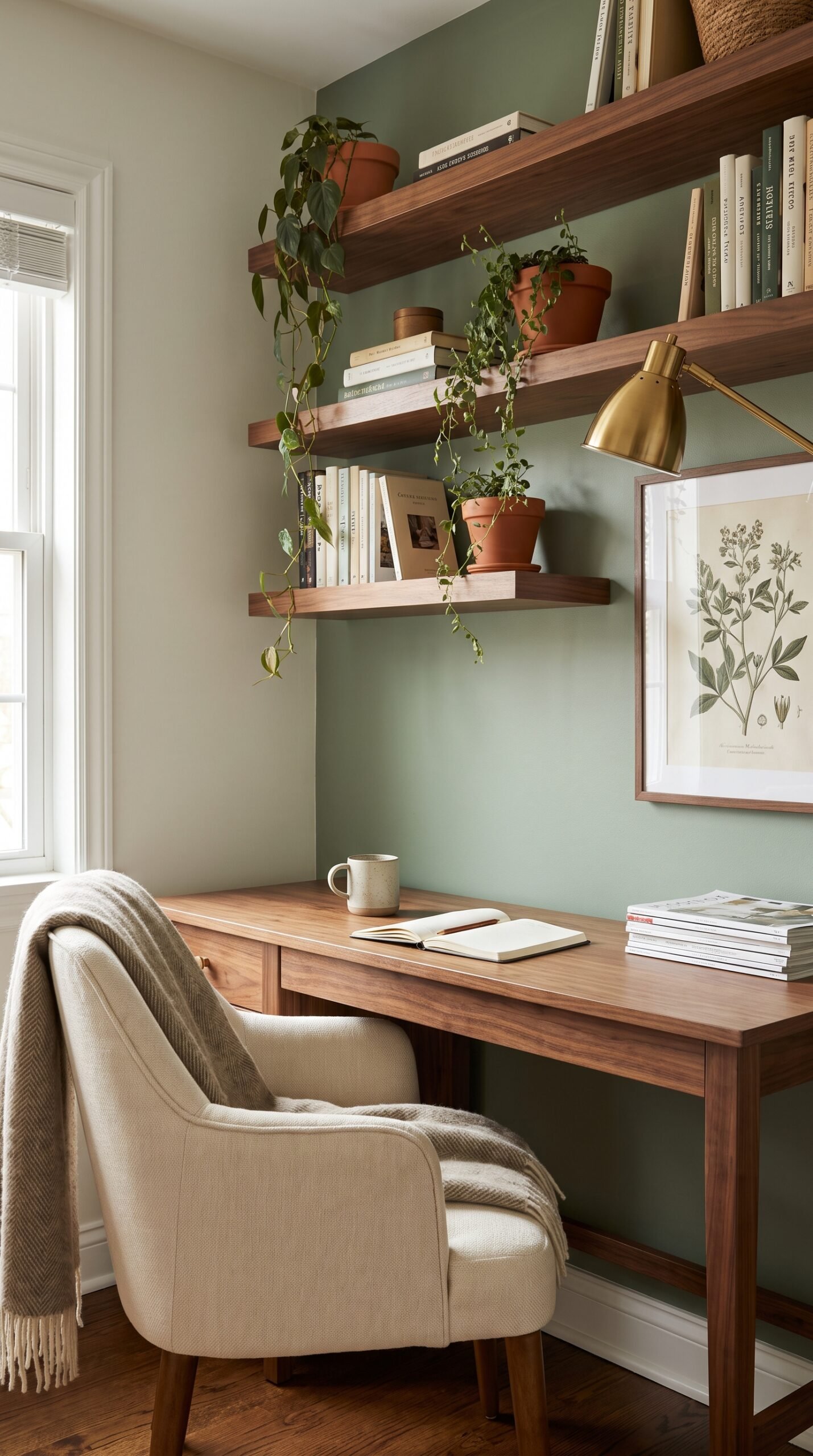
15 Home Office Ideas That Actually Make You Want to Sit Down
Most home offices are afterthoughts—a folding table in a corner, a mismatched chair, and a laptop with cords everywhere. The result is a space you avoid unless you have to work there. That’s solvable. A well-designed home office you want to sit down in isn’t about a huge budget; it’s about the right desk, the right chair, the right lighting, and one or two personal touches that make the space feel yours.
The rule for home offices is that comfort and function come first. A beautiful desk you can’t work at is worthless. A stylish chair that hurts your back after two hours ruins the whole point. Get the ergonomics right first, then layer in the design. Both matter, but never in reverse order.
These fifteen ideas cover full-room home offices, closet-office setups, and hybrid living-room-plus-office arrangements. Pick the ideas that fit your space and skip the rest. The best home office is the one you actually use, not the one that photographs best.
1. Choose a real desk, not a folding table
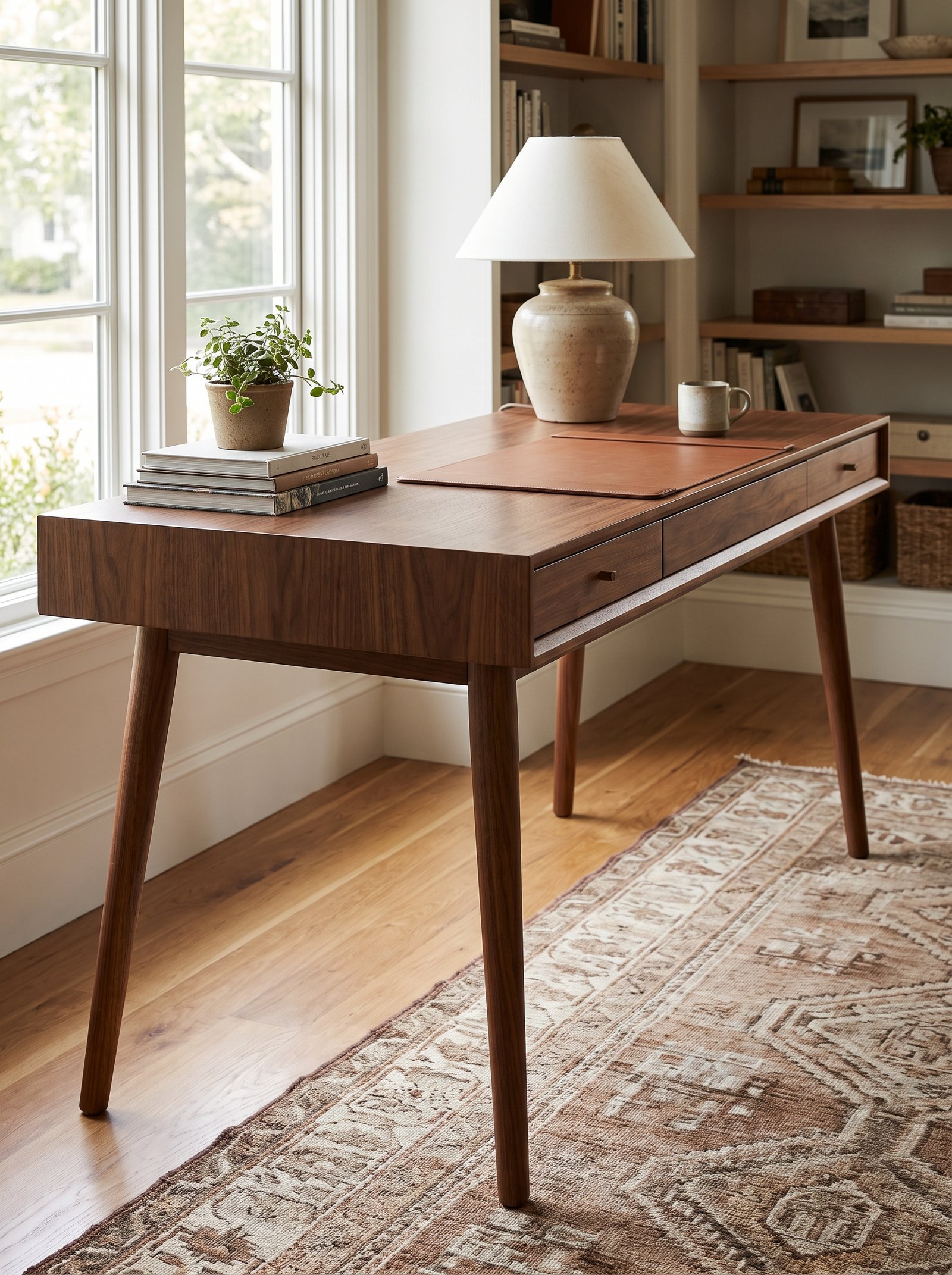
A dedicated warm-oak or walnut desk (48-60 inches wide, 24-30 inches deep) transforms a workspace from temporary to permanent. Amazon, IKEA, and West Elm all sell quality desks from $200-800.
Look for desks with visible legs (rather than solid pedestal bases) to keep the visual weight light. One or two shallow drawers are useful for pens, notebooks, and charger cables. Skip desks with full cabinet bases—they’re usually too visually heavy for smaller offices.
For rentals or budget setups, IKEA’s Alex drawer + Karlby wooden top combination makes a beautiful desk for $200-300. Amazon has similar warm-oak desks with tapered legs for $150-300.
2. Invest in a real ergonomic chair
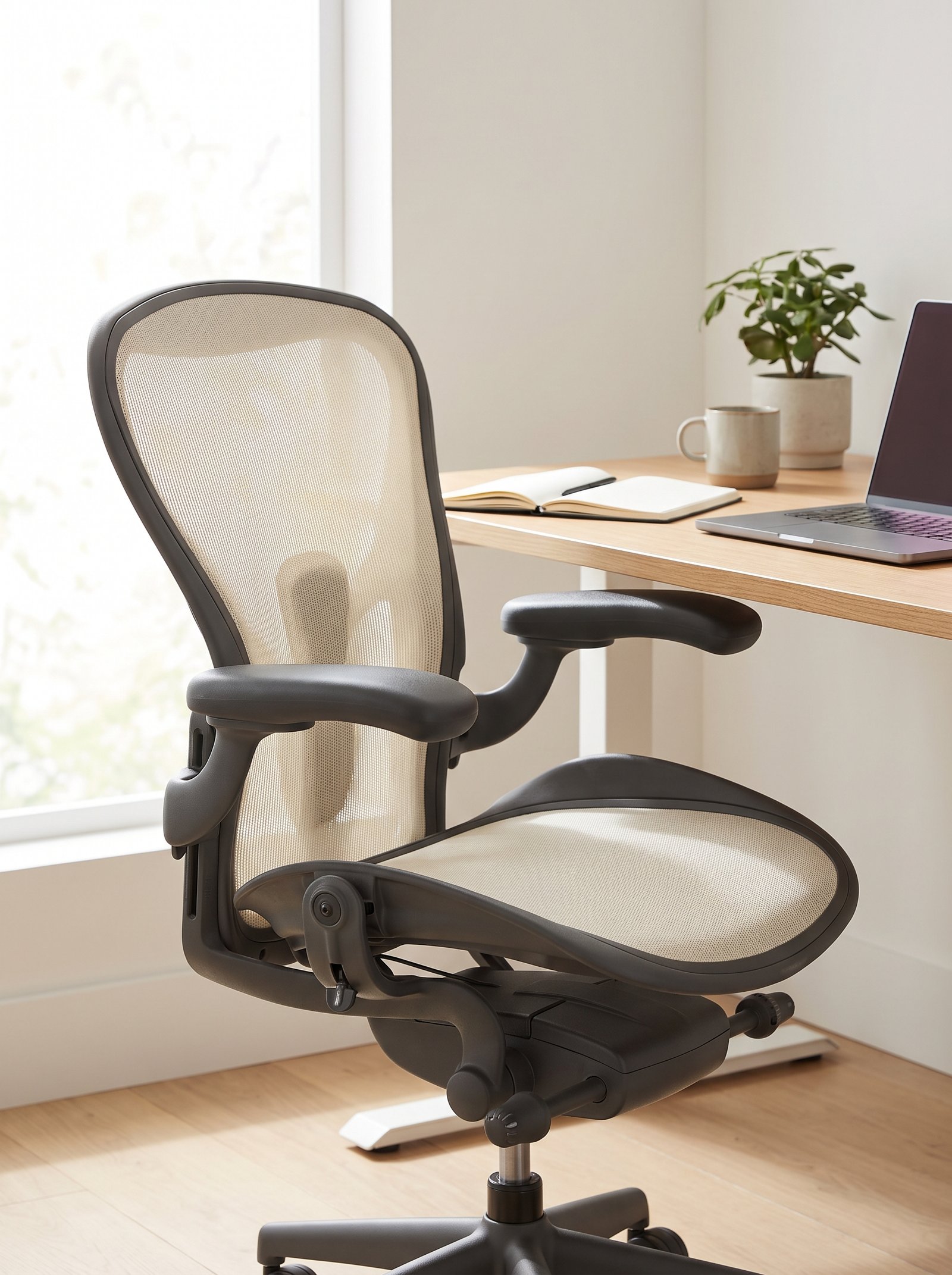
The chair matters more than the desk. A poorly designed chair after two hours will make you avoid the whole office. Look for adjustable lumbar support, adjustable armrests, seat depth adjustment, and 5-star rolling base.
Herman Miller Aeron and Steelcase Leap are the gold standard ($800-1500). For budget alternatives, Autonomous ErgoChair Pro ($350) and Sihoo M57 ($200) both offer real ergonomic adjustments at fraction of the cost.
Skip decorative-only office chairs (velvet upholstered dining chairs, low modern acrylic chairs). They look nice in photos but destroy productivity within days.
3. Add a warm task lamp on the desk
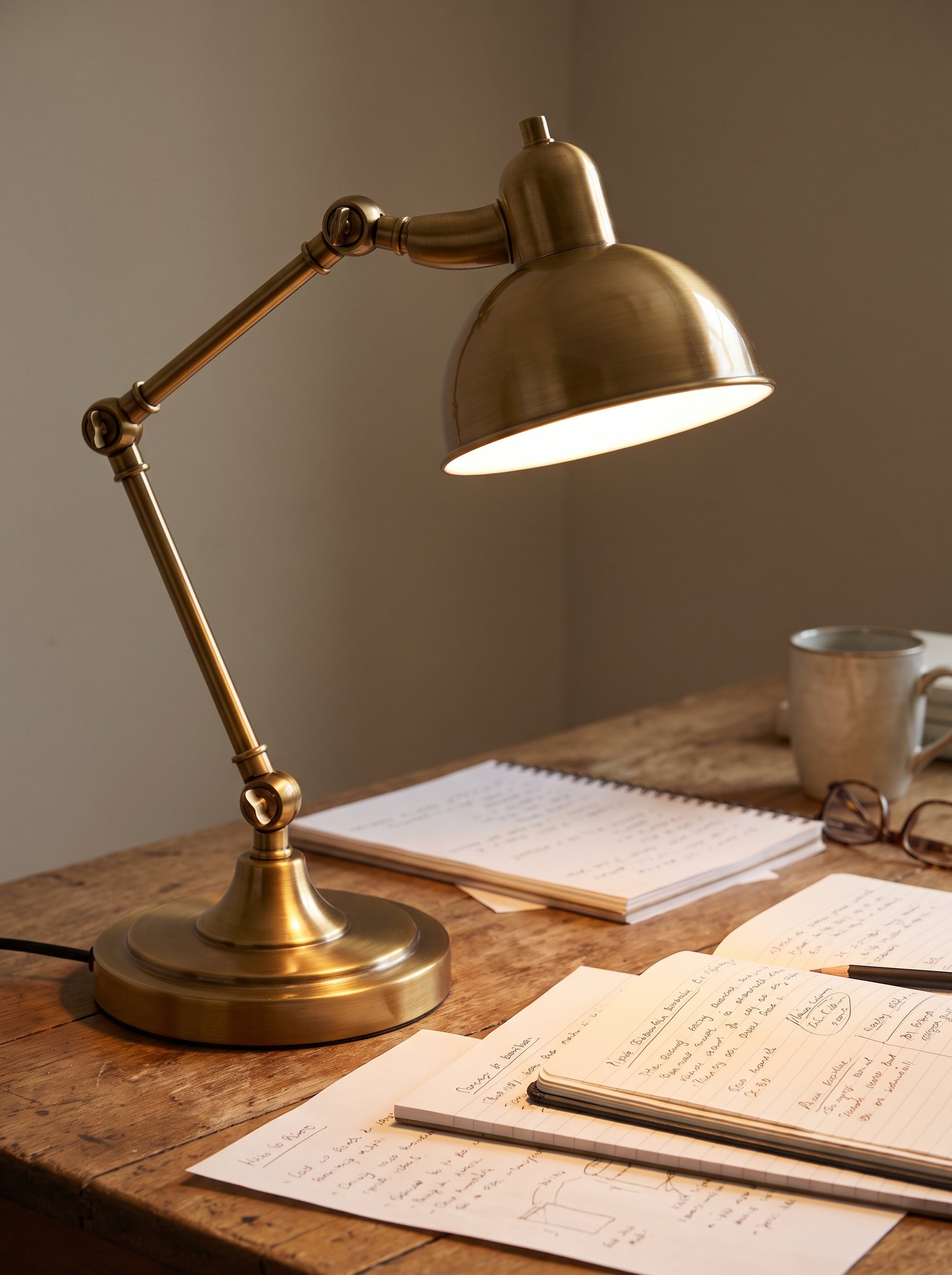
Overhead room lighting is rarely enough for detailed work. A warm-white task lamp (2700-3000K) directly on the desk provides the focused light your eyes need without straining. Brass, matte black, or warm wood bases all work.
Choose a lamp with an adjustable arm so you can direct light exactly where needed. Skip decorative-only table lamps—they look pretty but often don’t direct light usefully.
The pool of warm light from the task lamp also warms the whole desk zone, making the office feel cozy rather than institutional. Combine with under-cabinet or floor lighting for full layering.
4. Add a floor plant behind the desk
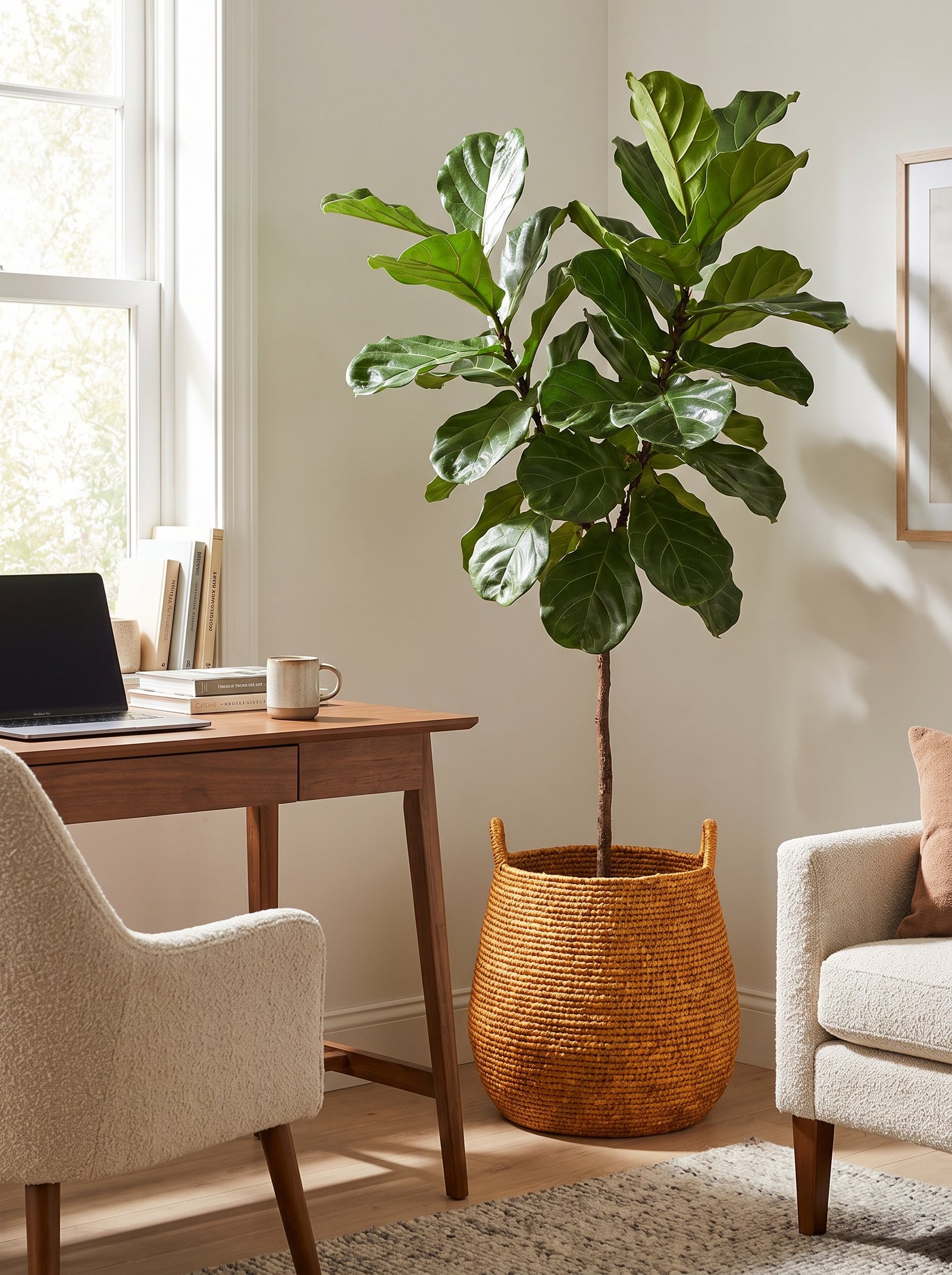
A 4-6 foot floor plant in the corner behind or beside the desk softens the corner and adds visual life to a work zone that would otherwise be all hard surfaces. Fiddle-leaf fig, monstera, or bird of paradise all work in bright indirect light.
The plant also serves as a video-call background element that makes the space feel intentionally designed. Blurred backgrounds are fine, but a warm plant behind you photographs and Zooms beautifully.
Choose a warm-toned woven basket or ceramic pot to hold the plant. Skip plastic nursery pots. The material of the pot matters as much as the plant itself for the design impact.
5. Hide cables and cords
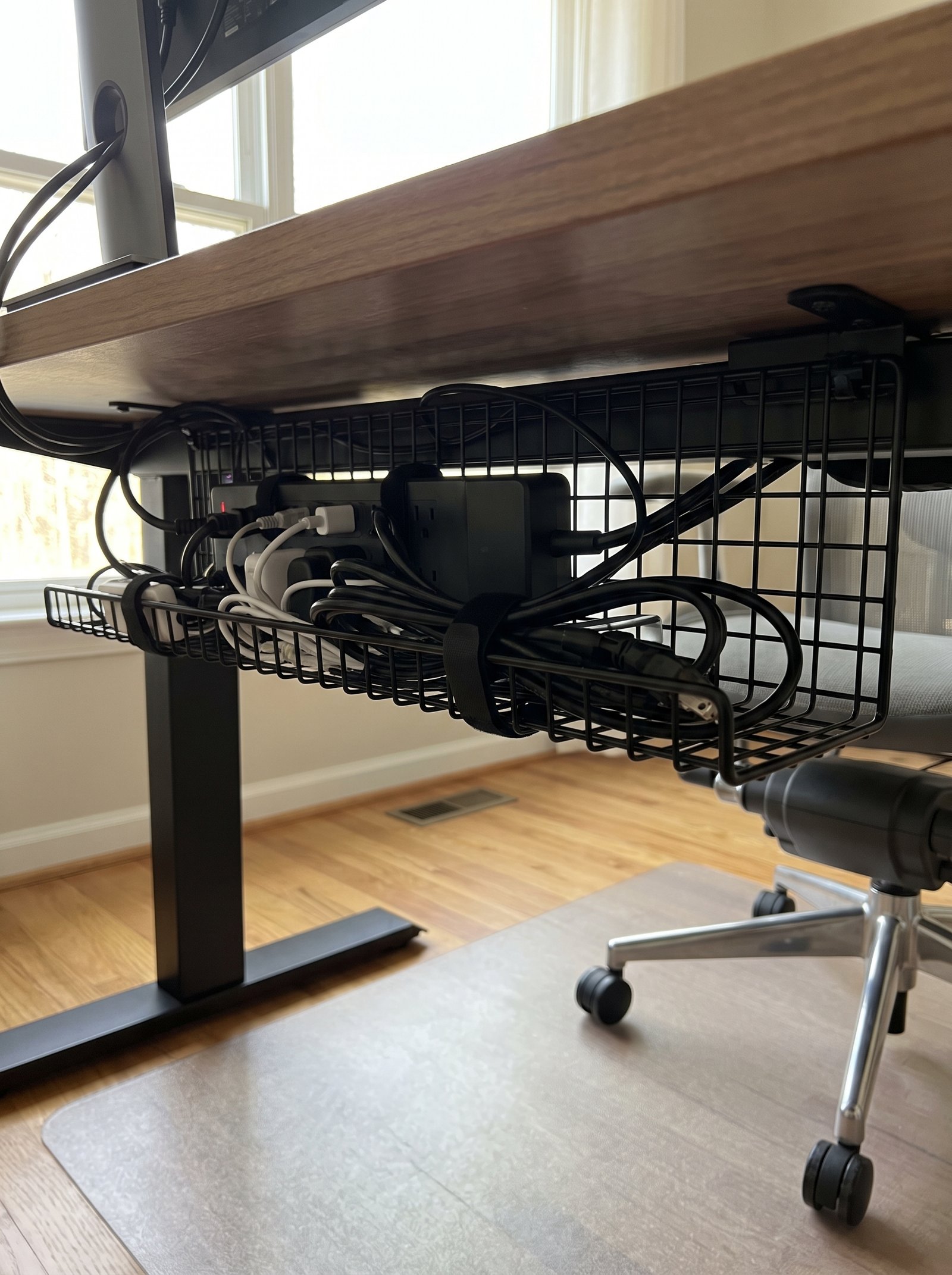
Visible cords age a home office visually more than almost anything else. Use a cable management tray under the desk (mounts with screws or adhesive) to hide power strips and excess cord length.
Cable clips along the desk legs route the visible portions of cords down neatly. Amazon and IKEA both sell cable management kits for $10-30. This one investment transforms how the office reads.
Route the desk-to-computer cables through a cord grommet or a small hole drilled in the desk edge (or the back). For rentals, adhesive clips on the desk underside work just as well.
6. Add floating shelves above the desk
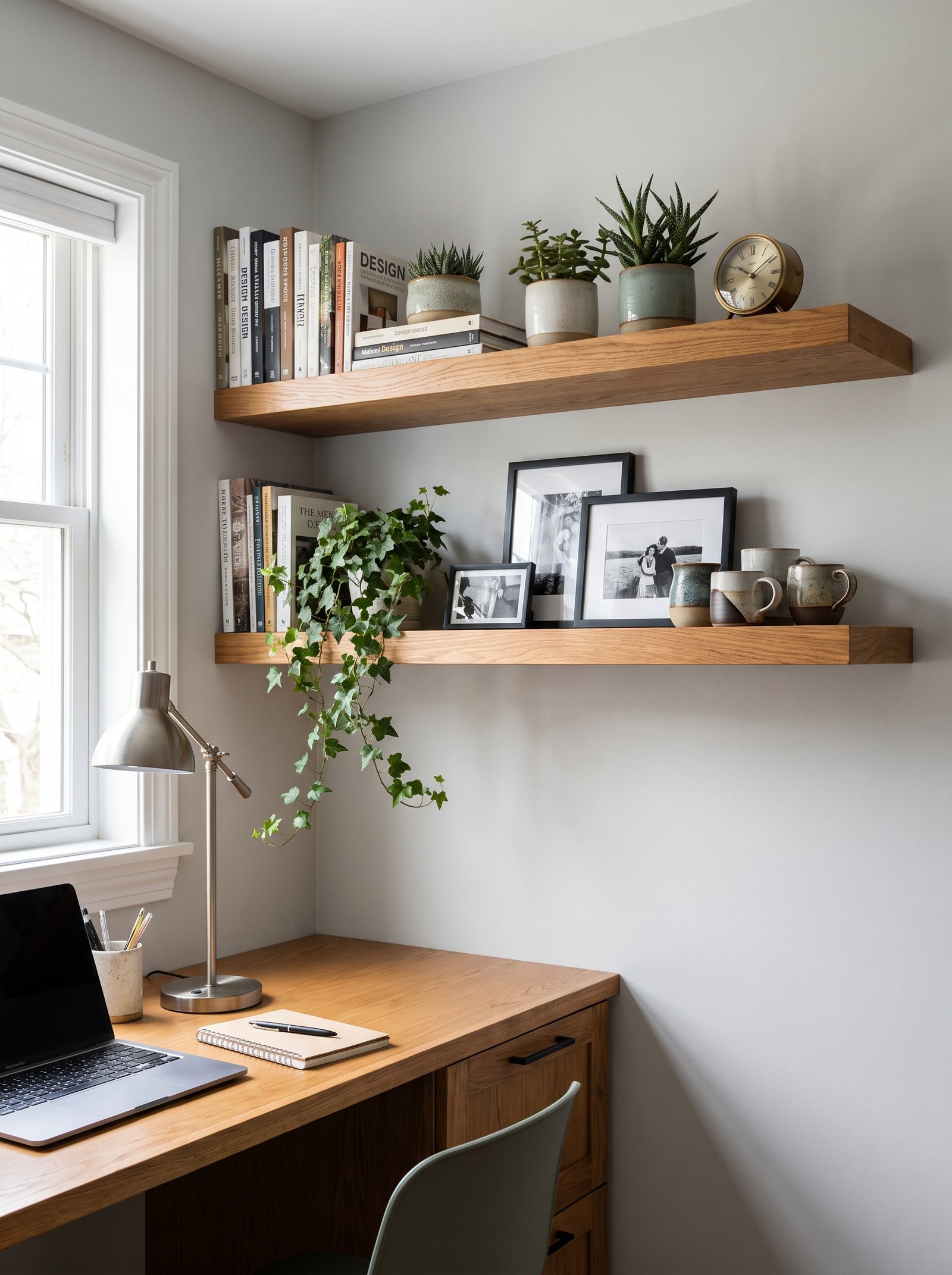
Two warm-oak floating shelves above the desk hold books, plants, framed photos, a small clock, and small ceramic objects. This adds vertical visual interest and storage without eating floor space.
Style with a mix of function (reference books, notebooks) and design (plant, framed art, small object). Keep shelves 60-70% full—overpacked shelves read as cluttered.
For rentals, use heavy-duty command-strip mountable shelves (up to 15 pounds) or two tiny screws that patch easily. The vertical style adds a lot of design impact.
7. Add a comfortable secondary chair for reading
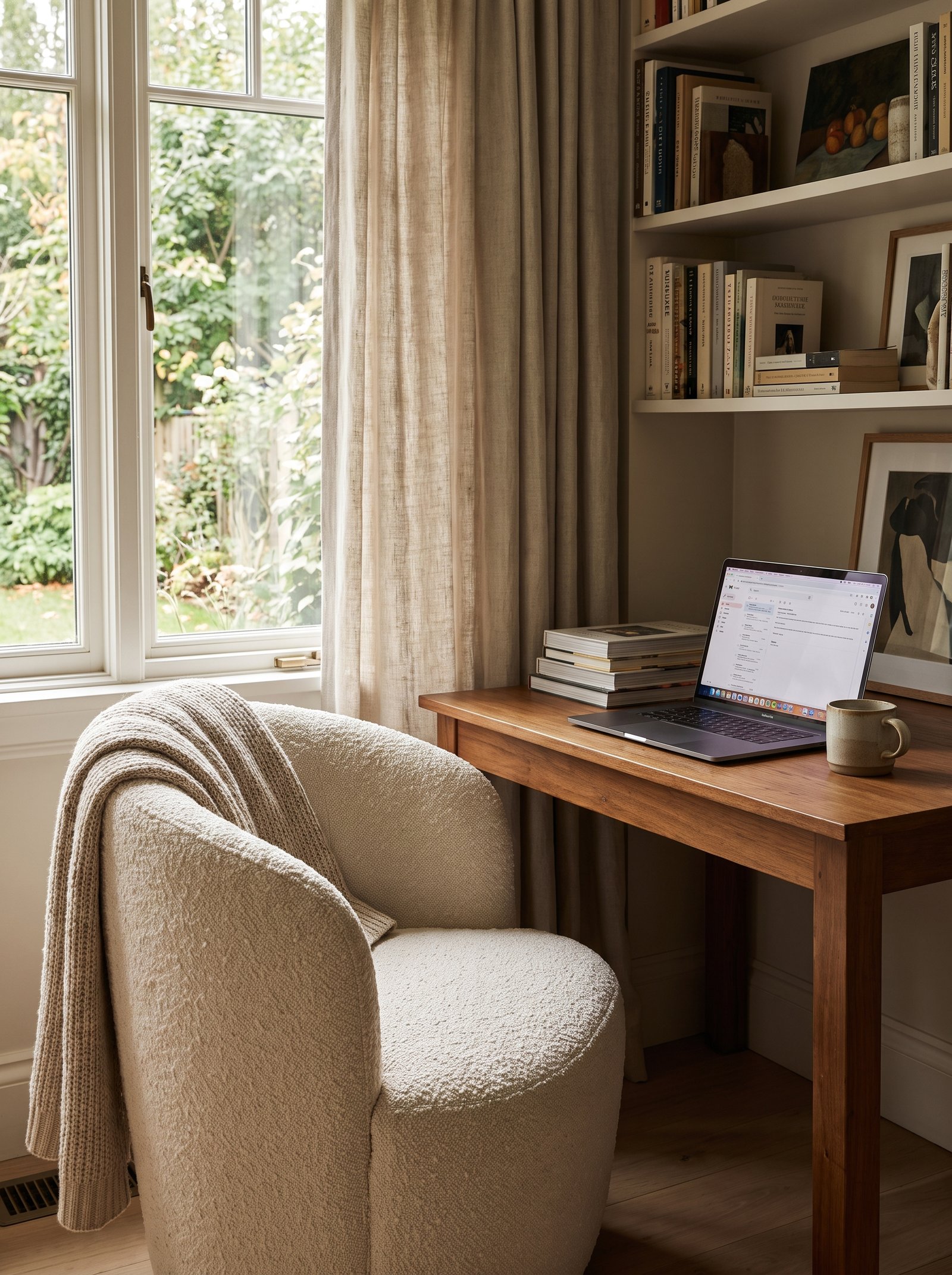
If space allows, add a small comfortable armchair or a small loveseat as a secondary seating spot. Move to the chair for reading emails, meetings, or thinking away from the desk. Two zones (work at desk, think in chair) improve productivity noticeably.
Choose a small cream boucle armchair or a cane back chair with a cushioned seat. Under $500 options exist at Article, West Elm, and Wayfair. Add a small side table with a lamp beside it.
This “office reading nook” doubles as a video-call moment when the desk background is messy—move to the chair for the calls, back to the desk for work.
8. Hang art or a mood board in front of the desk
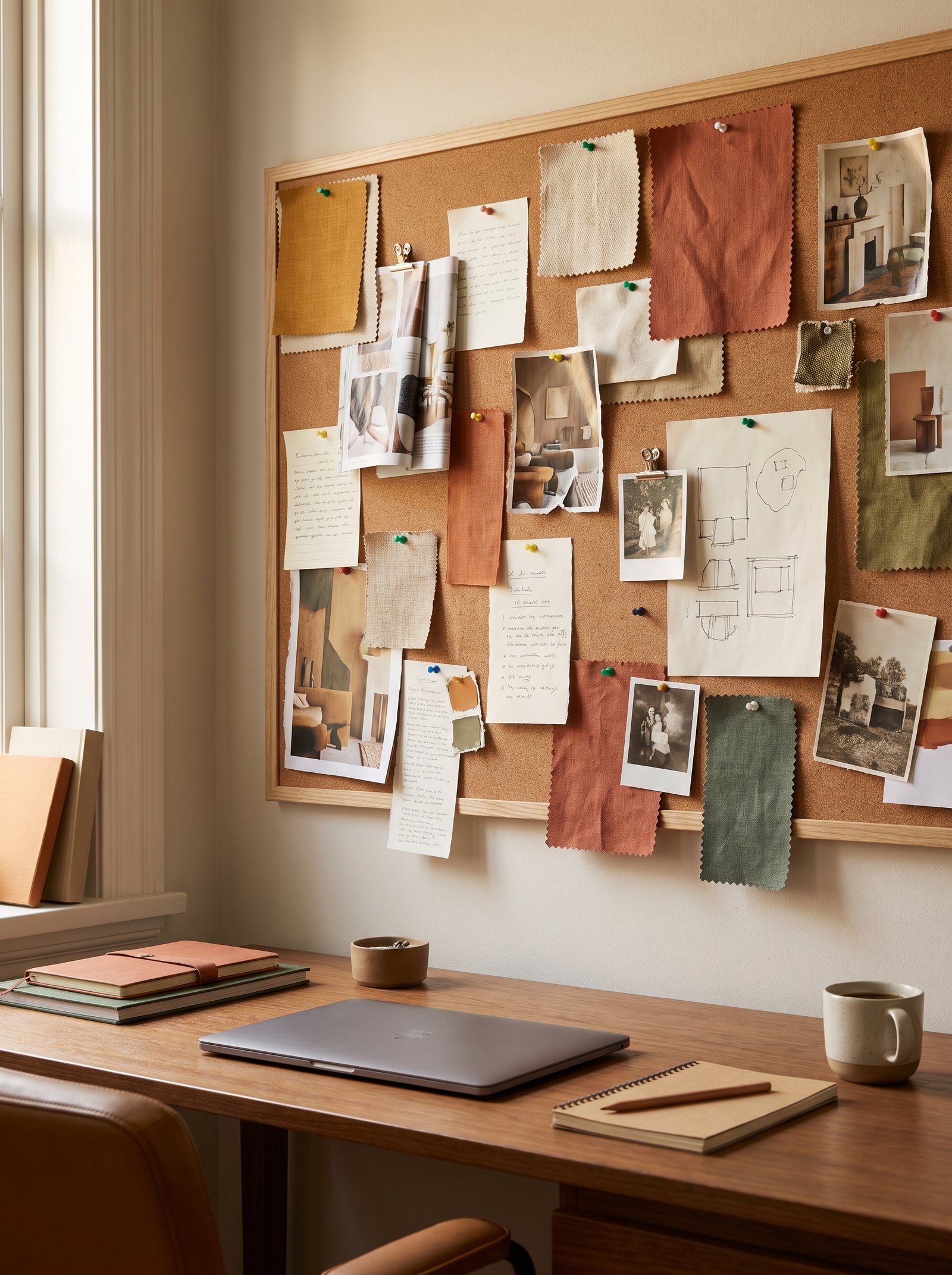
The wall you stare at while working matters. Instead of leaving it blank, hang framed art, a corkboard with inspiration, or a large calendar. Something visual to look at during the moments between tasks.
Choose art that supports focus rather than distracts: quiet landscapes, abstract paintings in muted tones, botanical prints. Skip overly stimulating art (bold graphic prints, busy patterns) directly in front of the desk.
For maximum function, add a corkboard or magnetic board for pinning current-project notes. This becomes both design and workflow tool.
9. Add a small area rug under the desk
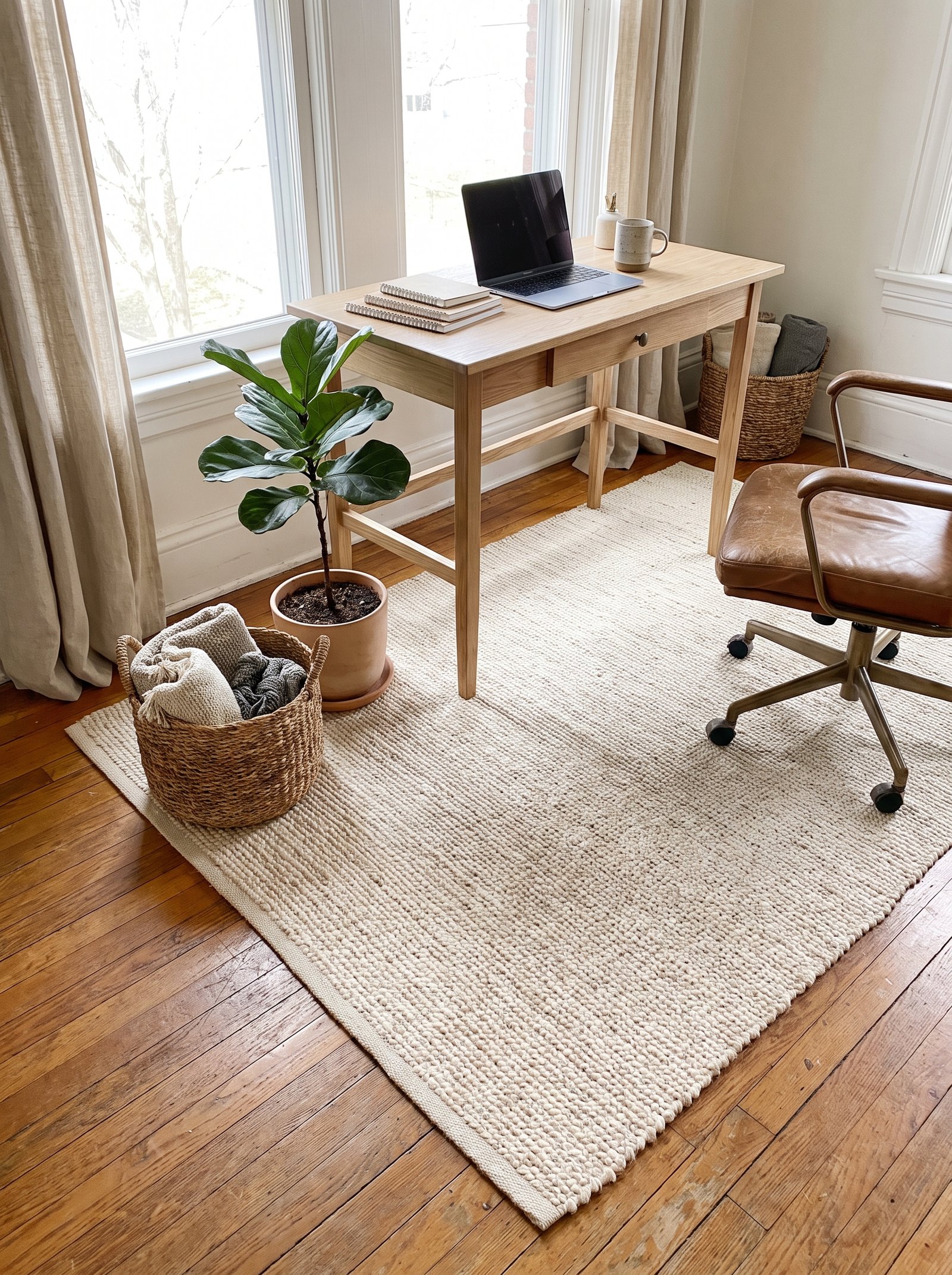
A small rug (4×6 or 5×8) under the desk defines the work zone visually and adds warmth to hard floors. Choose flat-weave cotton or jute that handles rolling chairs.
Skip high-pile shag under chairs—the chair wheels catch and the rug wears fast. Flat-weave in warm cream, oat, or subtle pattern is the right choice for durability plus design.
Add a rug pad underneath for grip and a slight cushion effect. The rug becomes both design element and small comfort layer.
10. Style the desk with 3-5 objects maximum
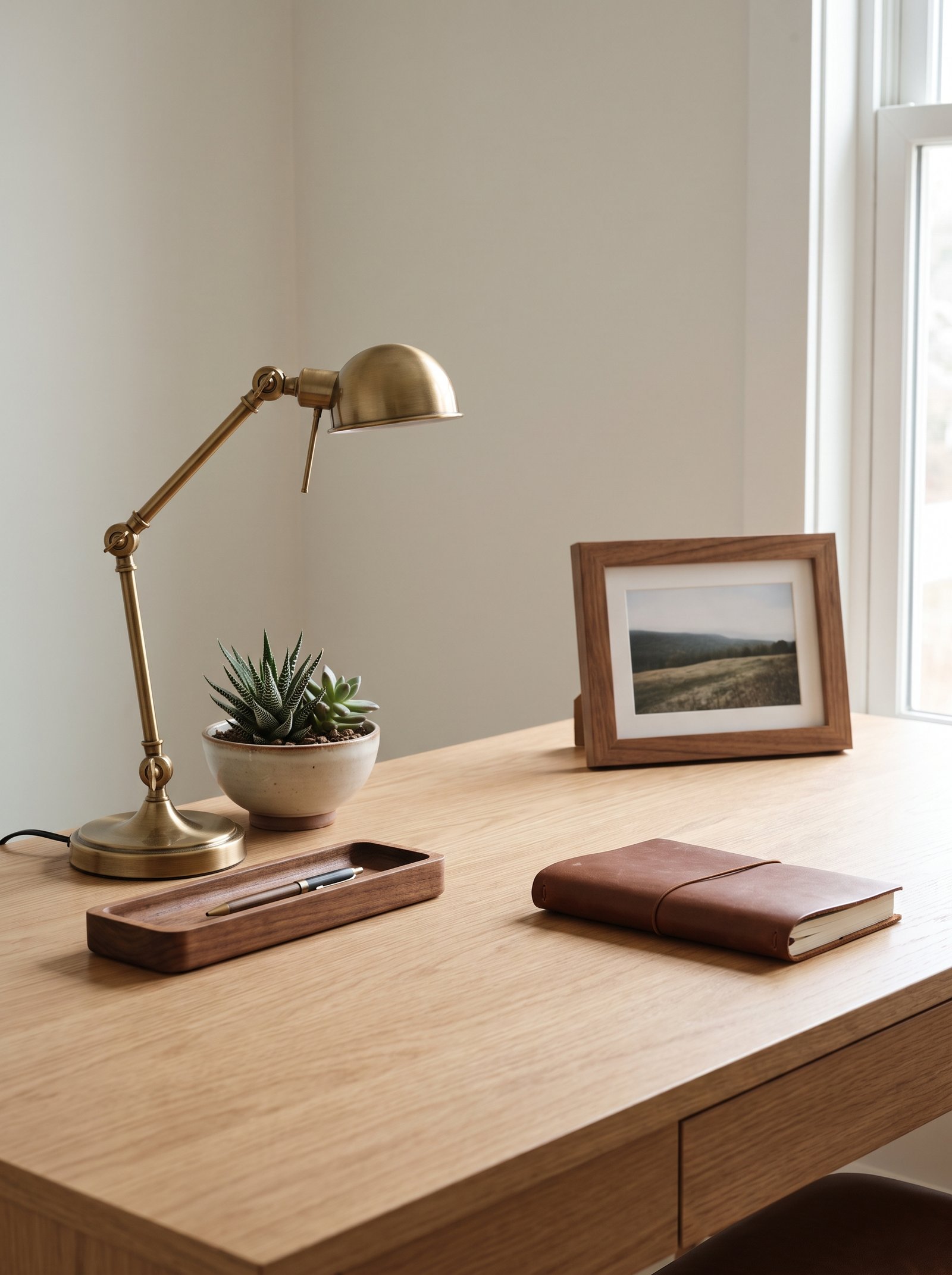
A cluttered desk is a stressful desk. The rule: 3-5 objects visible on the desk surface maximum. Lamp, one small plant, one small tray for pens, one photo or small piece of art, one notebook or coffee mug.
Everything else lives in drawers, on shelves, or hidden. Papers get filed daily. Cables get hidden. Chargers get put away when not in use. Clean surfaces support focus.
A daily 5-minute desk reset at end of workday keeps the office looking magazine-ready every morning and reduces friction to sitting down the next day.
11. Use a monitor arm to free desk space
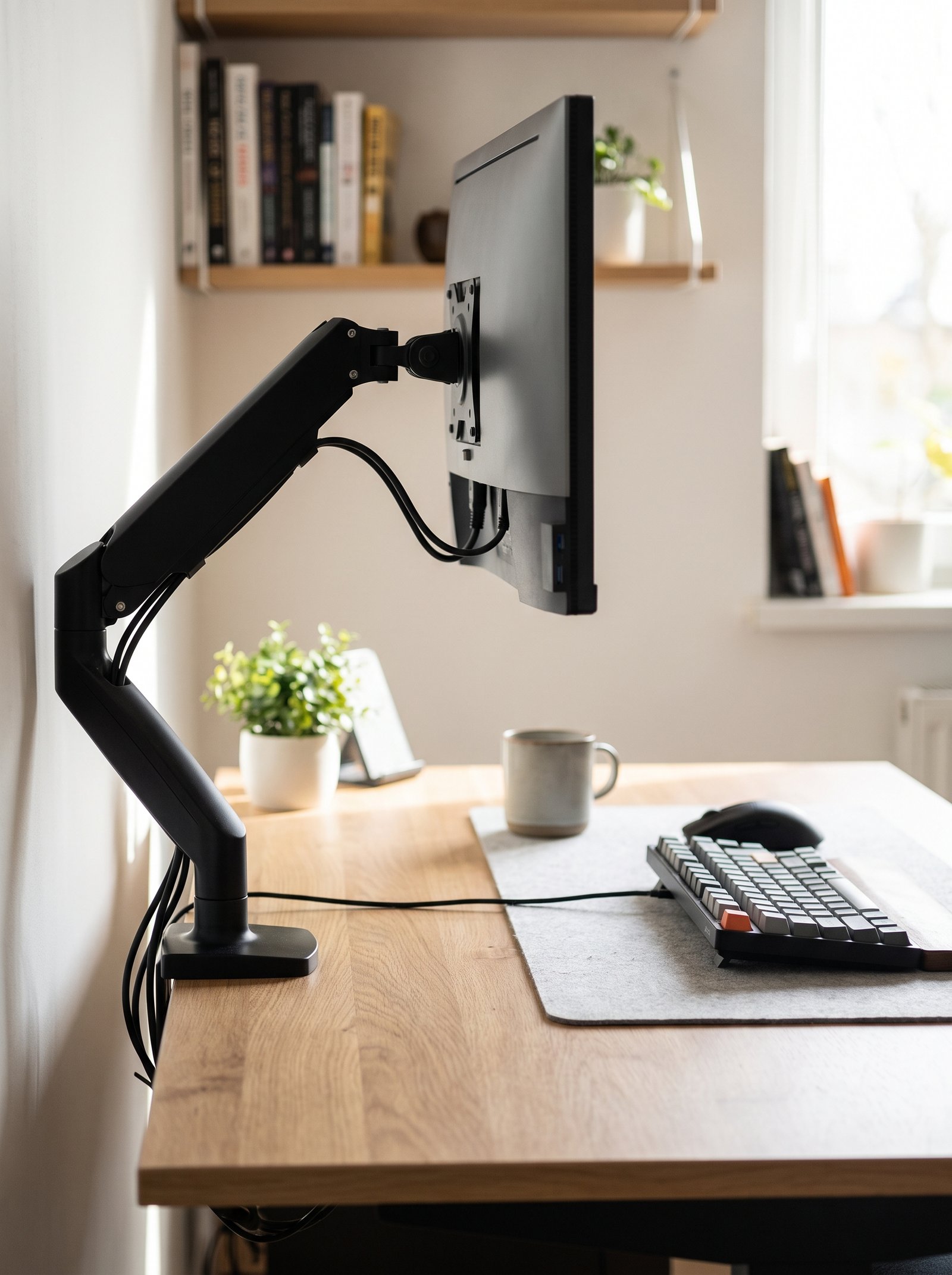
A single monitor sitting on a stand eats desk space. A monitor arm (VESA-mount arm that attaches to the desk edge) lifts the monitor off the desk entirely, freeing up 200-300 square inches of usable surface.
Amazon sells single-monitor arms for $30-80. Dual-monitor arms for $60-150. The investment pays back within a week of use—more desk space, better ergonomic viewing angle.
Choose matte-black or brass arms that coordinate with your desk lamp and other office hardware. Consistency of hardware finishes is what makes the office feel designed.
12. Add a small warm-scented candle
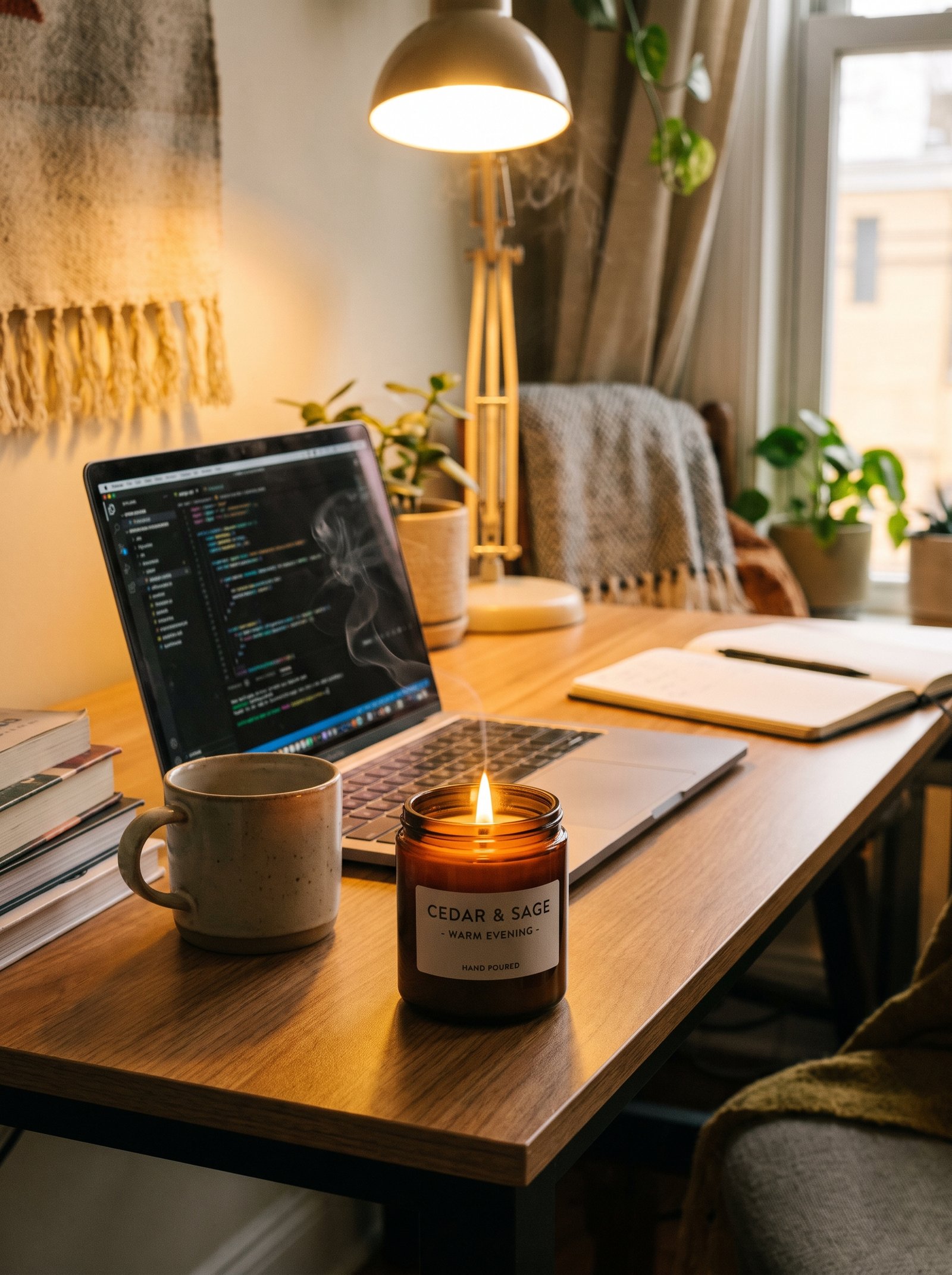
A small candle in a warm scent (cedar, sandalwood, fig, warm vanilla) lit during focus work creates an olfactory anchor that helps signal to your brain “this is work time.” This is a small but real productivity habit.
Choose candles in warm ceramic or amber-glass vessels—decorative-when-not-lit, functional-when-lit. Skip overly floral or overly clean scents that fight with focus.
The candle also adds a small pool of warm light near the desk during evening work. Combined with the task lamp and a floor lamp, the office develops proper light layering.
13. Add a small warm-neutral desk pad
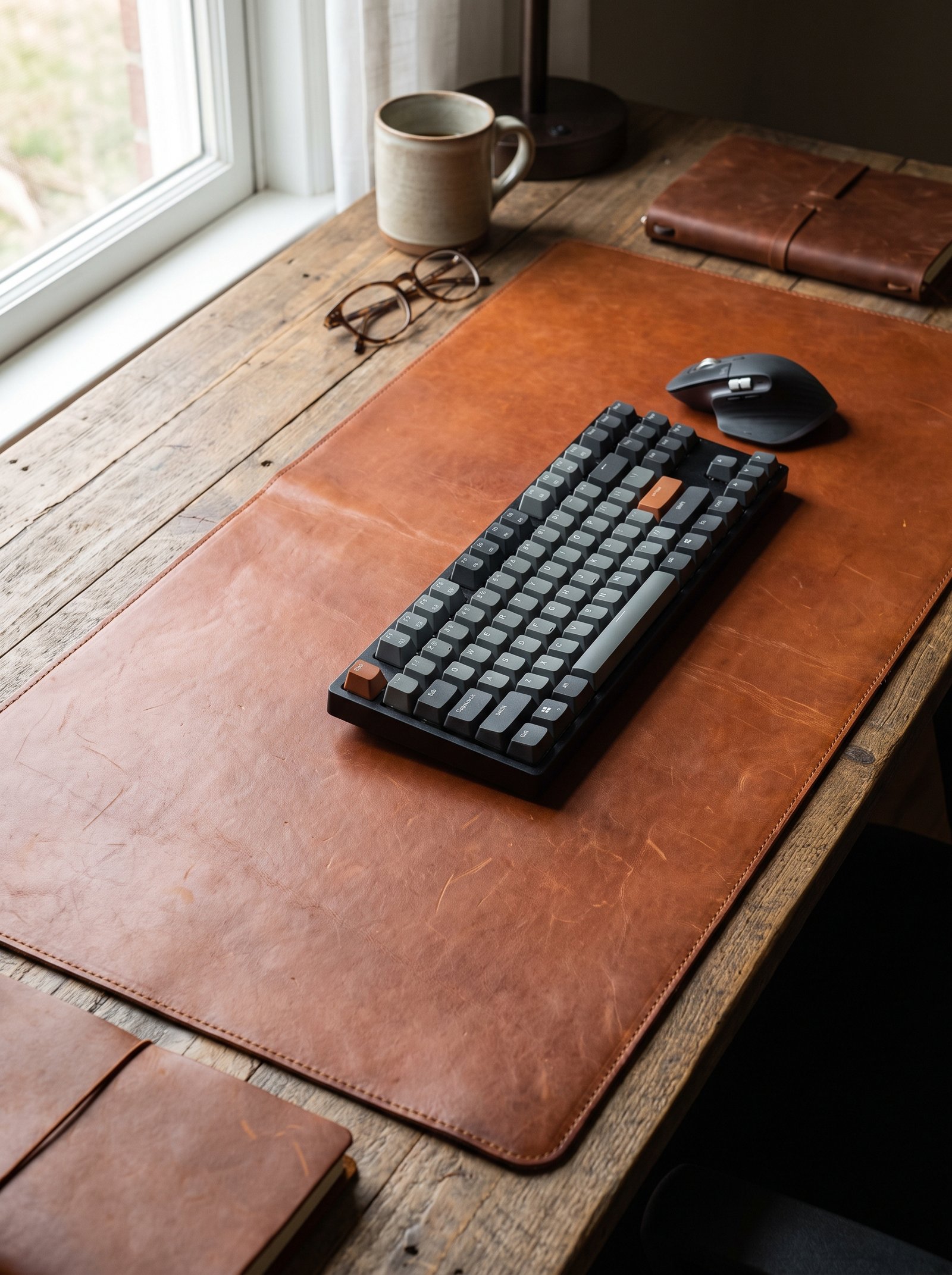
A large leather or cork desk pad (24×48 inches) covering most of the desk surface protects the wood, defines the work zone, and adds a soft moment of texture. Choose cognac leather, cream cork, or warm oat felt.
The desk pad also serves as a large mousepad for the whole zone, so a separate mousepad isn’t needed. This one addition transforms how the desk feels underhand.
Amazon sells quality desk pads for $30-80. Choose one at least 4 inches wider than your keyboard-monitor-mouse spread for full protection and design impact.
14. Store supplies in matched containers
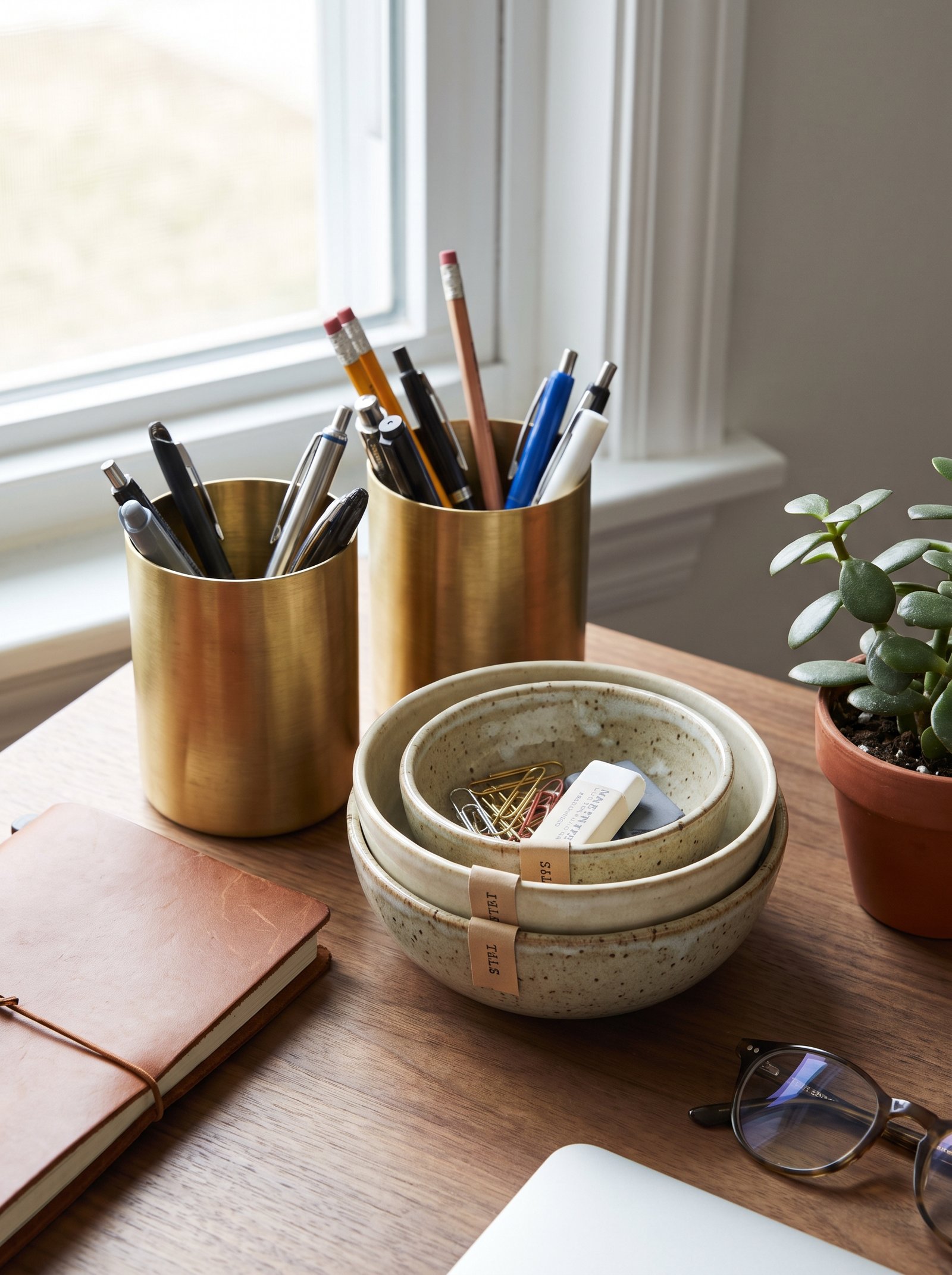
Pens, notebooks, sticky notes, paperclips—these accumulate visually into clutter fast. Store all in matched brass, wood, or cream ceramic containers on the desk or in the drawer.
One container for pens, one small dish for paperclips, one for sticky notes. Consistent material and finish reads as intentional; mixed containers read as random.
For inside-drawer organization, use small woven or wood drawer organizers to keep everything sorted. Open a drawer to well-organized supplies rather than a jumbled pile.
15. Add a small stack of books

A small stack of 3-5 hardcover books on the corner of the desk (or on the floating shelf above) adds intellectual warmth and a small design vignette. Choose books you actually read or reference.
The books can serve double-duty as monitor stand height adjusters or as landing surface for a small plant or object. Layered vignettes make offices photograph beautifully.
Rotate the book stack every few months—current-project reference books, favorite novels, art or design books. Fresh rotation keeps the office feeling current.
A great home office is one you sit down at willingly, not reluctantly. The right desk, chair, and lighting solve most productivity friction. The right art, plant, and small design touches make the space feel yours. Both matter, and neither alone is enough.
Start with the chair—if it hurts, nothing else matters. Then add the task lamp, hide cables, and reduce clutter to five items on the desk. Add the plant, art, and floating shelves next. Layer in styling touches (rug, candle, matched containers) over the following weeks. A home office you love isn’t built in a weekend; it’s built through a series of small improvements over months.