15 Cozy Reading Nook Ideas for Long Winter Weekends
A great reading nook is one of the highest joy-per-square-foot investments in any home. It doesn’t need a lot of space—a corner, an alcove, a bay window, or even a small chair in a well-lit spot works. What matters is that when you sit down, everything you need for a long reading session is within arm’s reach and the whole vignette invites you to stay for hours.
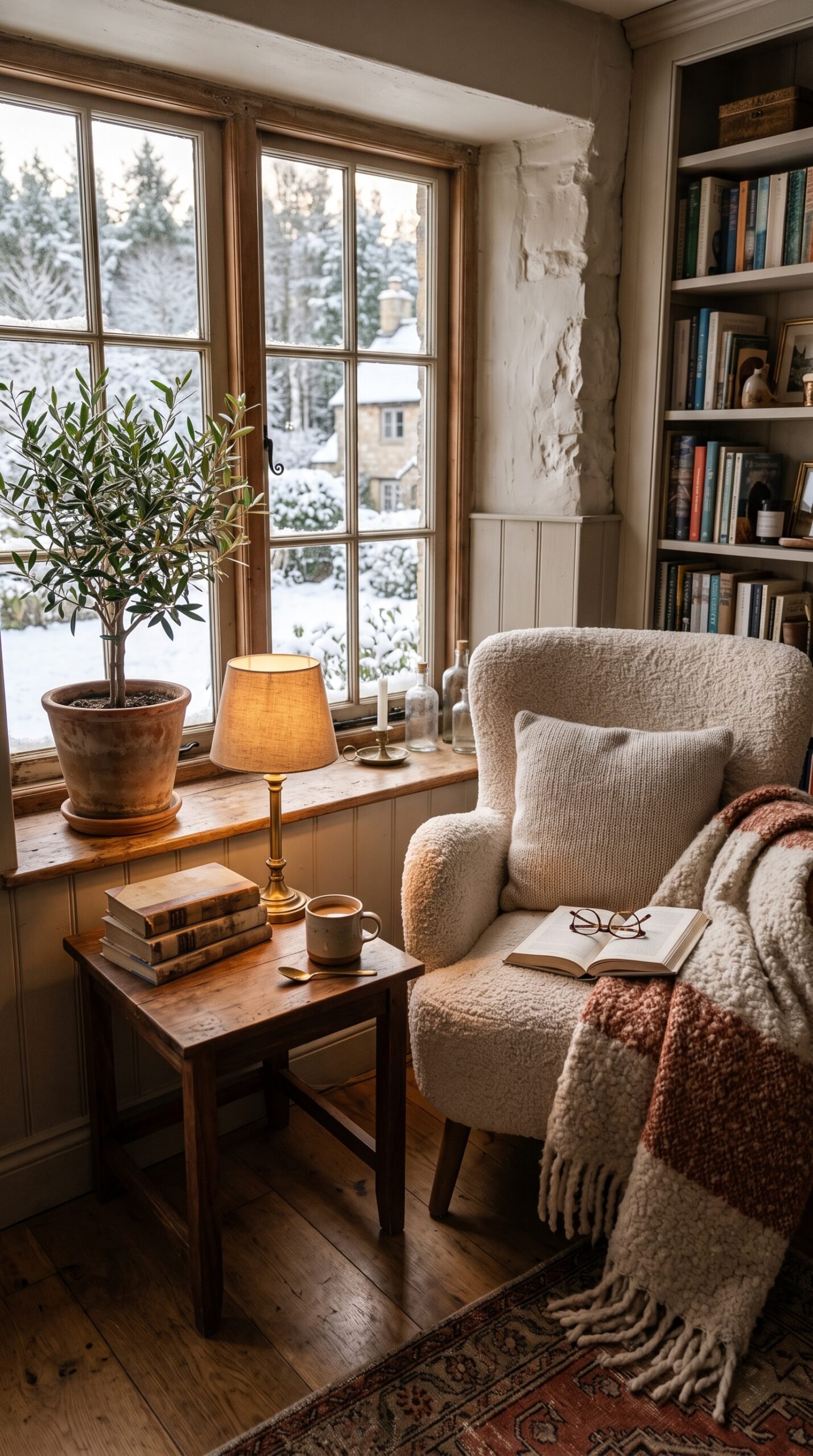
The rule for cozy reading nooks: warmth, comfort, and function all combined. A comfortable chair (or seat), warm task lighting, a small side table, a soft throw, and a stack of books already waiting. Add a candle and a mug and the nook becomes irresistible.
These fifteen ideas cover reading nooks in every possible home spot: bay windows, bedroom corners, closet conversions, hallway alcoves, under-stair spaces, and dedicated reading rooms. Pick the spot in your home with the best light and the least foot traffic, and build the nook from there.
1. Choose the right chair for long sessions
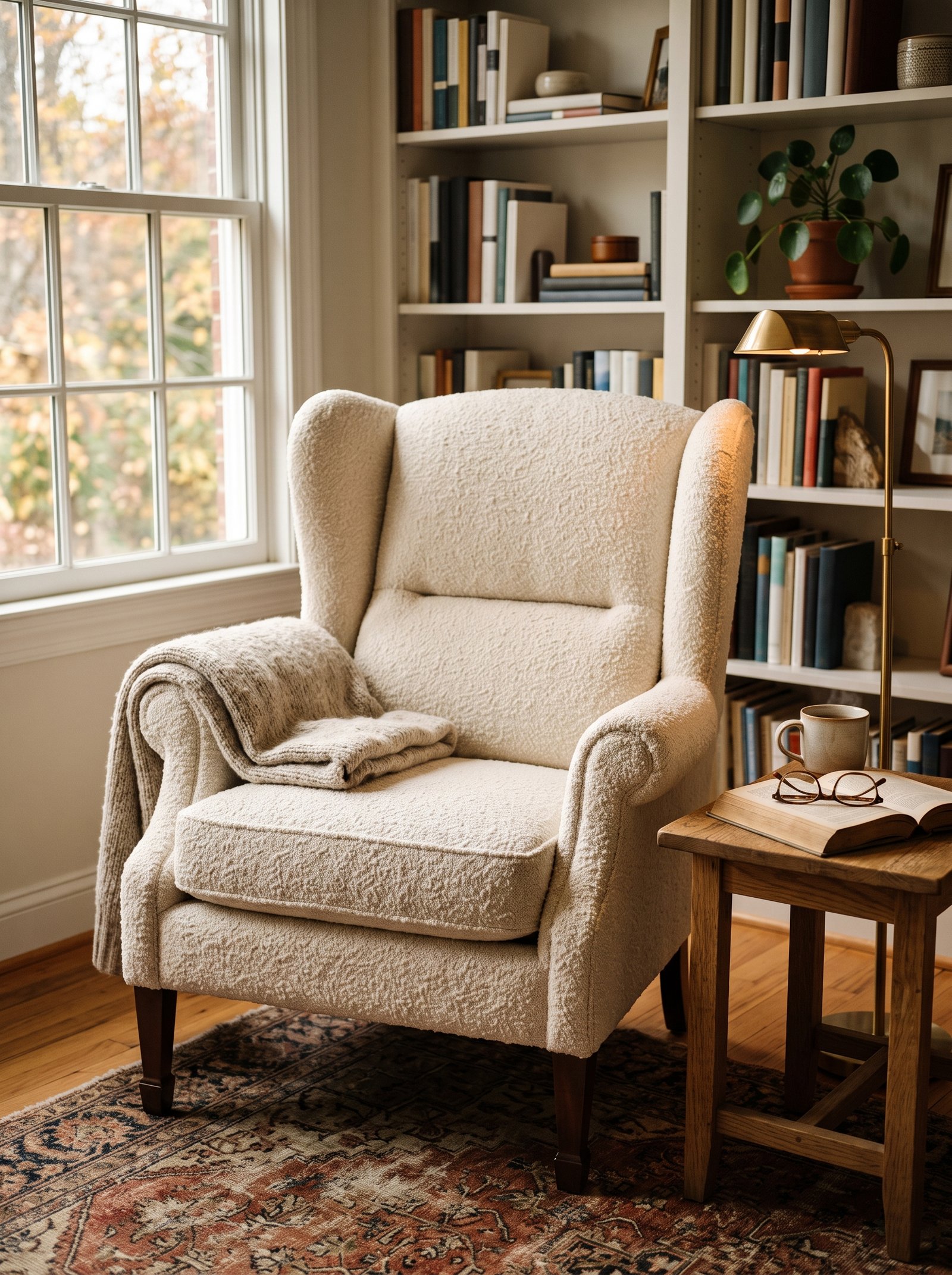
The chair is the nook. If it hurts your back or forces awkward posture after 20 minutes, you’ll never actually read there for long sessions. Choose comfortable armchairs with lumbar support, sturdy armrests, and depth appropriate for your body.
Cream boucle armchairs, wingback chairs, or classic English rolled-arm chairs all work. Under $500 options exist at Article, West Elm, IKEA, and Wayfair. Test the chair in-store if possible; buy from returnable sources online otherwise.
Skip trendy accent chairs that photograph beautifully but feel awful for reading. Comfort over Instagram appeal every time. The chair you actually want to sit in for 3 hours beats the chair that looks pretty for 20 minutes.
2. Add a warm-bulb floor or table lamp
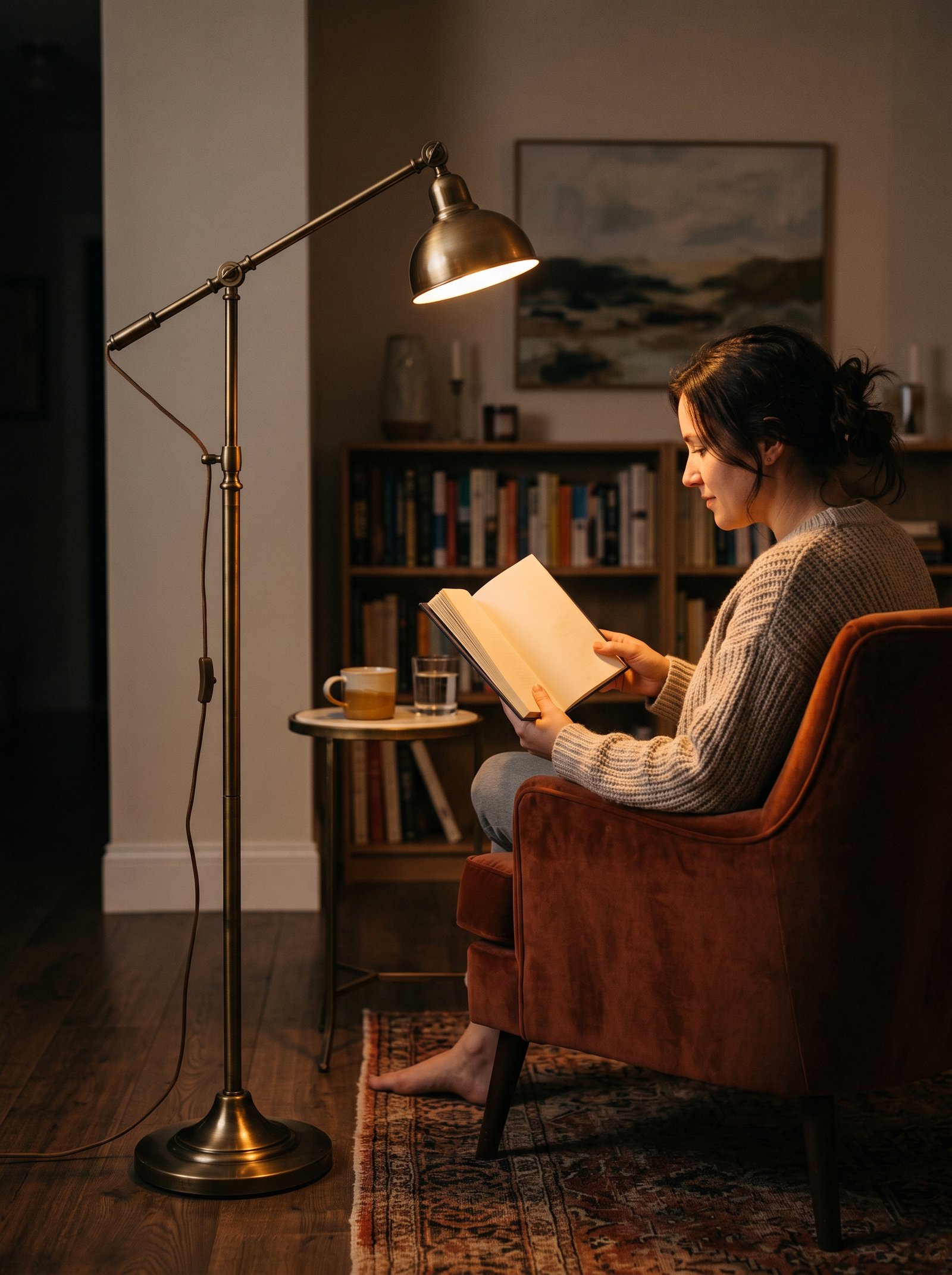
The right task light makes reading possible. Position a warm-bulb (2700K) floor lamp beside or slightly behind the chair, or a table lamp on the side table at seated eye level.
Warm bulbs don’t strain eyes for long sessions the way cool bulbs do. Adjustable-arm lamps (like an anglepoise) let you direct light exactly onto the page.
For extra polish, choose a warm brass or matte-black lamp base. The lamp becomes both function and design piece—part of the nook’s vignette even when the light is off.
3. Add a small side table for tea and books
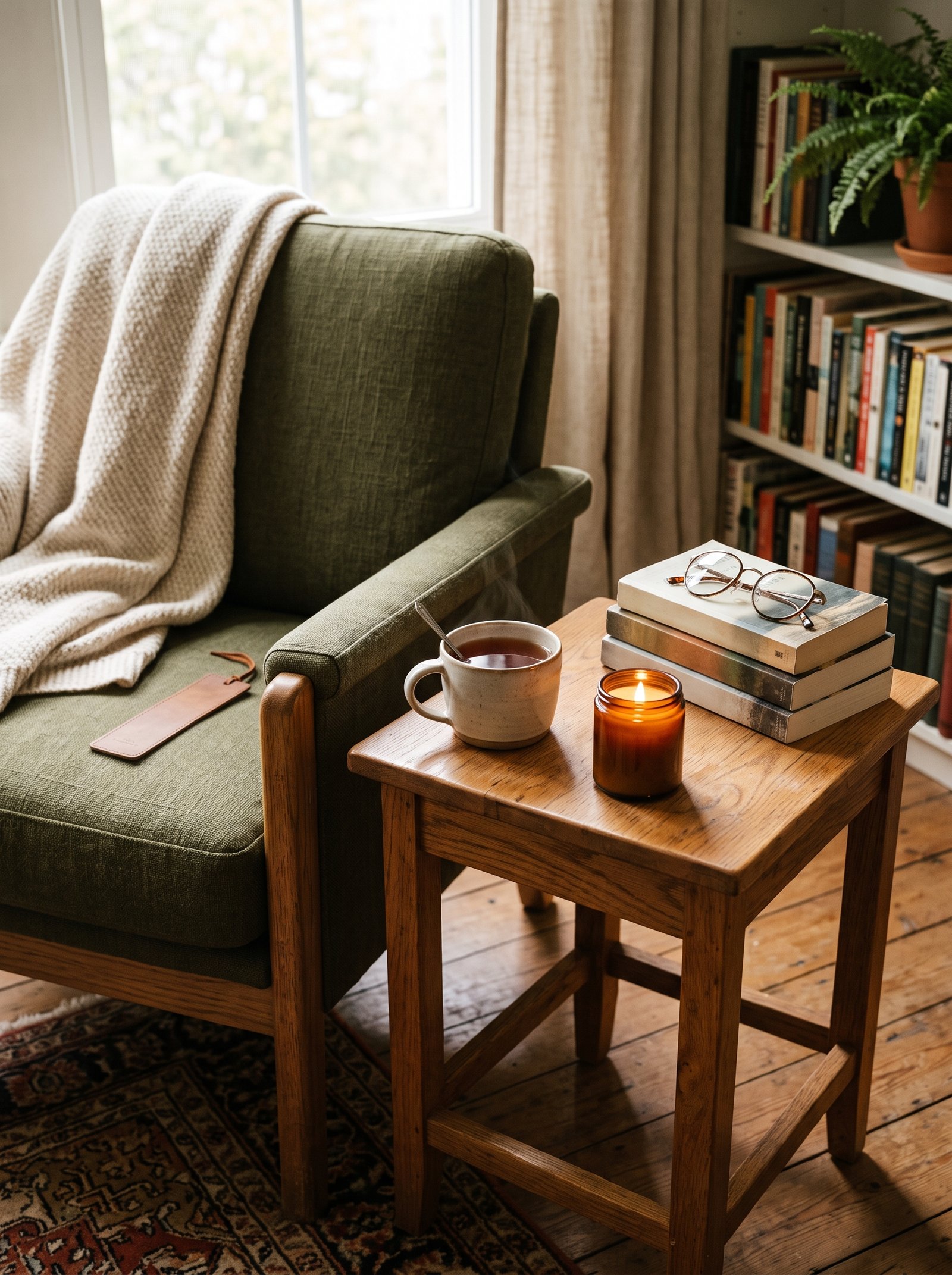
A small side table beside the chair holds a mug of tea or coffee, a small stack of books, reading glasses, and a small candle. Without a landing spot, everything sits on the floor or gets balanced on the chair arm.
Choose a warm-oak or walnut side table 14-18 inches wide, 20-24 inches tall. Amazon, West Elm, and Article all sell small nook-appropriate side tables for $60-200.
The table becomes part of the nook’s design—styled with 2-3 objects when not in use (candle, small vase, one book). Layered vignettes read as intentional.
4. Add a soft throw draped over the chair
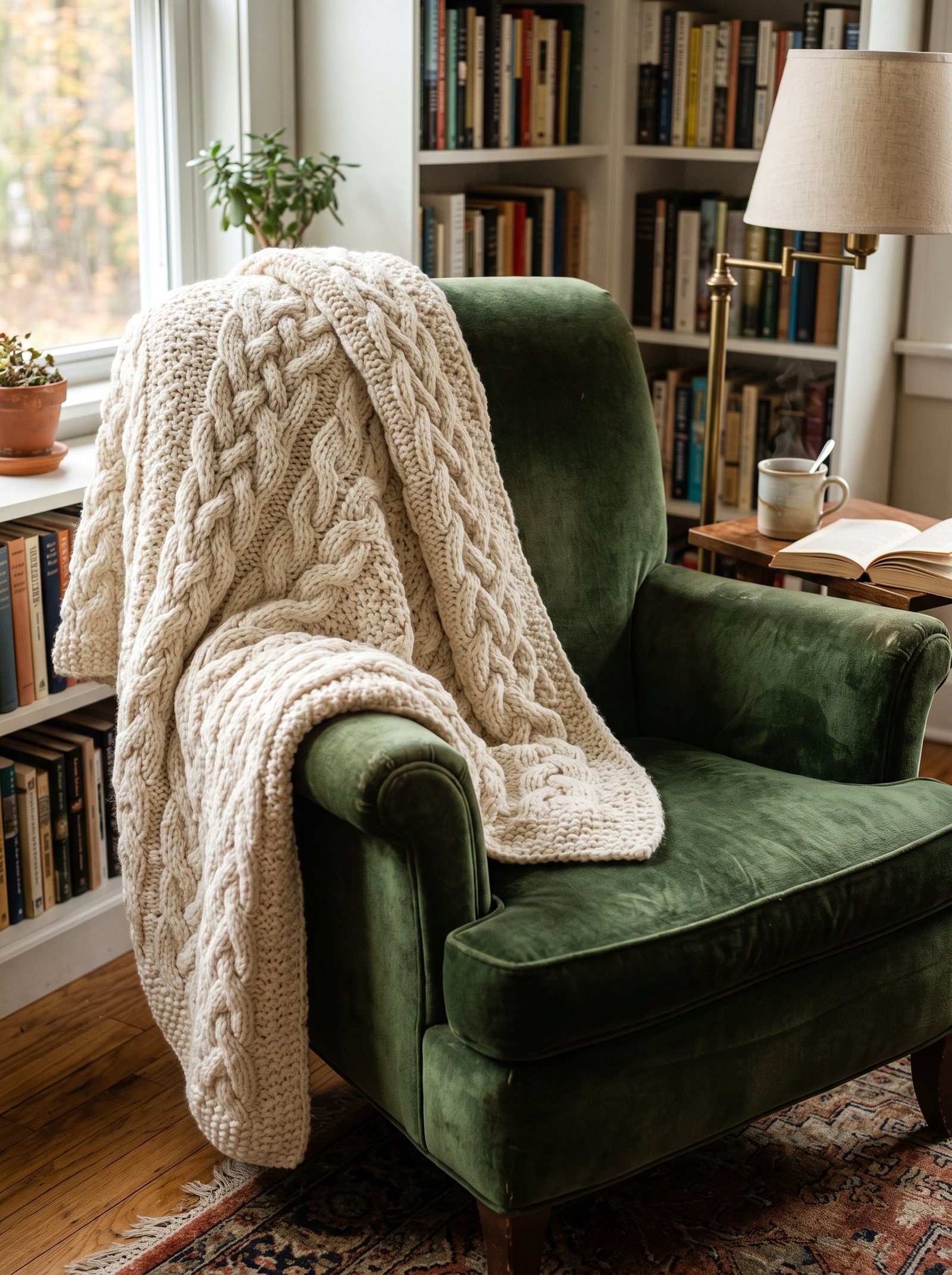
A large chunky knit or wool throw draped over the back of the chair (or folded on the seat) invites use. On cool days, wrap up in the throw for immediate warmth without needing to turn up the heat.
Choose cream, oat, or sage in cable knit, wool, or chunky boucle. Skip pure white throws (show every wear); choose muted warm tones that photograph beautifully.
The throw does triple duty: aesthetic warmth (visual coziness), thermal warmth (actual warm reading), and design layer (softens the chair’s edges).
5. Add a small basket for extra throws
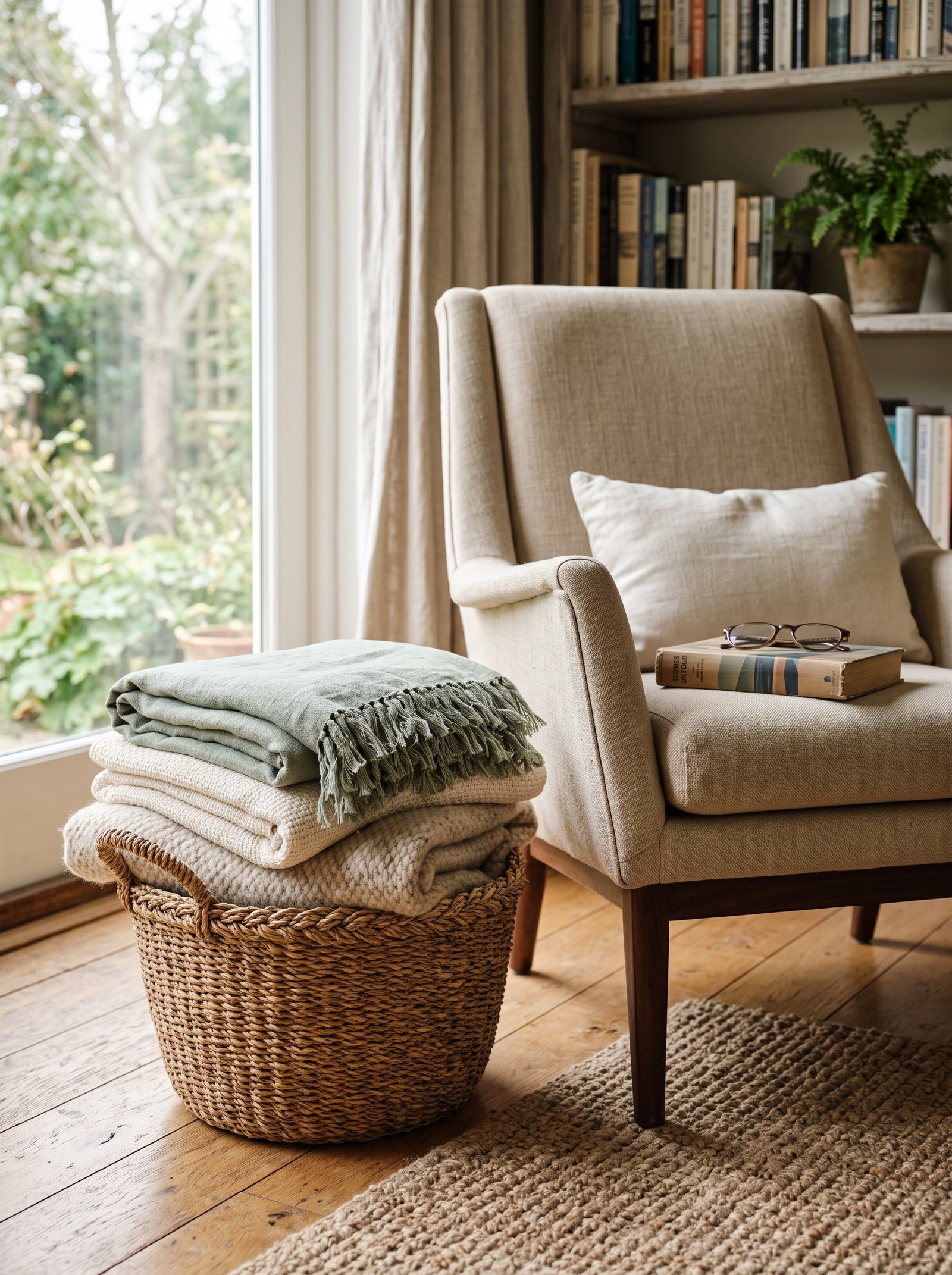
Beside the chair, a small woven basket filled with 2-3 folded throw blankets provides options for changing weather or moods. Cream boucle, oat wool, sage cable-knit—all together create the impression of a well-stocked reading retreat.
Choose warm seagrass, rattan, or cotton canvas baskets. Style with the throws overflowing slightly so the basket never looks empty even when all throws are in use.
Position the basket 12-18 inches beside the chair for easy reach. Kicking off a heavy throw for a lighter one mid-reading session becomes effortless.
6. Add a stack of favorite books within reach

Books stacked visible on the side table or on a small floor pile beside the chair signal “the reading happens here.” Choose books you actually love and might re-read—not just decorative-looking ones.
Rotate the stack seasonally. Spring poetry, summer novels, fall memoirs, winter thrillers. This subtle rotation keeps the nook feeling fresh throughout the year.
The stack also provides options when you sit down—pick up whichever mood suits the moment. Without a visible stack, you’d have to walk to a bookshelf across the room, which defeats the settle-in quality of the nook.
7. Add a warm-scented candle
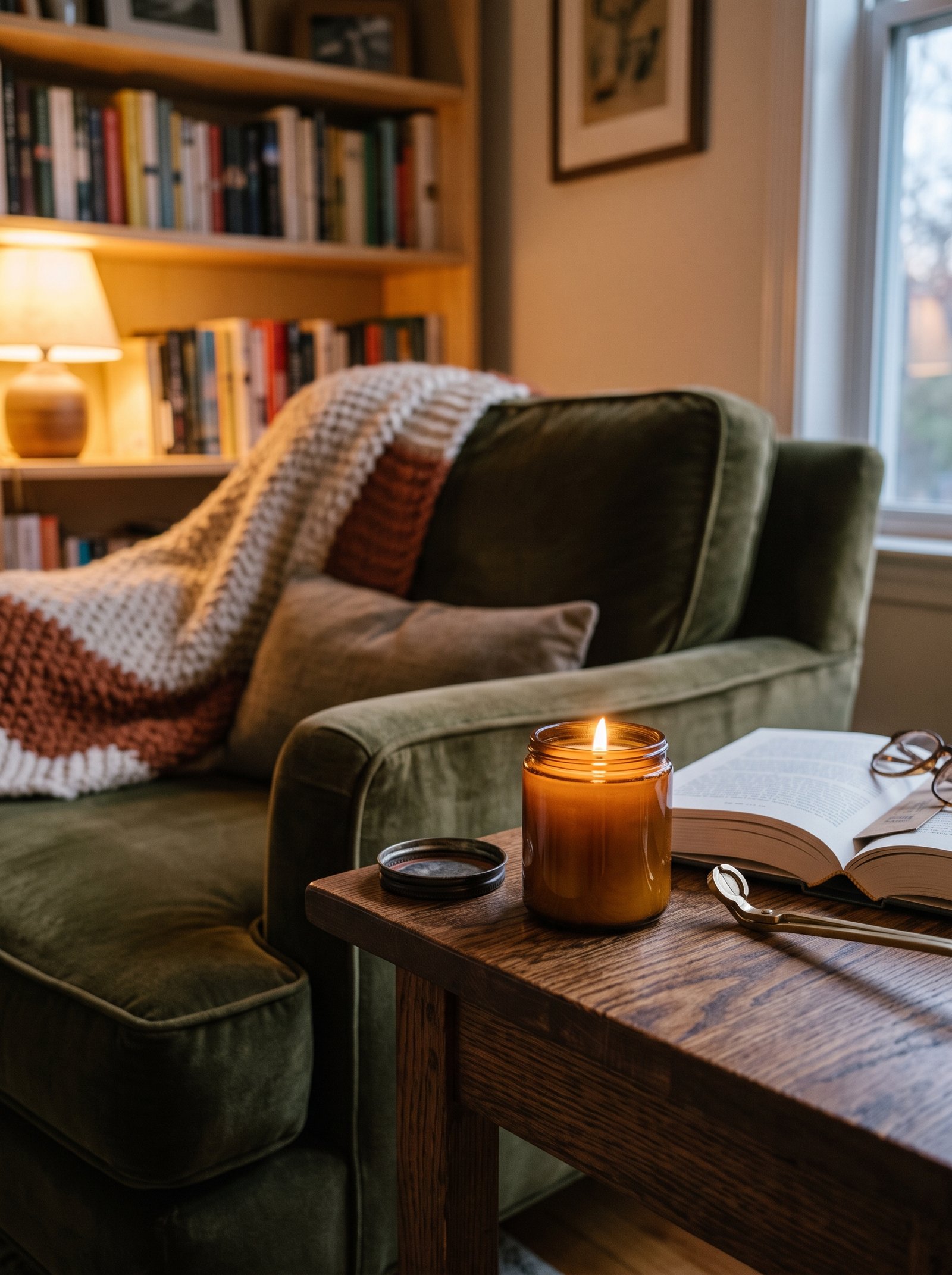
A small warm-scented candle beside the chair (on the side table, on the floor beside the throw basket) transforms the sensory experience of the nook. Warm scents help focus and signal “reading time” to your brain.
Choose cedar, sandalwood, warm vanilla, fig, or subtle spice scents. Skip overly floral or overly clean scents that fight with immersion in a book.
Light the candle for the first hour of your reading session. The subtle scent + soft flicker + warm light combine into an immersive sensory environment.
8. Add a soft rug underfoot
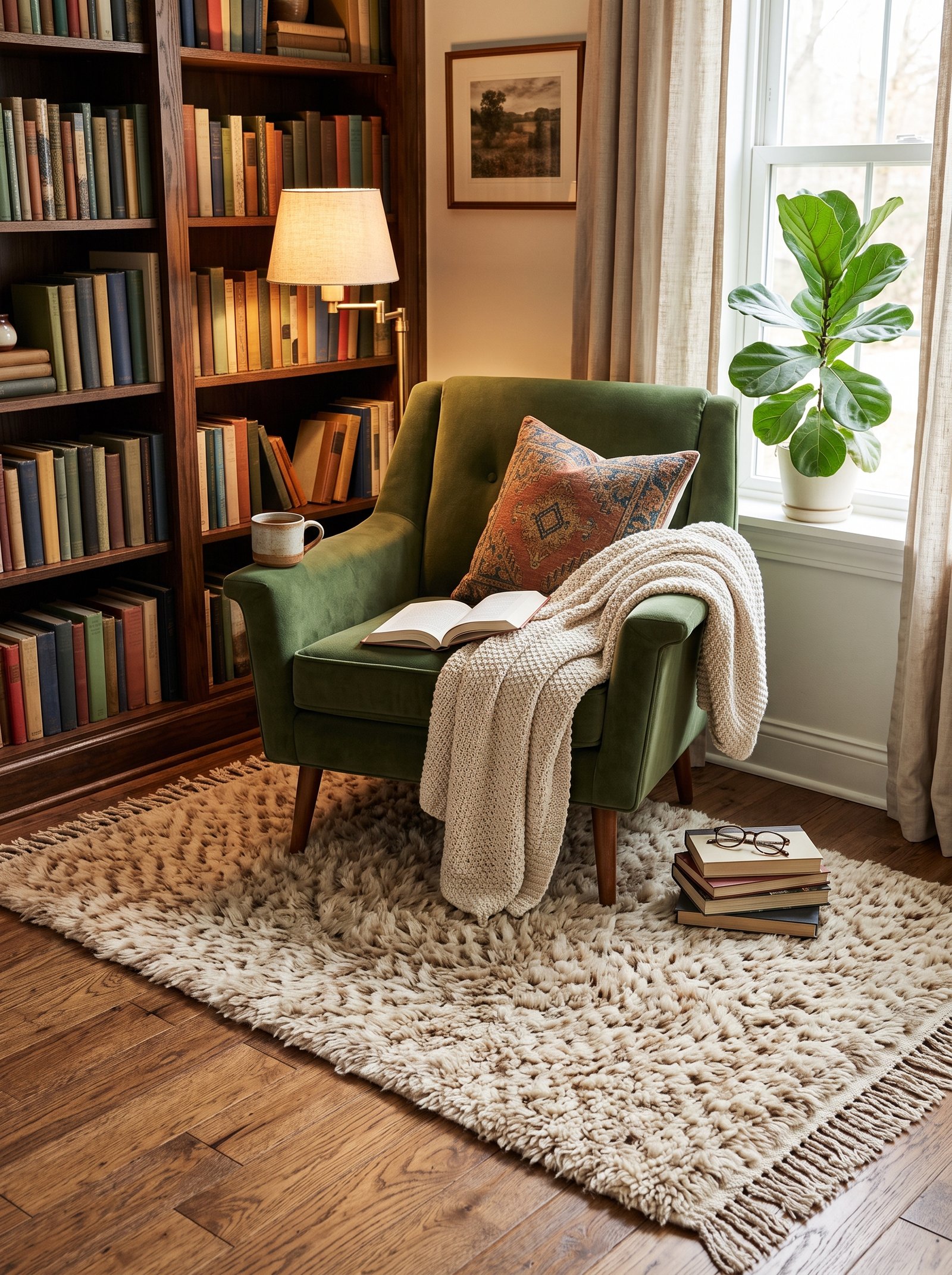
A small area rug (2×3 or 3×5) directly under and around the chair defines the nook zone and adds warmth underfoot. Choose plush wool or a soft sheepskin for maximum sensory comfort.
The rug creates a visual boundary that reads as “this is its own zone,” even in the middle of a larger room. The eye sees the rug and reads the vignette as separate from surrounding decor.
Layer over an existing larger rug for extra depth. Layered rugs are a designer staple and add richness to any spot.
9. Add a small footstool or ottoman
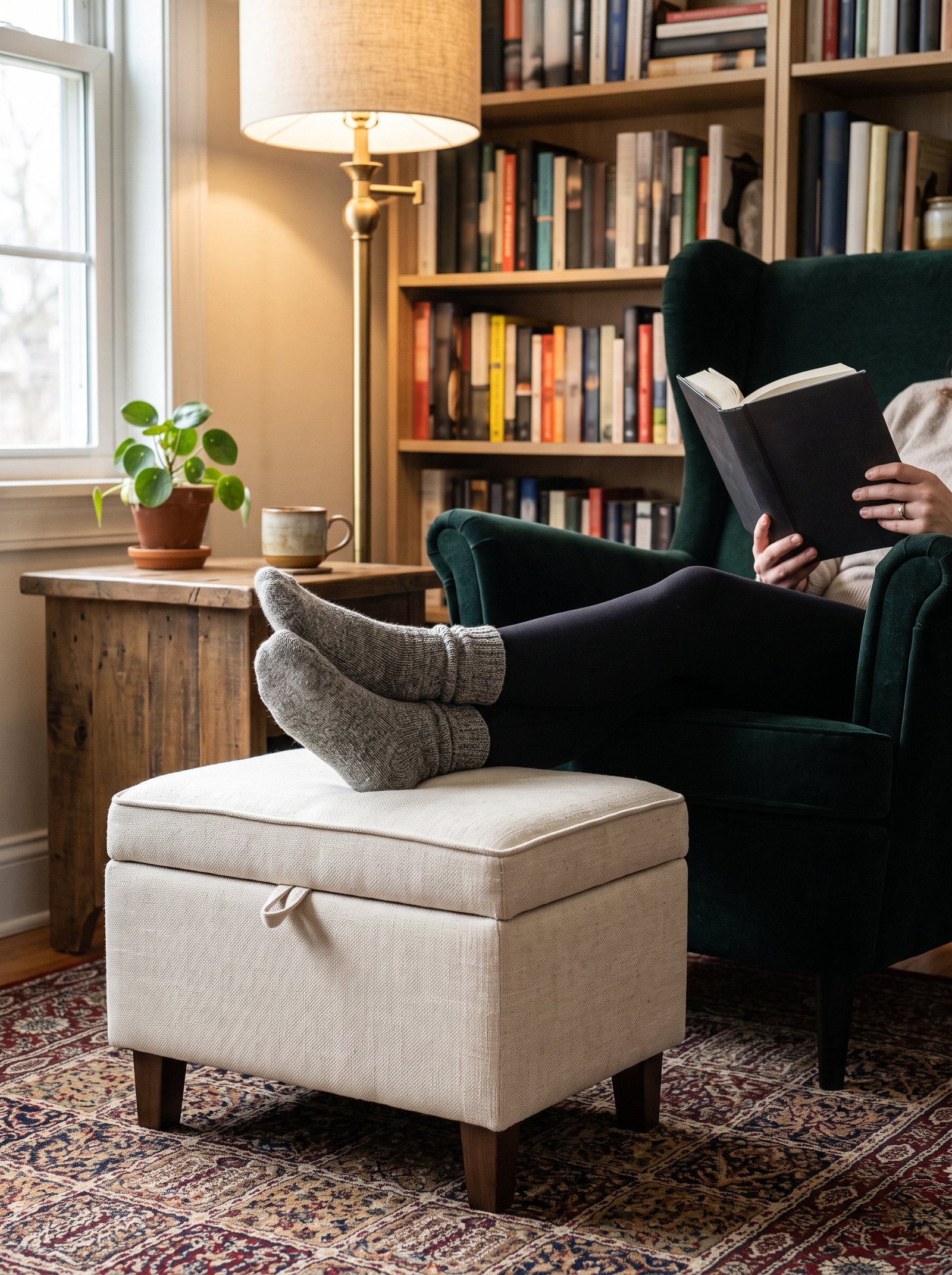
A small footstool or ottoman in front of the chair invites lifted feet during long reading sessions. Physical comfort translates directly to how long you’ll actually stay in the nook.
Choose an upholstered footstool in matching fabric to the chair (or a coordinating warm neutral). Amazon and West Elm sell small footstools for $80-200.
For extra function, choose a storage ottoman with lift-up top—store extra blankets, current-read books, or reading glasses inside. Multi-function pieces earn their space.
10. Build a nook in a bay window
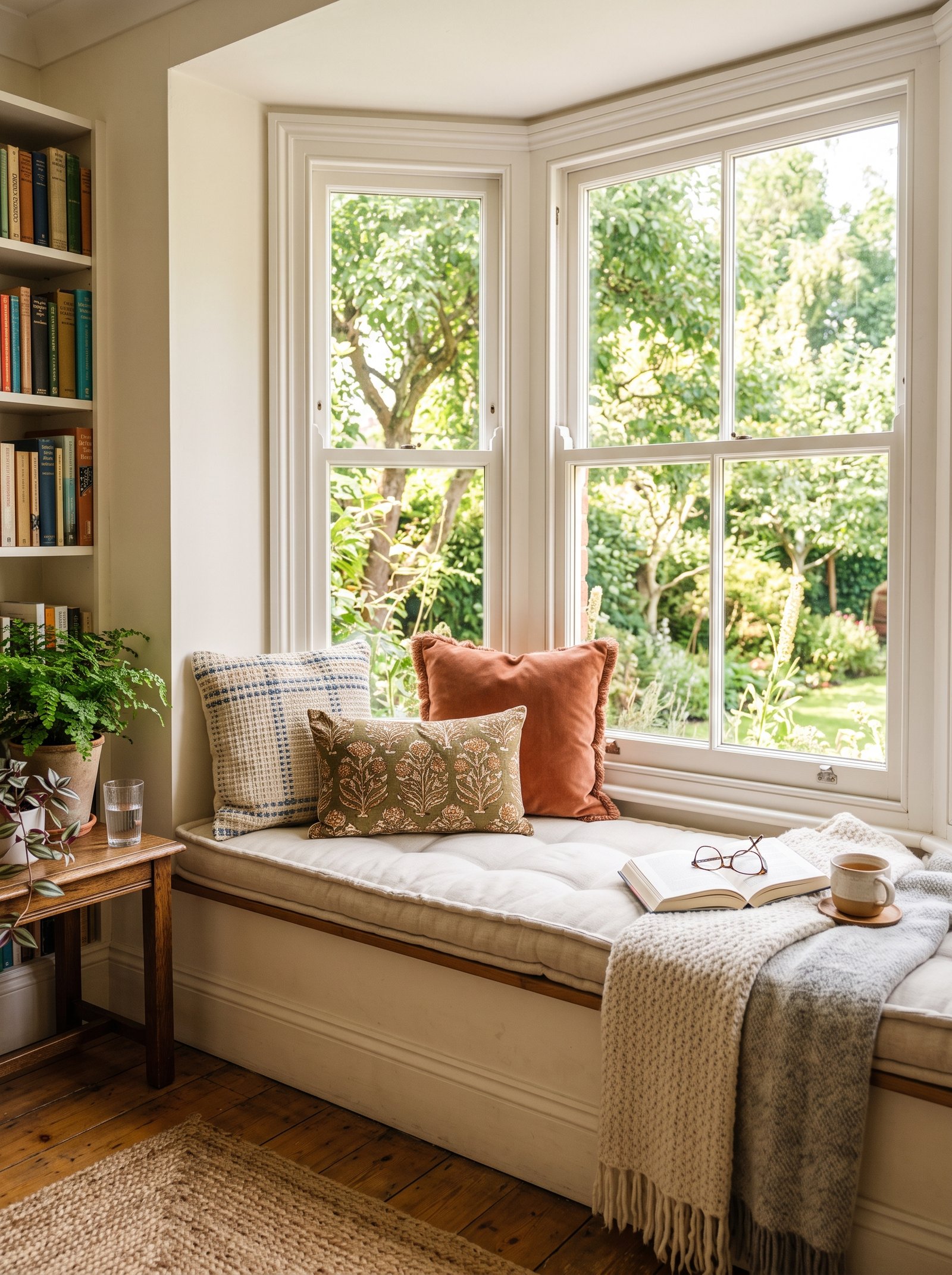
A bay window is the perfect natural reading spot—natural light for daytime reading, view for eye rest, built-in seating potential. Add cushions and pillows on the window seat for immediate coziness.
For rentals or homes without existing window seats, add a small bench with cushion under the bay window. Same visual effect without construction.
Warm cream or oat cushions with 2-3 accent pillows create the classic “bay window reading” vignette. Style with a small throw draped and a small side table nearby.
11. Build a nook in a closet conversion
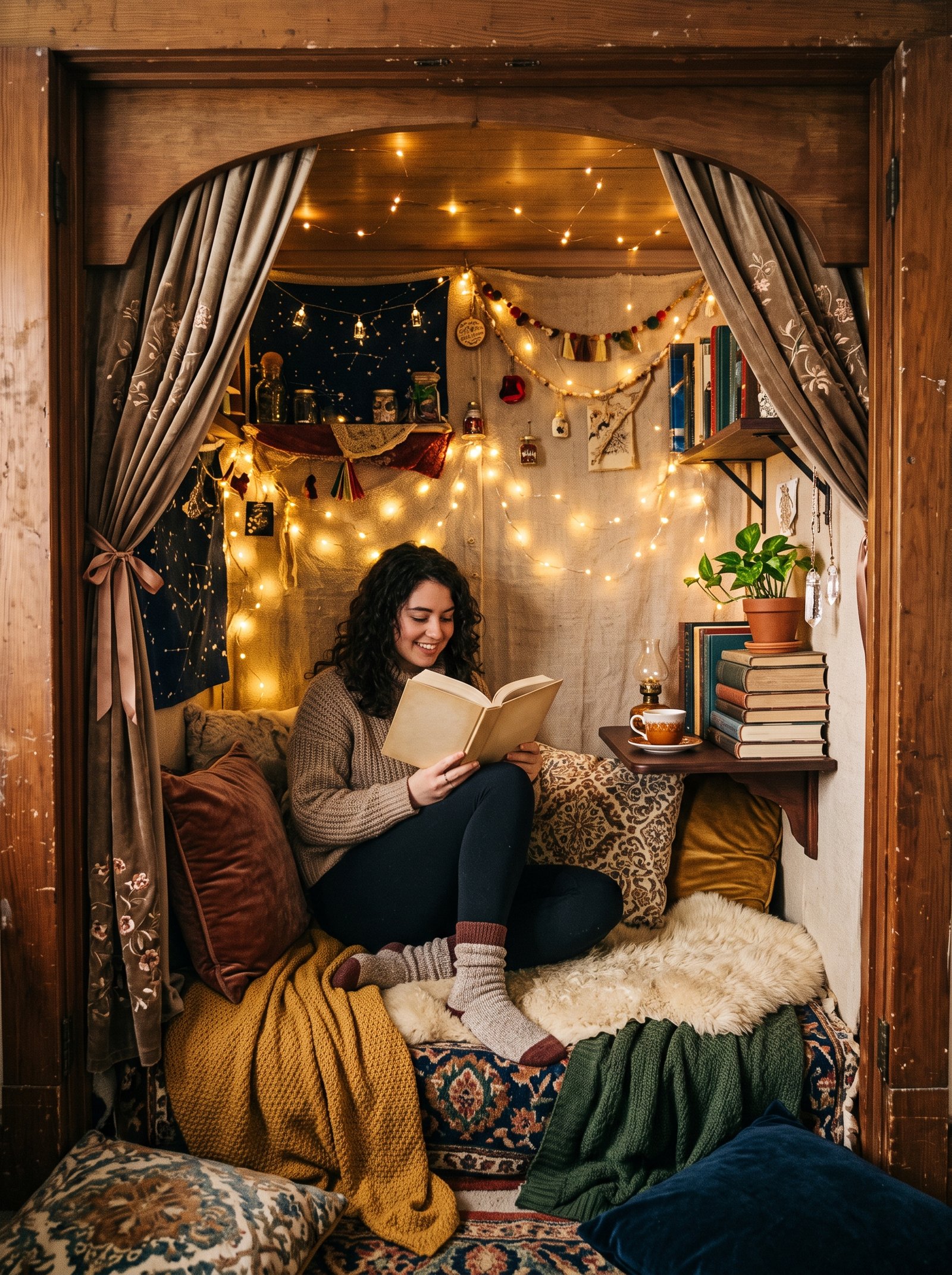
A small unused closet can convert into a magical enclosed reading nook. Remove the door, add cushions on the floor, string warm fairy lights along the ceiling, install a small floating shelf for books.
This works especially well for kid reading nooks—the enclosed space feels magical and secret. Adult versions with better lighting and adult-scale cushions work equally well.
The enclosed nook feels like a small retreat within the home—somewhere to disappear for an afternoon without leaving the house.
12. Build a nook under stairs
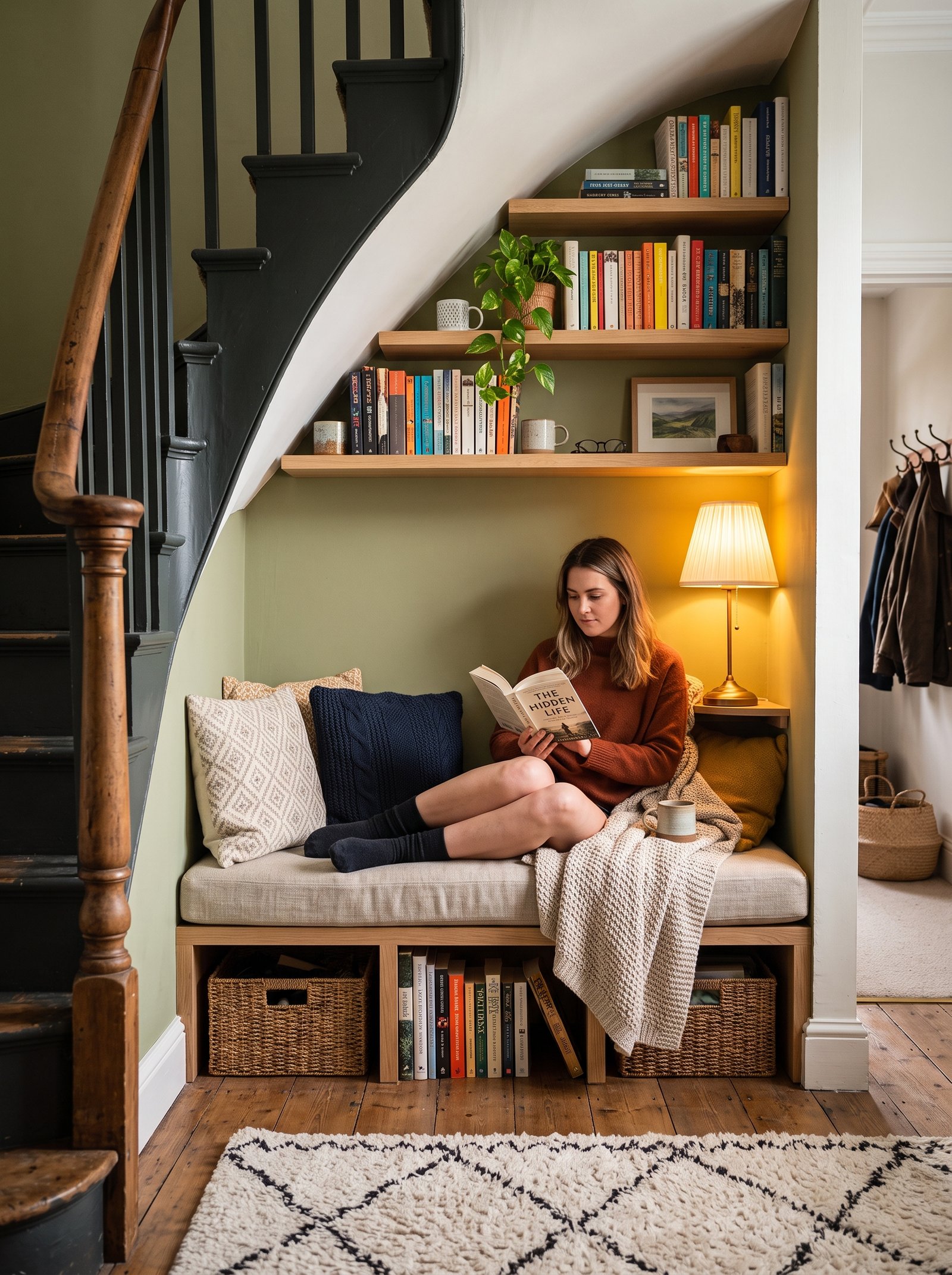
The angled space under stairs in older homes is often wasted. Convert to a small reading nook with a bench cushion, floating shelves for books, a small warm lamp, and a soft rug.
The sloped ceiling adds architectural character that feels almost cave-like—perfect for a cozy reading retreat. Paint the interior in a warm color to enhance the enveloping feeling.
For rentals, use a small chair positioned under the stairs rather than built-ins. The location itself provides the “tucked away” feeling.
13. Add wall-mounted or floating bookshelves
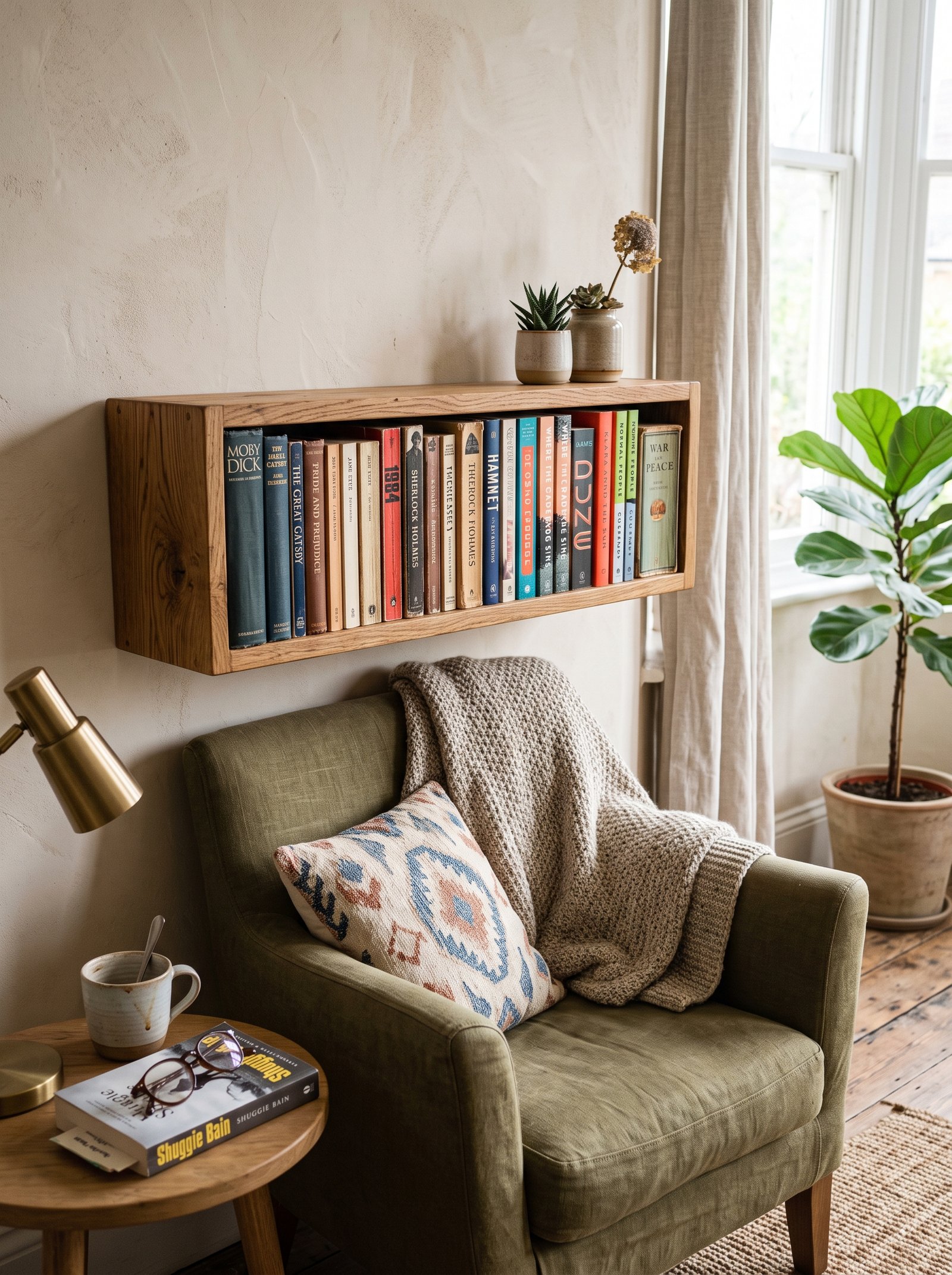
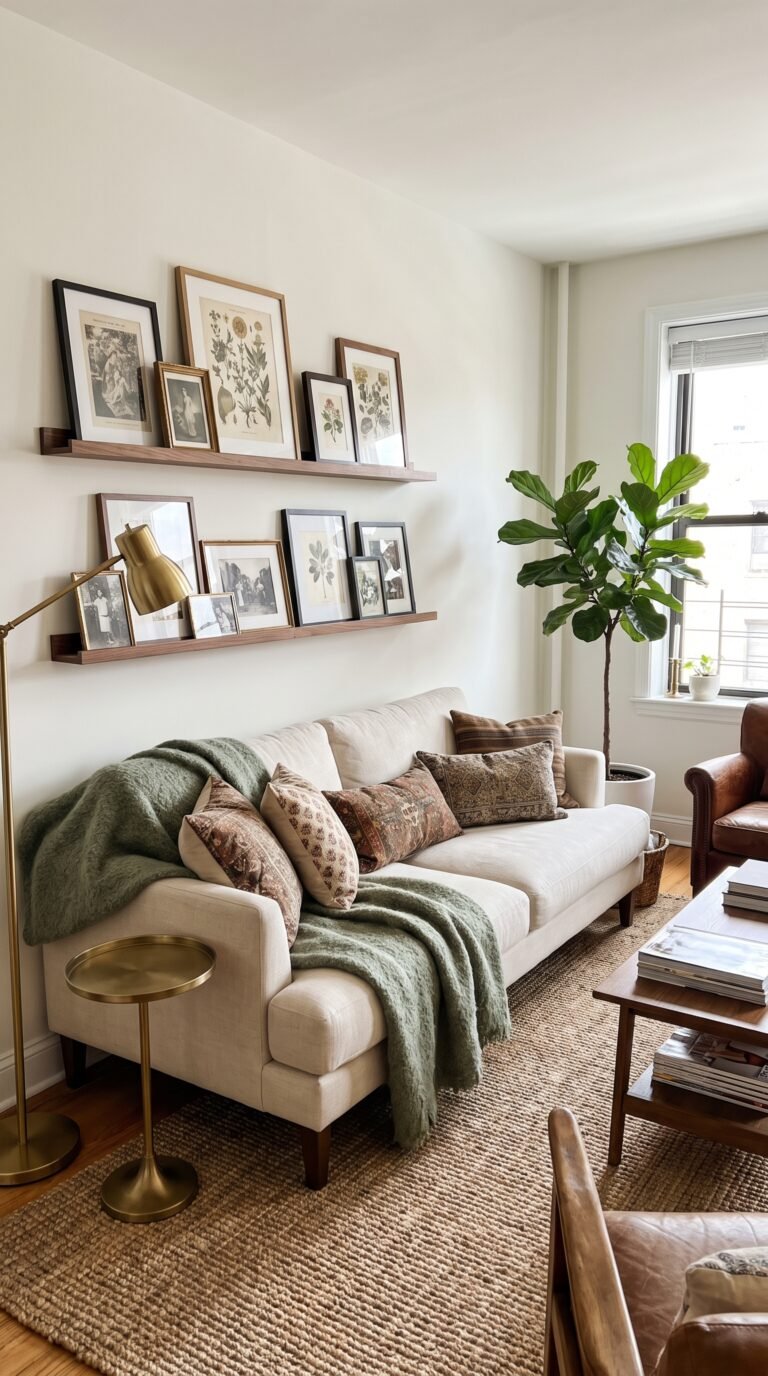
A small wall-mounted bookshelf or floating shelf near the reading chair holds current-read books, favorite classics, and a rotating small library. The books become part of the nook’s design.
Style shelves in a mix of vertical and horizontal book placement—all vertical reads as a store; mix creates visual interest. Add small objects between books (small plant, ceramic vessel) for design breaks.
The shelves also serve as easy access—no need to walk across the room to grab another book when the current one is finished. Everything reading-related lives in the nook.
14. Add layered lighting for evening reading
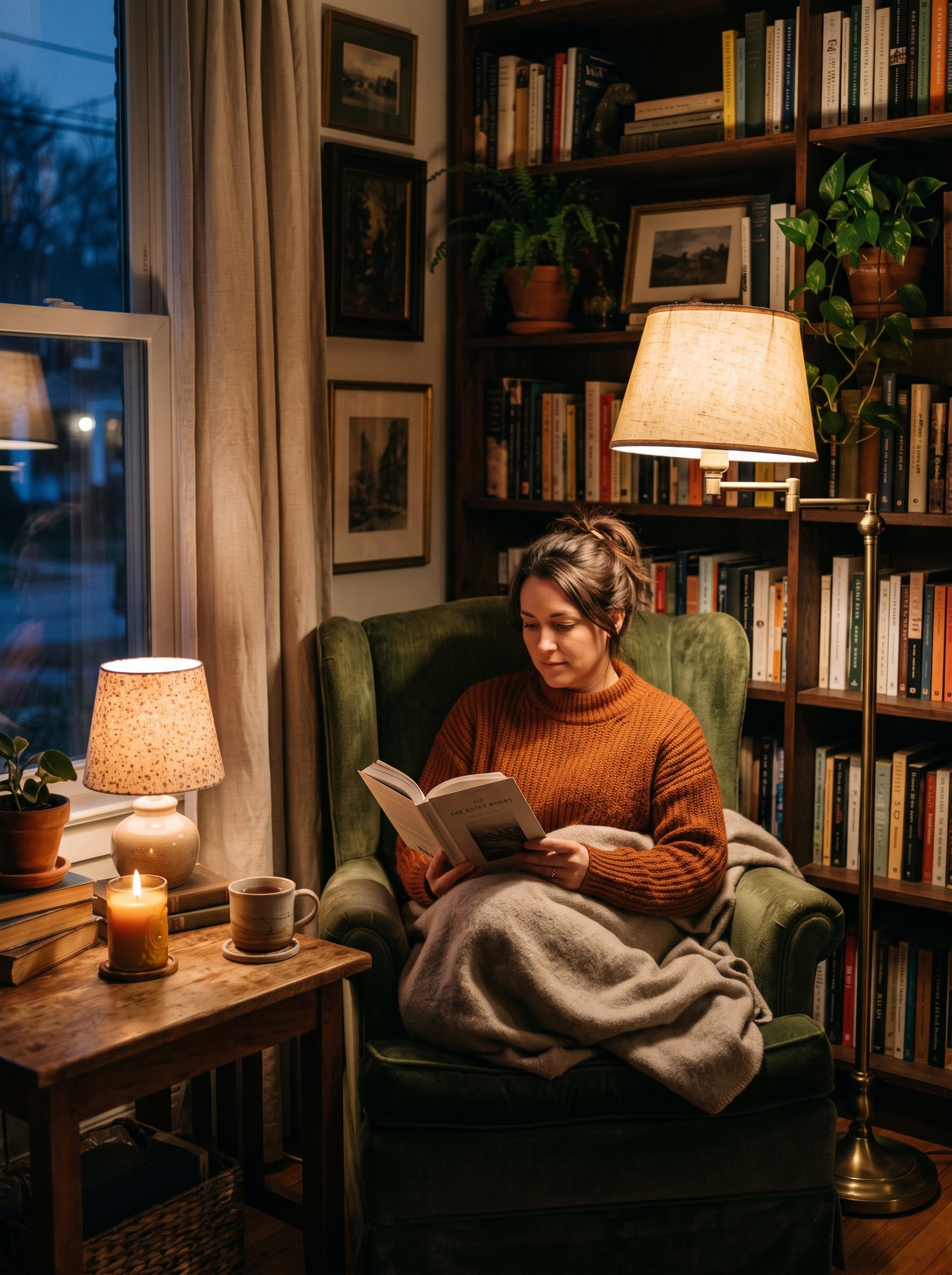
One task lamp alone isn’t enough for atmospheric evening reading. Add a floor lamp, a table lamp, and a warm candle for three-point lighting that’s functional and beautiful.
Layered warm lighting eliminates harsh shadows that strain eyes during long sessions. The candle provides ambient warmth; the lamps provide reading-focused light.
Turn off the overhead room light entirely when using the nook. The nook’s own light layers create the intimate environment; overhead room lighting destroys it.
15. Design for zero interruptions

A great reading nook is a phone-free, TV-free, notification-free zone. The physical setup matters, but the mental commitment to disconnect makes the nook work.
Position the nook in a spot away from busy household traffic and out of TV or work-computer line of sight. If possible, in a room that’s not the main entertainment space.
Leave the phone in another room during reading sessions. The whole point of the nook is deep, uninterrupted attention to the book—not competing with digital distractions.
A cozy reading nook is one of those home features that pays back many times over the small investment it takes to create. An afternoon spent reading in a well-designed nook is one of the small daily luxuries that makes a house feel like a genuine home—not just a place to eat and sleep.
Start with the chair, the task lamp, and the side table. Those three foundational pieces are the whole nook. Add the throw basket, book stack, and candle next. Layer in the smaller styling touches (rug, footstool, floating shelf, wall-mounted lamp) over the following weeks. In under a month, an unused corner transforms into the most-loved spot in the entire house.