

30 Modern Farmhouse Kitchen Ideas That Age Better Than Trends
Twenty-five modern farmhouse kitchen ideas that age better than trends — cream Shaker cabinets, aged brass hardware, honed marble, apron sinks, open oak shelves, and the small styling details that separate authentic farmhouse character from fleeting Instagram trends.
Modern farmhouse style has been accused of being a passing trend, but the underlying elements — Shaker cabinets, apron sinks, warm wood tones, aged brass hardware — have been timeless for over 100 years. The “modern” part is just the simplification: fewer frills, cleaner lines, less clutter.
This guide is twenty-five specific modern farmhouse kitchen ideas that have genuinely aged well through decades of design history. Each is chosen for timelessness rather than trendy appeal. Follow them and your kitchen looks beautiful today, in 10 years, and in 50 years.
1. Cream Shaker cabinets (never pure white)

The foundation of every modern farmhouse kitchen is cream (not pure white) Shaker-style cabinet doors. Pure white reads cold and clinical. Cream reads warm, timeless, and ages beautifully for decades.
Sherwin-Williams Alabaster, Benjamin Moore White Dove, and Farrow & Ball Pointing all read cream and work in both north- and south-facing kitchens.
Shaker-style doors (flat center panel, simple frame) are the single most timeless cabinet style — classic since the 1800s and modern since the 2010s. They will never go out of style.
Choose soft-close hinges and drawers — the small daily luxury adds up over years of use.
Cream Shaker cabinets paired with warm oak or walnut accents is the single most “modern farmhouse” combination in design. Timeless, warm, and photographs beautifully in any light.
2. Install a white apron-front (farmhouse) sink
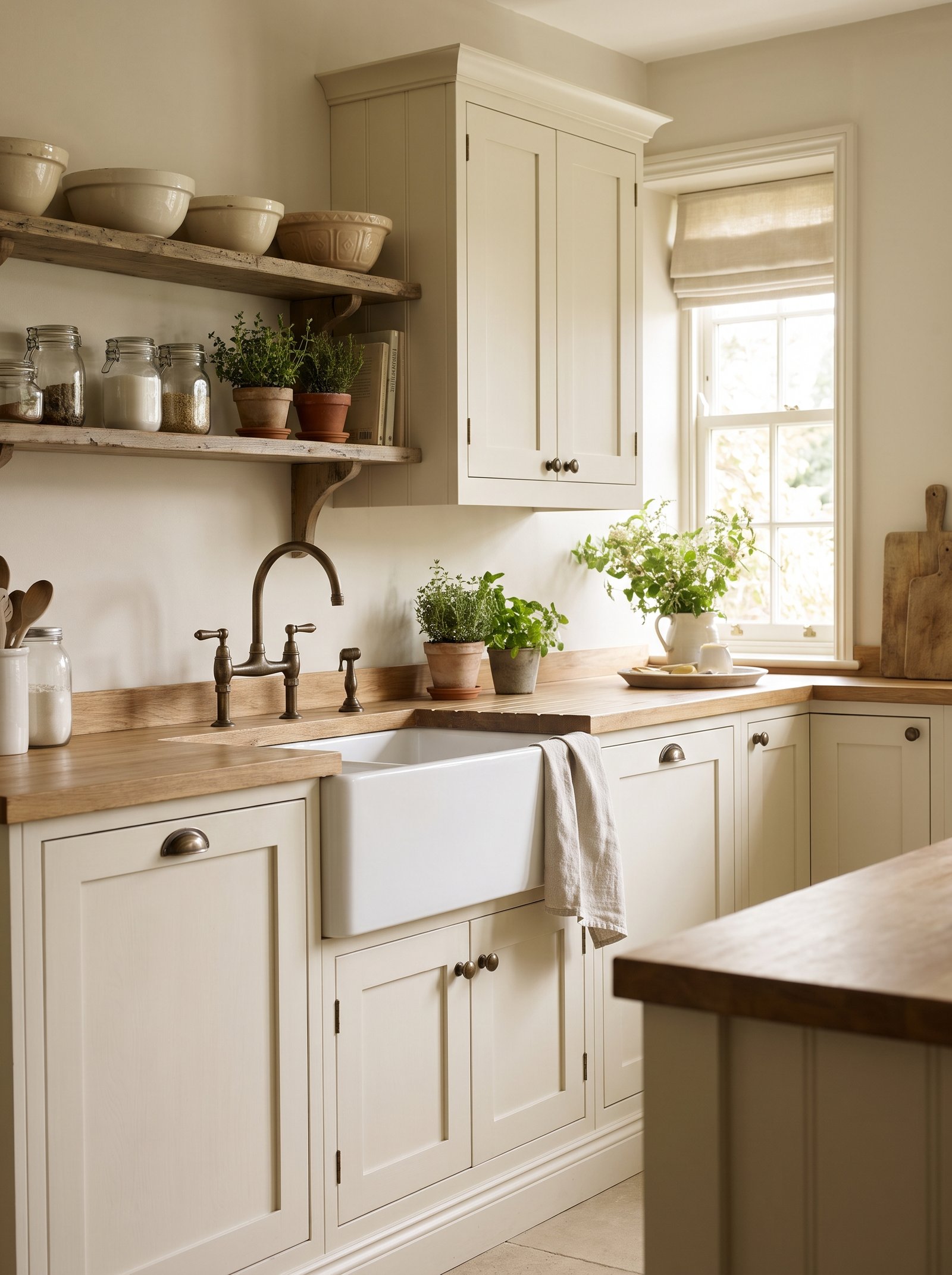
The single most character-defining fixture in a farmhouse kitchen is the apron-front sink. The deep single basin + exposed front = instant modern farmhouse character.
Kohler, Signature Hardware, and Ferguson all sell fireclay apron sinks in the $300-900 range. White or cream fireclay reads timeless.
Choose a single large basin (24-33 inches wide) — fits sheet pans, large pots, and makes daily cleanup easier than divided basins.
Pair with an aged brass or matte black pull-down faucet. The combination reads warm farmhouse rather than cold modern.
This one fixture change can transform a generic kitchen into a modern farmhouse kitchen more than any other single upgrade.
3. Add open wood shelves instead of upper cabinets
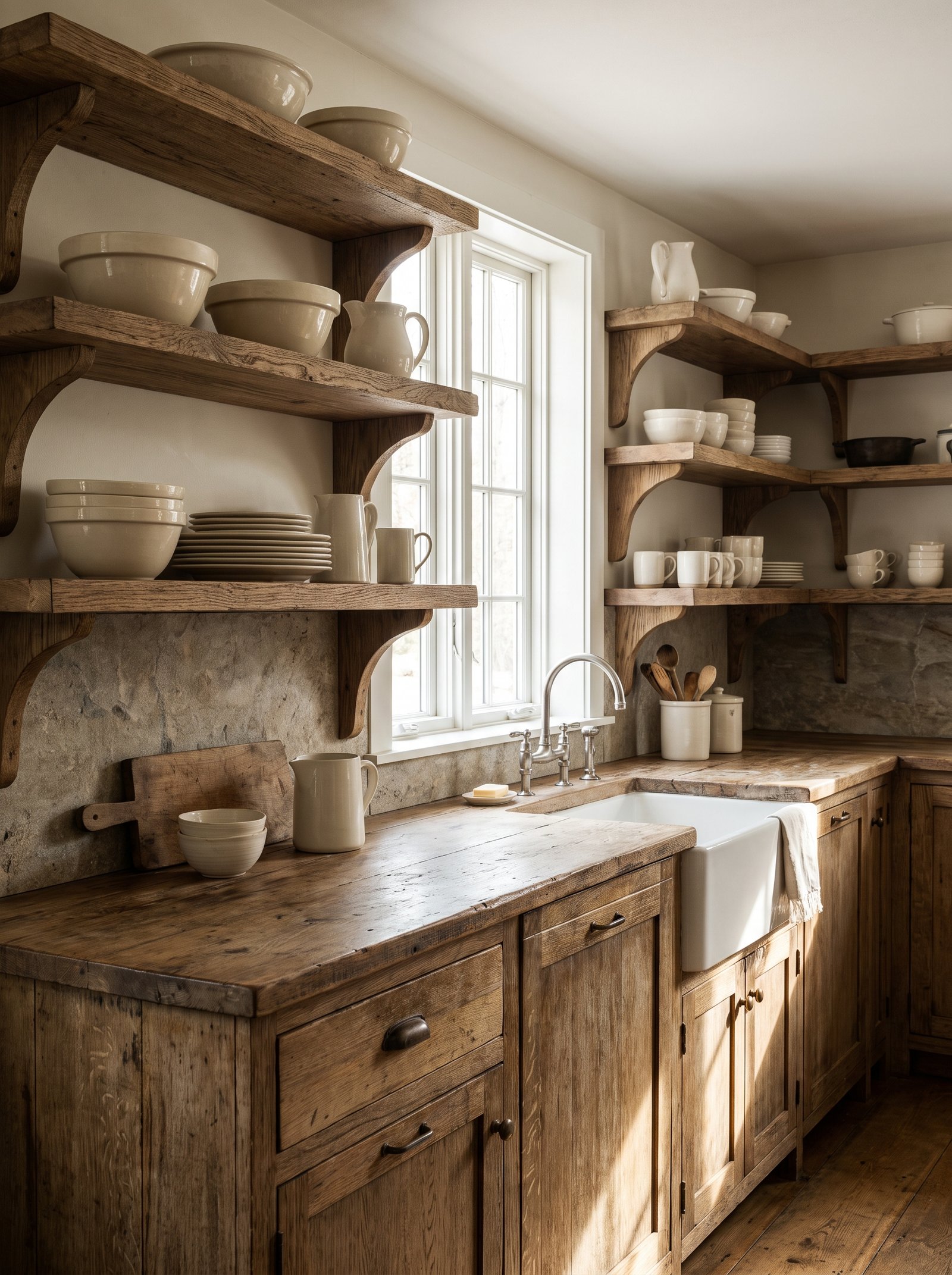
Replacing one bank of upper cabinets with open oak or walnut shelves creates the airy, lived-in feel that modern farmhouse kitchens are known for.
Choose 1.5-2 inch thick solid oak or walnut shelves 10-12 inches deep. Mount with heavy-duty L-brackets or steel floating hardware rated for 40+ lbs each.
Style with cream ceramics, matching mugs, cookbook stacks, and one small plant. Daily-use items only — never decorative knick-knacks.
The exposed wood warms the whole cream color palette and signals “this kitchen is lived in.”
Even one wall of open shelves (not all four) achieves the look without losing all upper storage.
4. Choose an aged brass pull-down faucet

The faucet is the jewelry of the kitchen. An aged brass or warm bronze pull-down faucet in a Shaker-style kitchen reads instantly timeless and sophisticated.
Kohler, Delta, and California Faucets all make aged brass pull-down faucets in the $200-700 range. “Living finish” versions develop a patina over time that looks even better.
The pull-down sprayer is the modern functional upgrade — essential for washing produce, cleaning the sink, and filling pots.
Pair with a matching aged brass soap dispenser mounted on the sink deck for a complete look.
Aged brass warms the whole kitchen palette. Chrome or stainless reads modern-clinical by comparison.
5. Install a honed marble island counter
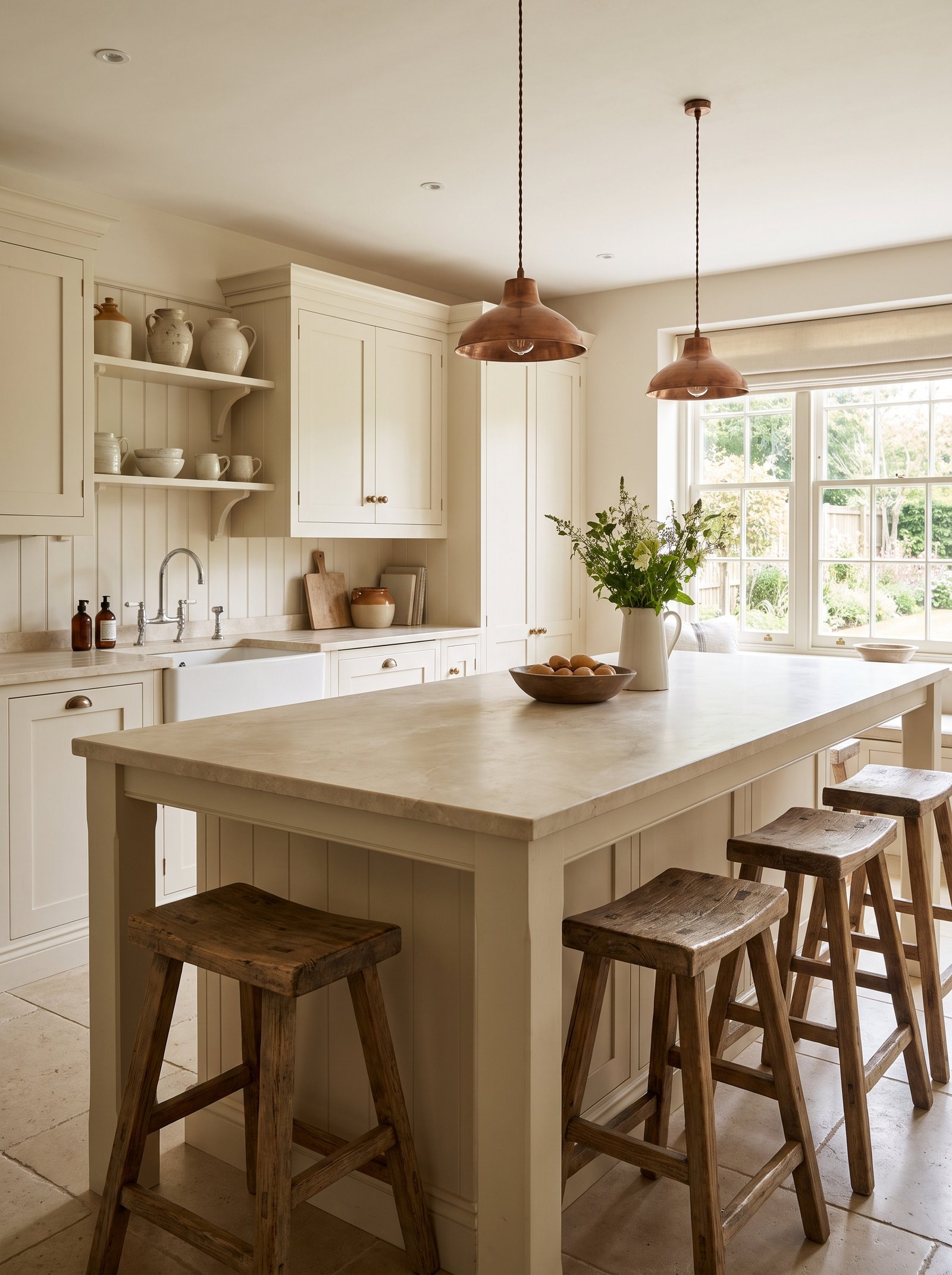
A honed (matte-finish) marble slab counter on the island is the character-defining luxury upgrade of a modern farmhouse kitchen.
Carrara or Cambria in honed finish runs $60-120/sq ft installed. A 6-foot island with a 2.5-foot overhang needs about 20 sq ft.
Honed finish (not polished) is more forgiving of stains, develops character over time, and reads warmer than glossy marble.
Pair with cream Shaker cabinets below for a classic farmhouse combination that photographs beautifully.
Expect to re-seal honed marble every 6-12 months. The patina it develops is the whole point.
6. Hang woven rattan pendants over the island

Woven rattan, seagrass, or wicker pendant lights hung over the kitchen island add warm texture and read instantly modern farmhouse.
Serena & Lily, Pottery Barn, and West Elm all sell woven pendants in the $200-600 each range. Three identical pendants over a 6-8 foot island.
Hang the bottoms of the pendants 30-36 inches above the island counter — low enough to light the surface without blocking sight lines.
Combine with 2700K warm bulbs for golden light that filters through the woven material and casts beautiful shadows on the ceiling.
One single large pendant also works if you prefer less visual repetition. Choose based on your island size.
7. Add a classic subway tile backsplash
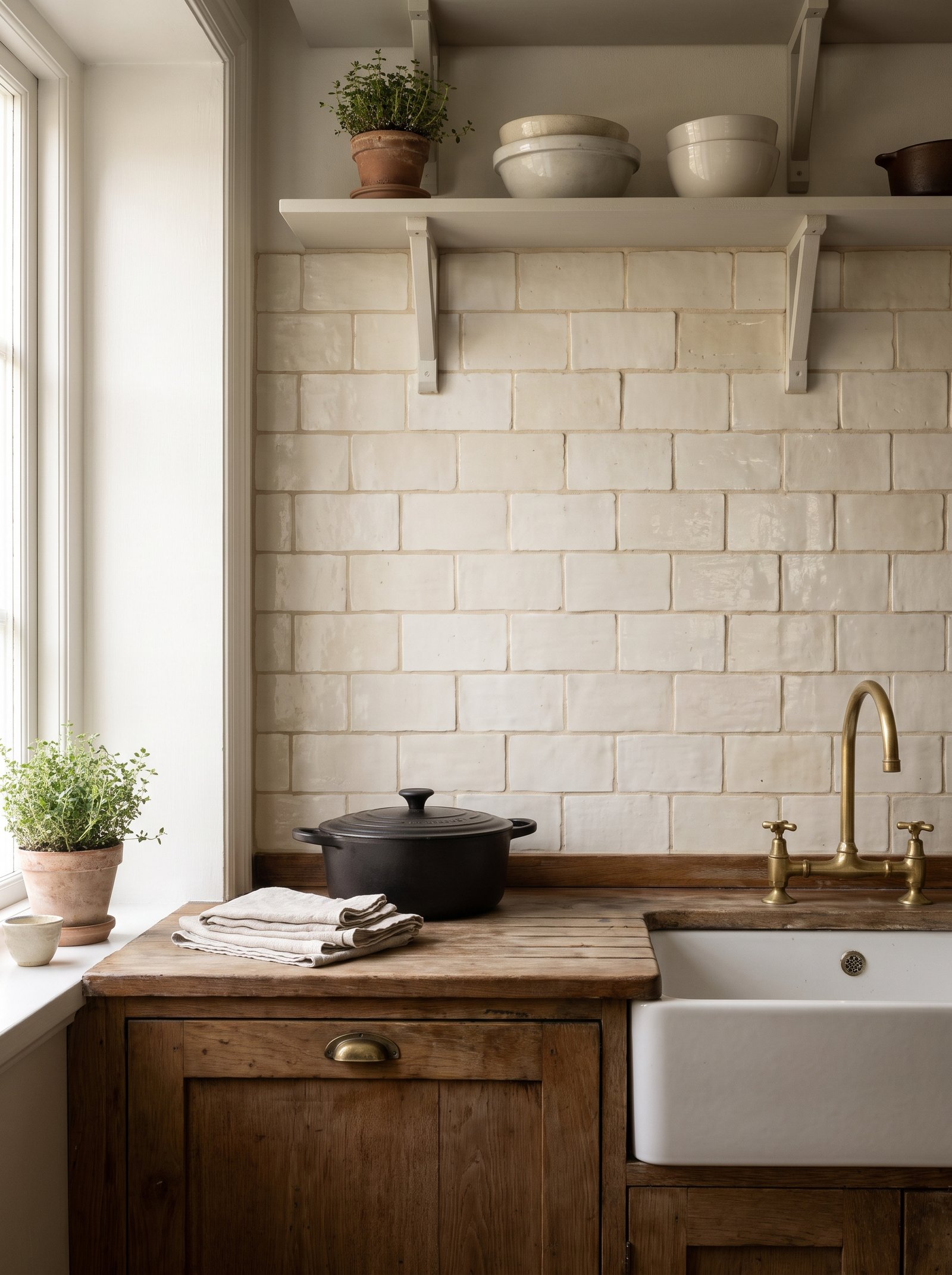
White or cream subway tile (3×6 or 4×8 inch rectangles) is the single most timeless backsplash choice. Classic since 1904 and still perfect today.
For modern farmhouse specifically, choose matte or satin finish subway tiles (not glossy) and dark cream grout instead of stark white.
Install in a classic brick pattern (offset by half) rather than stacked for timeless appeal.
Full backsplash height (counter to upper cabinets) reads intentional. Partial backsplash reads unfinished.
$3-8 per sq ft for the tile. Pair with the apron sink and aged brass faucet for a complete farmhouse look.
8. Choose an oak-stained island to contrast cream cabinets

A warm oak or walnut-stained island counter under honed marble (or butcher block) creates character-defining contrast against cream perimeter cabinets.
Natural oak reads warmest; walnut reads richest. Both pair beautifully with cream.
The two-tone (cream perimeter + wood island) is the signature modern farmhouse layout. One wood piece makes the whole kitchen read warmer.
Finish with aged brass hardware on both the cream cabinets and the oak island for consistency.
Adding one oak piece in a cream kitchen prevents the overall look from reading too monochromatic.
9. Add bistro-style bar chairs at the island
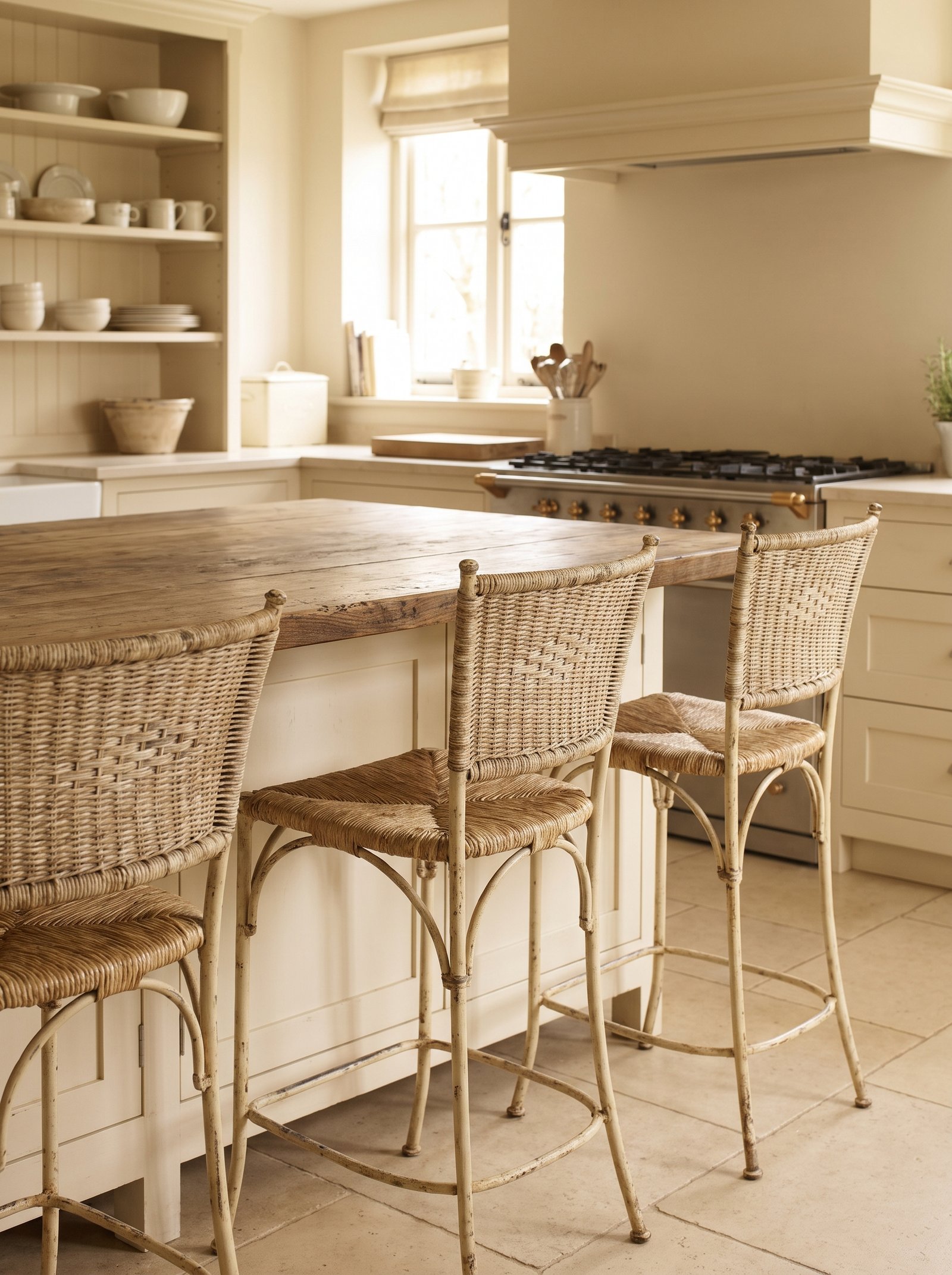
Metal or wooden bistro-style bar chairs at the island add French-country character without over-styling.
Look for aged brass, matte black, or warm oak bistro stools. Target Studio McGee, World Market, and Etsy sell them in the $80-250 each range.
Choose counter height (25-26 inches) or bar height (29-30 inches) based on your island.
Three chairs along a 6-foot island; four along an 8-foot island. Even spacing is key.
The slender metal frame + wooden seat reads French bistro, which pairs perfectly with the modern farmhouse aesthetic.
10. Expose wooden ceiling beams

If your home allows (or if you can add decorative beams), warm oak or walnut ceiling beams add character and warmth to a modern farmhouse kitchen.
Real exposed beams are the ideal — if your ceiling allows, consult a contractor.
Decorative beams (hollow boxes made of oak or walnut) mount to the ceiling with brackets and achieve the same look for a fraction of the cost. $100-400 per beam.
Three parallel beams across a standard kitchen ceiling is the classic look. Spacing 4-6 feet apart.
Pair with a cream painted ceiling between the beams for maximum contrast and warmth.
11. Replace blinds with linen roman shades
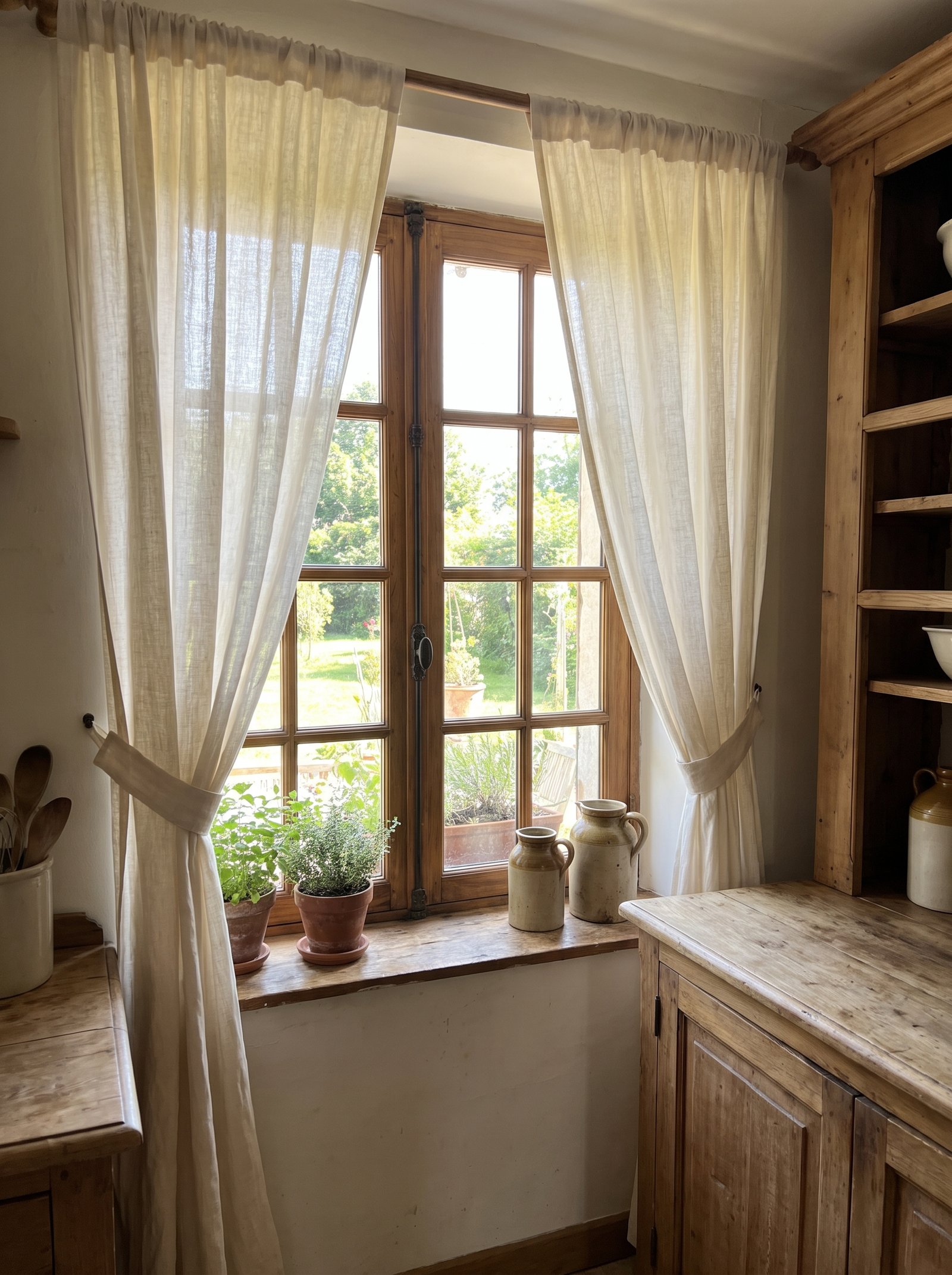
Plastic or vinyl blinds in a farmhouse kitchen are a mismatch. Natural linen roman shades or cafe curtains over kitchen windows read instantly more intentional.
Blindster, Everhem, and Levolor all make custom linen roman shades in the $100-350 per window range.
Cream or warm flax linen filters light beautifully while maintaining privacy.
Mount inside the window frame for a clean look. Cordless is safer around cooking areas.
This one small window upgrade elevates the whole kitchen immediately.
12. Design an open pantry with wicker basket storage

A dedicated open pantry (either a walk-in or a floor-to-ceiling cabinet with the doors removed) styled with matching wicker baskets and glass jars reads instantly modern farmhouse.
Open shelving with 6-10 matching wicker baskets labeled with chalk or wood tags creates functional storage that doubles as decor.
Decant dry goods (flour, sugar, rice, pasta, coffee beans) into matching glass jars with wooden lids for a styled pantry look.
Add a small chalkboard or wooden sign at the top of the pantry for personality.
This look signals “I cook from scratch” even if the owner mostly orders takeout.
13. Style the counter with fresh bread and a cutting board
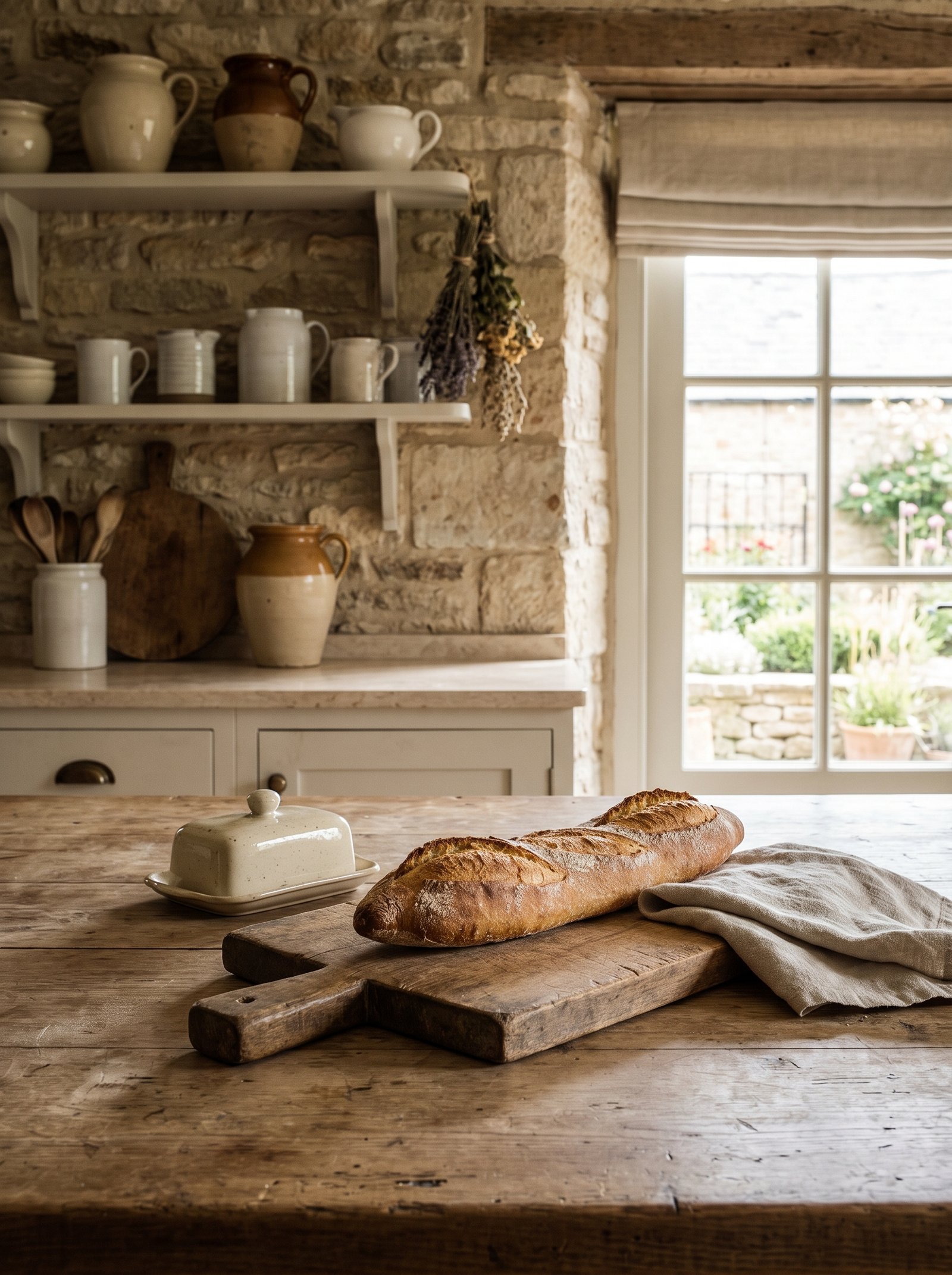
A fresh baguette or round loaf on a wooden cutting board, left out on the counter, is one of the quietest luxuries of a modern farmhouse kitchen.
Choose a solid wood cutting board — walnut, maple, or oak — in a size that feels intentional (12×18 inches or larger).
Fresh bread wrapped in a linen tea towel reads French-country beyond measure.
Even if the bread is from the grocery store, the display reads farmhouse-authentic.
Change the display with seasons: baguette in summer, round sourdough in winter, braided challah for holidays.
14. Add a ceramic olive oil cruet
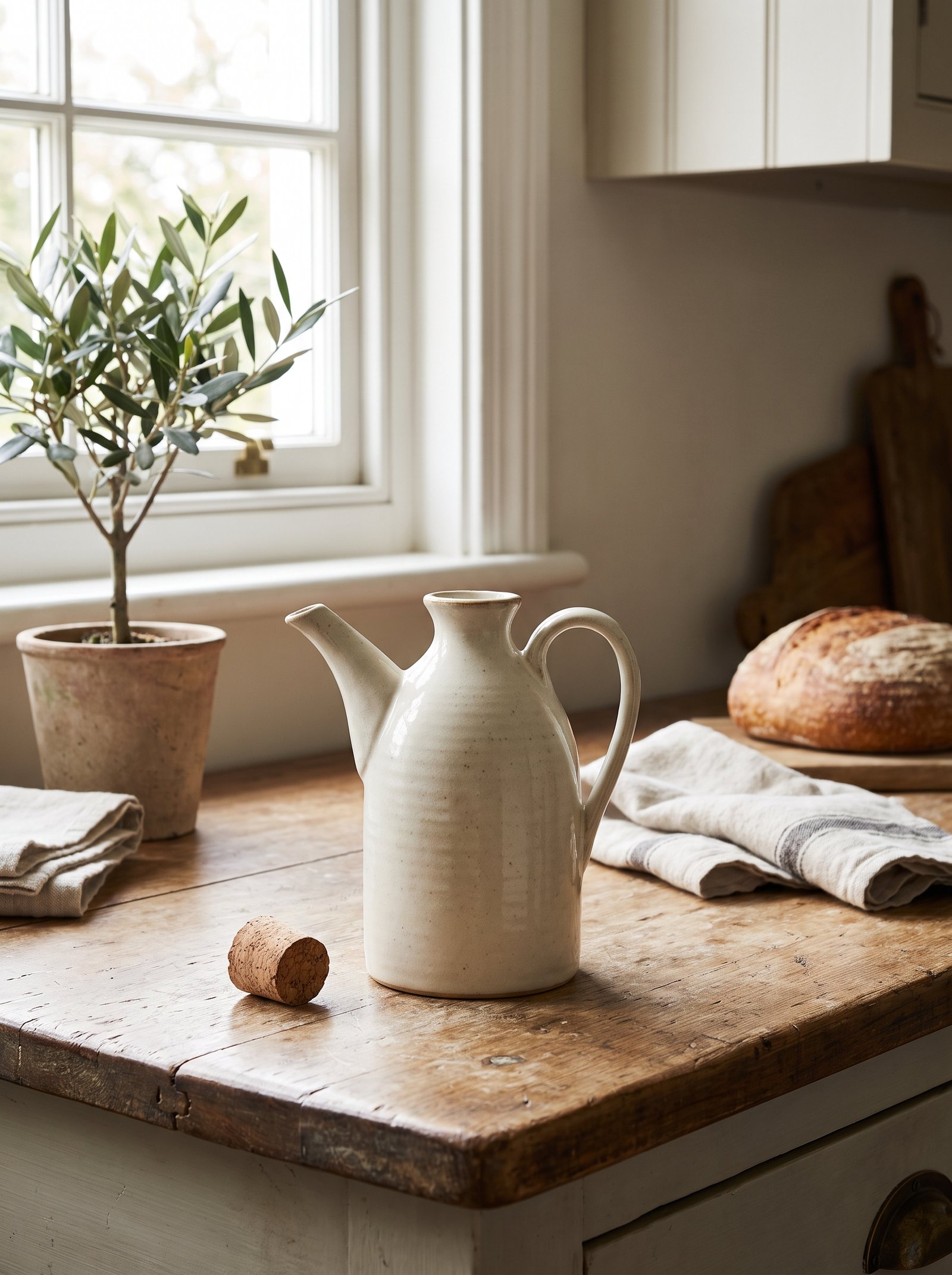
A styled ceramic olive oil cruet on the counter next to the stove reads intentional and functional. Hides the plastic bottle, adds decor.
Look for cream, oatmeal, or warm terracotta cruets with narrow spouts. Target Studio McGee, Etsy, and local potters sell them for $20-80.
Refill from your bulk olive oil bottle. Costs the same, looks dramatically better daily.
Pair with a matching ceramic salt cellar for a complete “cooking zone” styling.
Small daily styling elements like this signal care and intention.
15. Install a brass rail with hanging tea towels
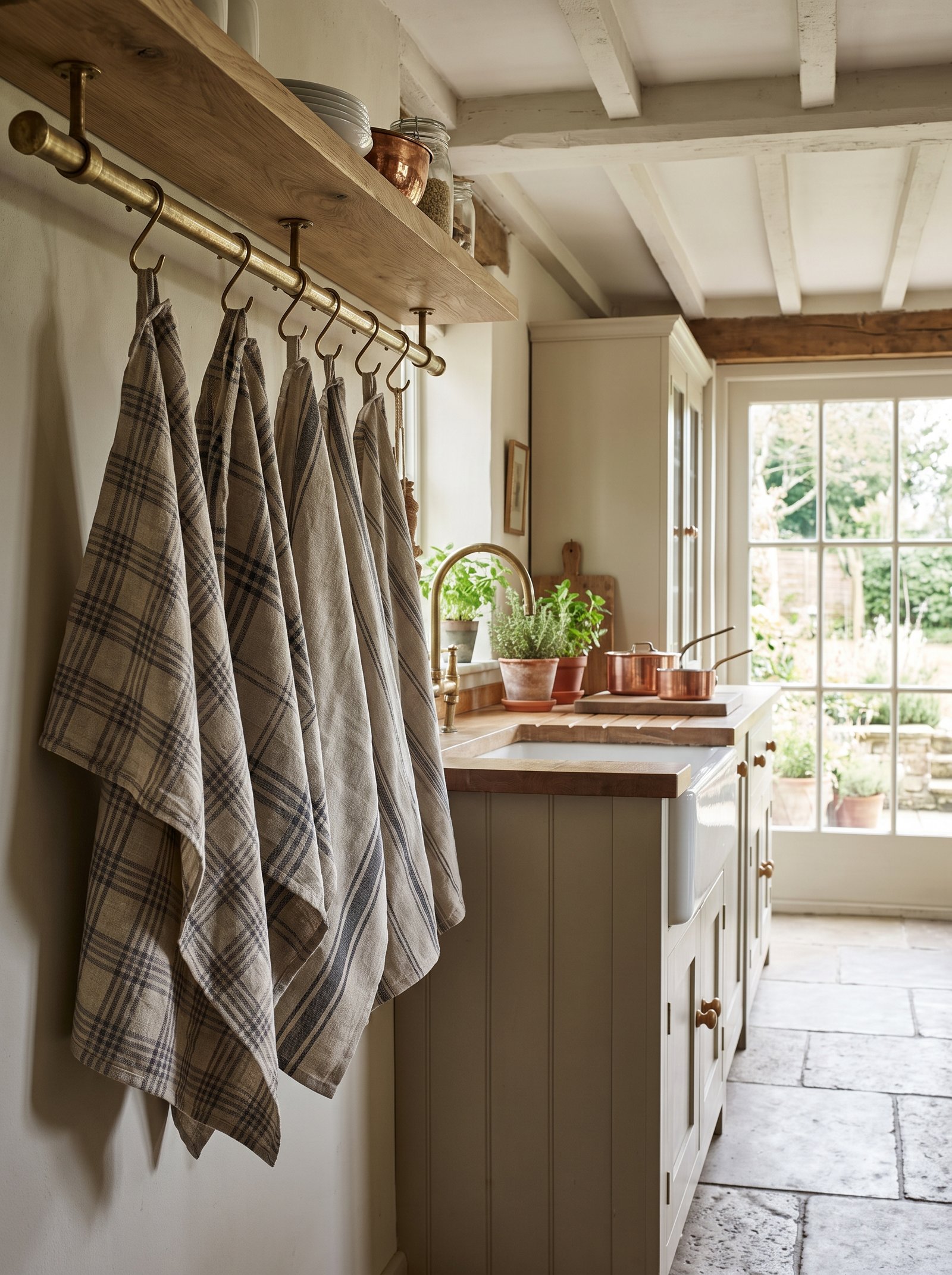
A short brass rail (12-18 inches) mounted below the counter or next to the sink for hanging matching linen tea towels adds warmth and function.
Rejuvenation, Anthropologie, and West Elm all sell aged brass towel rails in the $40-120 range.
Hang 2-3 matching cream linen tea towels — fold them neatly, not scrunched.
The rail replaces the floppy paper towel roll as the primary hand-drying spot (store paper towels in a drawer).
One brass rail + three linen towels upgrades the kitchen for about $60 total.
16. Use a stoneware pitcher for wooden utensils

A matte stoneware pitcher or ceramic jar on the counter next to the stove holding wooden utensils is instant styled countertop.
Look for cream, oatmeal, or warm terracotta pitchers 8-12 inches tall. East Fork, Farmhouse Pottery, and Etsy all sell them in the $30-150 range.
Fill with 4-6 wooden spoons, a spatula or two, one whisk. Not more. The restraint is the whole point.
Store metal and plastic utensils in a drawer. The counter crock is exclusively for wooden-handled tools.
Wooden utensils develop patina over years of use — a crock of them tells the story of a well-used kitchen.
17. Choose glass-front upper cabinets
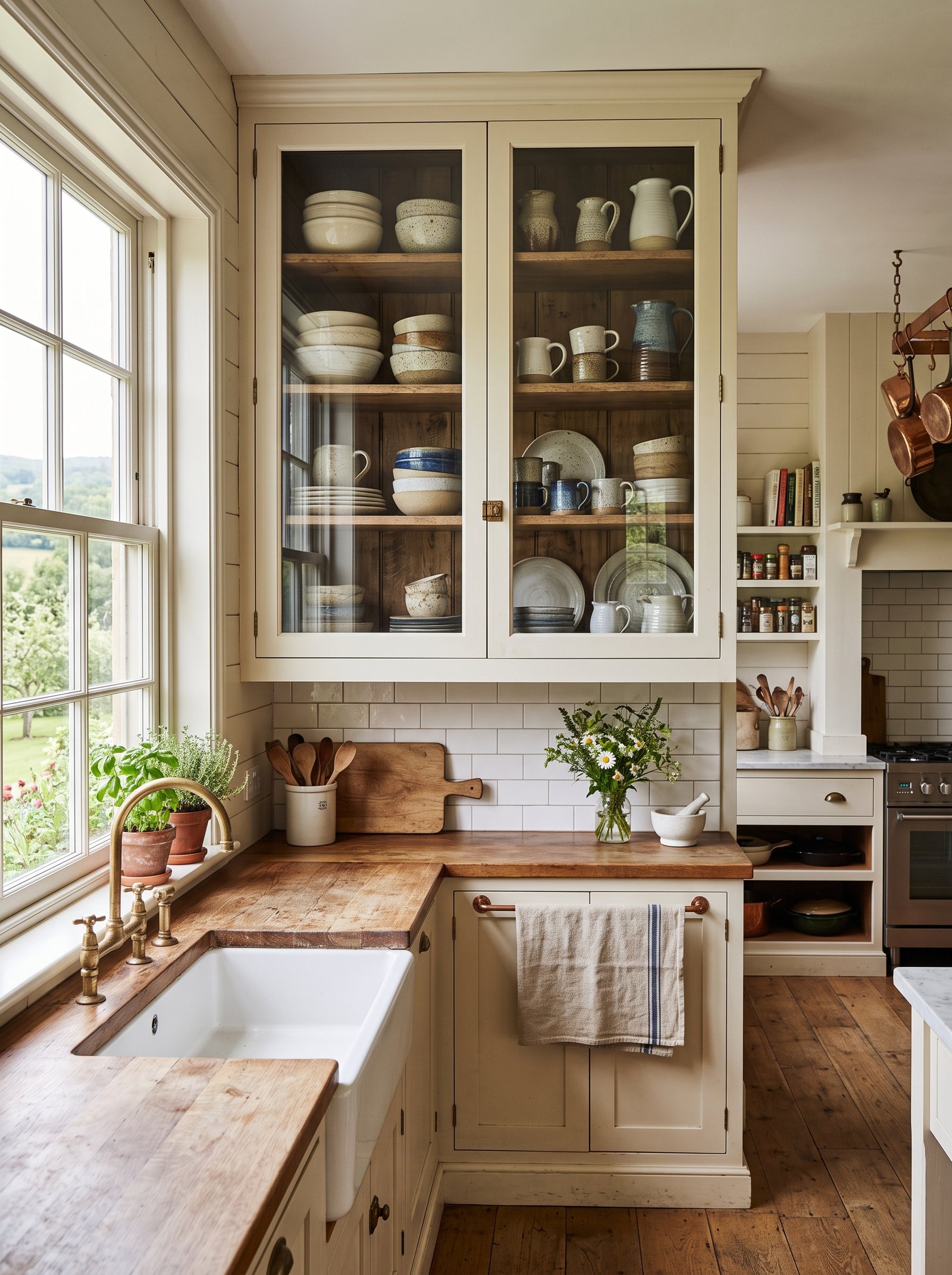
Glass-front upper cabinets (clear or fluted glass) create the visual lightness of open shelving while keeping dishes dust-free.
Replace solid cabinet doors with glass-insert replacements. Home Depot and Etsy sell them in the $80-200 per door range.
Style the inside with matching cream ceramics, glassware, or coffee mugs. Rotate seasonally with holiday-specific items.
Fluted or rain glass is more forgiving than clear — shows the shape of what’s inside without demanding Instagram-perfect organization.
Just one or two glass-front cabinets add visual interest to a wall of solid doors.
18. Create a bench nook by the window
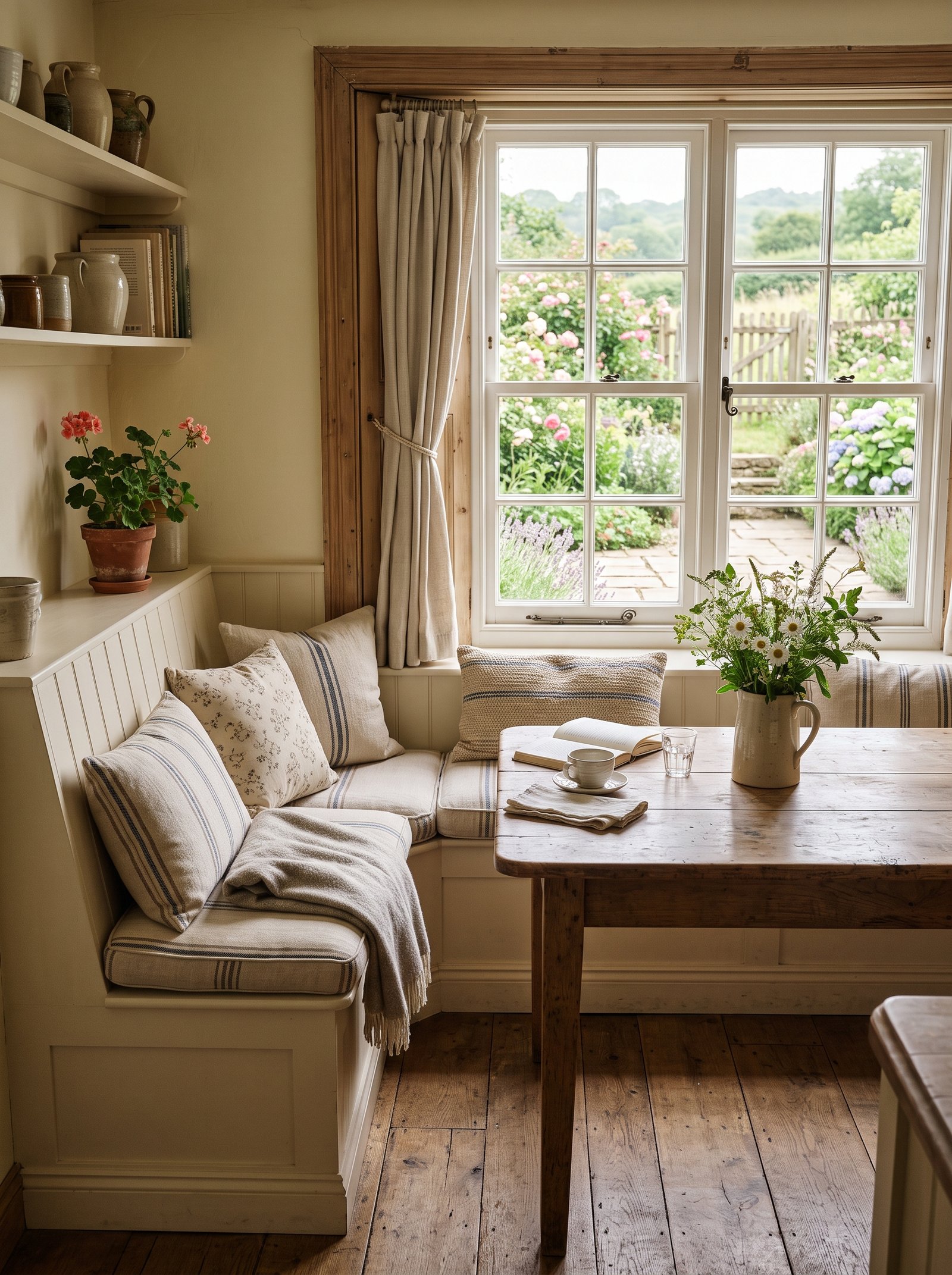
A built-in bench nook with cushions underneath a kitchen window reads instantly cozy modern farmhouse.
Build out a 3-5 foot deep by 4-6 foot wide bench with lift-up seat for storage. Pair with a round or square table and 2-3 chairs.
Add 2-3 soft cushions in cream linen, boucle, or warm woven fabric.
Hang a pendant light above the table. Add a small plant or dried floral centerpiece.
The nook becomes the kitchen’s daily life center — breakfast, homework, late-night snacks, phone calls.
19. Add wood paneling to the ceiling
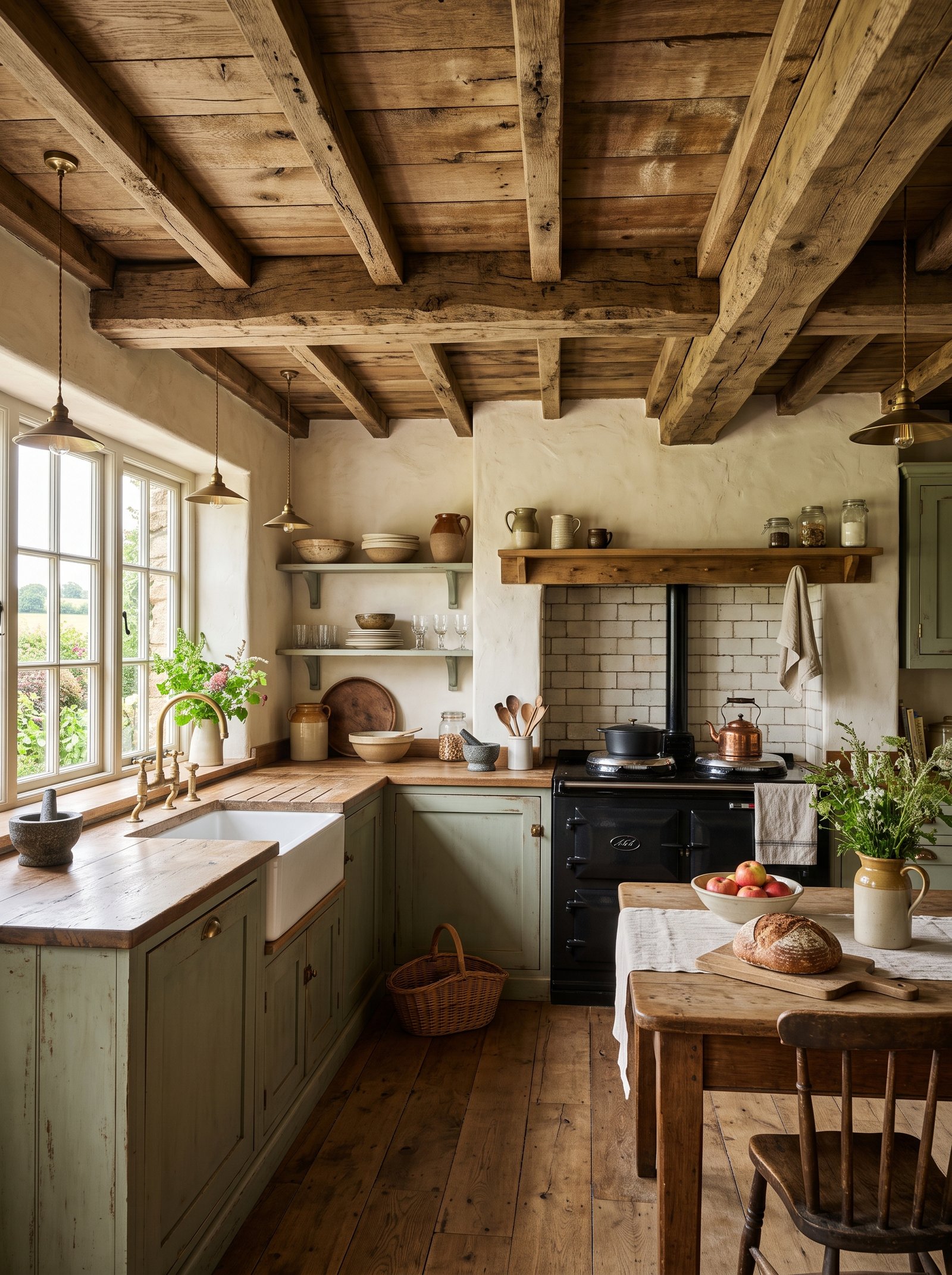
Shiplap or tongue-and-groove wood paneling on the kitchen ceiling adds significant character and warmth.
Choose horizontal shiplap in natural warm oak or whitewashed pine. Install over existing drywall with construction adhesive and finish nails.
Full ceiling coverage or just the kitchen area (not whole house) for maximum impact.
Pair with cream painted walls and warm wood floors to tie the whole room together.
The ceiling paneling is one of the most “farmhouse-authentic” upgrades you can make.
20. Hang dried herbs from the ceiling

Bundles of dried herbs (lavender, rosemary, sage) hung from the ceiling beams or a wall-mounted rail add scent, color, and farmhouse authenticity.
Dry fresh herbs from the farmers market or your garden. Tie in small bundles with jute twine.
Hang from exposed beams (idea 10) or from small hooks on the ceiling. 6-10 bundles clustered together look best.
Change seasonally — lavender in summer, bay laurel in fall, rosemary in winter.
One small styling choice that signals “this kitchen cooks” more than any single appliance can.
21. Add a bistro rug in front of the sink
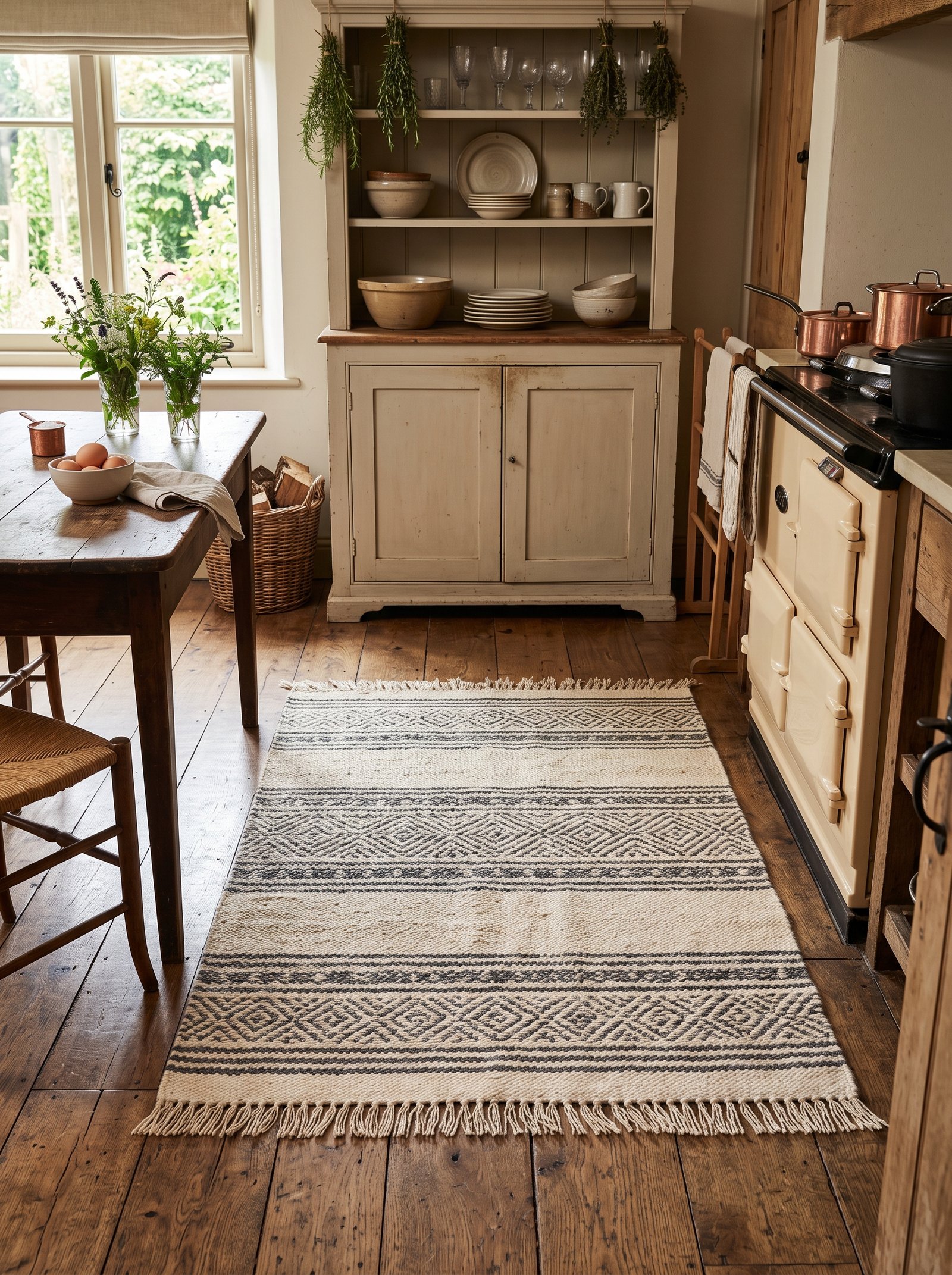
A warm cream, muted blue-and-cream, or soft terracotta flat-weave rug in front of the kitchen sink adds comfort underfoot and warm texture.
Choose cotton or wool flat-weave rugs 2×3 or 2×4 feet. Washable options from Ruggable and Lorena Canals cost $40-150.
Non-slip backing is mandatory near water. Pattern should be subtle — muted stripe or quiet floral — not loud.
Also works between the island and sink in galley kitchens.
One small rug makes doing dishes feel less like a chore.
22. Display matching ceramic canister sets

A set of 3-4 matching ceramic canisters on the counter (for flour, sugar, coffee, tea) in cream or warm stoneware is one of the oldest farmhouse decor moves.
Look for canisters with wooden or ceramic lids. Mason Cash, Fishs Eddy, and Etsy potters sell them for $30-100 each.
Decant frequently-used dry goods — not showcase items. Flour, sugar, coffee, pasta.
Keep the lids tight to maintain freshness. The containers are both decor and food storage.
This classic styling element has been timeless for 200 years and will remain so.
23. Hang a pot rack above the island

A wall-mounted or ceiling-mounted pot rack with aged brass or matte black finish holding copper pots and cast iron pans reads farmhouse-authentic.
Rejuvenation and specialty kitchen stores sell ceiling-mount pot racks in the $200-500 range.
Hang 4-6 pots max — a copper skillet, cast iron pans, one or two saucepans. The pots are the styling.
Pair with aged brass hooks for consistency with the kitchen hardware.
The visible pots signal “I cook from scratch” and double as styled decor.
24. Build a banquette dining nook

An L-shape or U-shape upholstered banquette dining nook creates a cozy family-sized dining area in a modern farmhouse kitchen.
Build out custom benches or use IKEA storage benches with added cushions. Oak or walnut-stained wood with cream linen cushions.
Pair with a round pedestal table and 2-3 chairs for a complete dining nook.
Seats 5-6 people comfortably — perfect for family meals, dinner parties, or weekend brunches.
This single kitchen feature can replace a formal dining room entirely in open-plan homes.
25. Put it all together — the full modern farmhouse kitchen

You do not need all 24 ideas in one kitchen. The best modern farmhouse kitchens layer 10-14 of these elements intentionally.
Start with the big-impact pieces: cream Shaker cabinets (1), apron-front sink (2), aged brass faucet (4), honed marble island (5). This is the “bones” of the look.
Add warm texture: woven rattan pendants (6), subway tile backsplash (7), open oak shelves (3). Visual rhythm and farmhouse authenticity.
Layer daily styling: olive oil cruet (14), stoneware pitcher with wooden utensils (16), brass rail with tea towels (15), fresh bread on a cutting board (13).
The photograph at the top of this idea is one modern farmhouse kitchen with all these elements layered together — cream cabinets, oak island, honed marble, apron sink, aged brass hardware, woven pendants, open shelves, warm golden-hour light. The whole room reads like it has been loved and used for decades, even if it was renovated last year.
Why these elements age so well
Every element in this guide has been in continuous use in American and European kitchens for 100-200 years. Shaker cabinets since the 1800s. Apron sinks since the 1920s. Subway tile since 1904. Open wood shelves since forever. The “modern” part is just that we have refined the proportions, improved the materials, and simplified the ornamentation.
Trends come and go. These elements remain because they are functional first and beautiful second. That is the definition of timeless design.
Keep reading — related decor guides
- → 25 Tiny Kitchen Ideas
- → 25 Rental Kitchen Makeover
- → 25 Master Bedroom Boutique Hotel
- → 25 Living Room Layouts
Save this to your Pinterest kitchen board. New home-decor guide every day at Abodenest.
Take our 2-minute Decor Style Quiz
Answer 10 quick questions and discover whether you’re Modern Boho, Scandinavian Minimalist, Modern Farmhouse, Mediterranean, Japandi, or Classic Traditional — plus your color palette and 3 articles made for you.
Start the Quiz →Modern Farmhouse Kitchen FAQs
What makes a kitchen modern farmhouse style?
Modern farmhouse kitchens balance warm cream or soft white cabinetry with matte black or aged brass hardware, solid wood accents (butcher block, oak shelves, walnut island tops), subway tile or zellige backsplash, and farmhouse sinks. Timeless material choices and restrained color palettes separate modern farmhouse from the shiplap-heavy 2016 version.
What colors are modern farmhouse kitchens?
Warm whites (Benjamin Moore White Dove, Farrow & Ball Pointing), soft creams for cabinets, matte black for hardware and accents, aged brass for lighting, warm walnut or oak for islands and shelves, and one accent color like deep olive, warm terracotta, or soft black for a painted island.
Are shaker cabinets still in style?
Yes, shaker cabinets are the most timeless cabinet style in modern farmhouse kitchens because the simple square-profile frame reads clean across trend cycles. Choose shaker in warm cream or soft black, with aged brass or matte black cup pulls, and the kitchen will age beautifully across decades.
What countertop goes with modern farmhouse?
Honed quartz or marble in warm cream (Carrara-pattern quartz is the practical choice), butcher block on the island for warmth, or soapstone for a traditional look. Avoid polished black granite and busy speckled quartz which read dated. Keep countertops restrained to let the cabinets and hardware carry the style.
What light fixtures go with modern farmhouse kitchens?
Aged brass pendants over the island (schoolhouse, dome, or linear chandelier style), a mix of matte black and brass for sconces, under-cabinet LED strips in 2700K warm white, and one statement chandelier over the dining area. Avoid chrome and polished nickel which read 2010 contemporary.
Our interactive tools can help
Take the style quiz, generate a beige wall color palette, or calculate the perfect pillow stack for your bed — all free, all in under 2 minutes.
Explore Tools →