
25 Bed Styling Tricks That Make Any Bed Feel Like a Hotel Room
A hotel bed stops you at the door. The sheets look crisp, the pillows look sculpted, the whole arrangement feels staged in the best possible way — and almost none of that has anything to do with the mattress underneath. It is styling. The same tricks the housekeeping teams at good boutique hotels use every morning are things you can copy at home in about ten minutes, with no new purchases and no professional training required. The difference between a bed that reads lived-in and one that reads styled is a short list of pillow math, layering rules, and small details most of us never learn.
Below are 25 bed styling tricks drawn from boutique hotel housekeeping teams, interior stylists working on magazine shoots, and the kind of editorial bedrooms you keep screenshotting on Pinterest at 11pm. Every one is low-cost, repeatable, and designed to survive the actual humans and pets who sleep in the bed every night. Pick two or three. The bed will transform tonight.
1. Start With a Tight Fitted Sheet
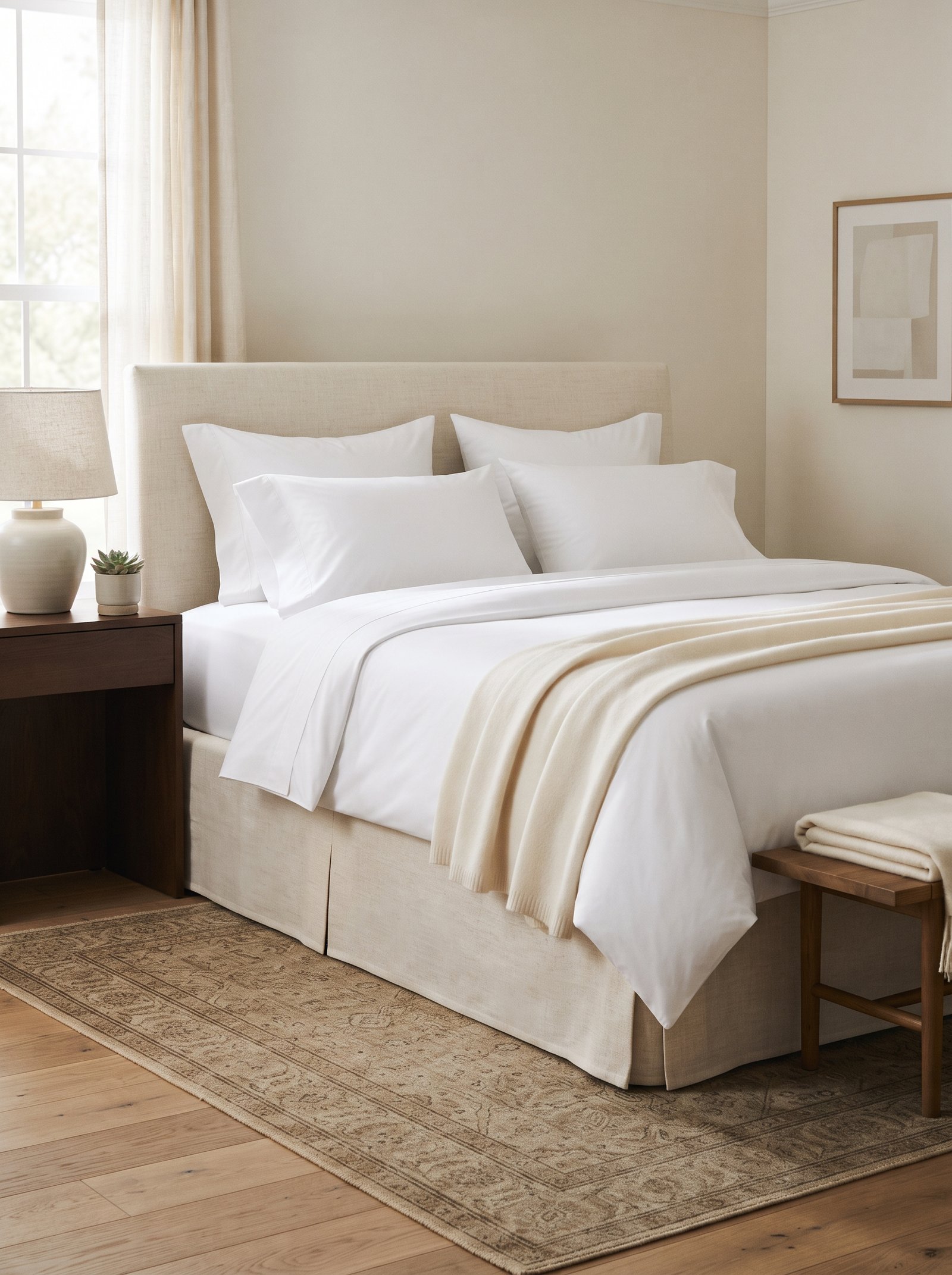
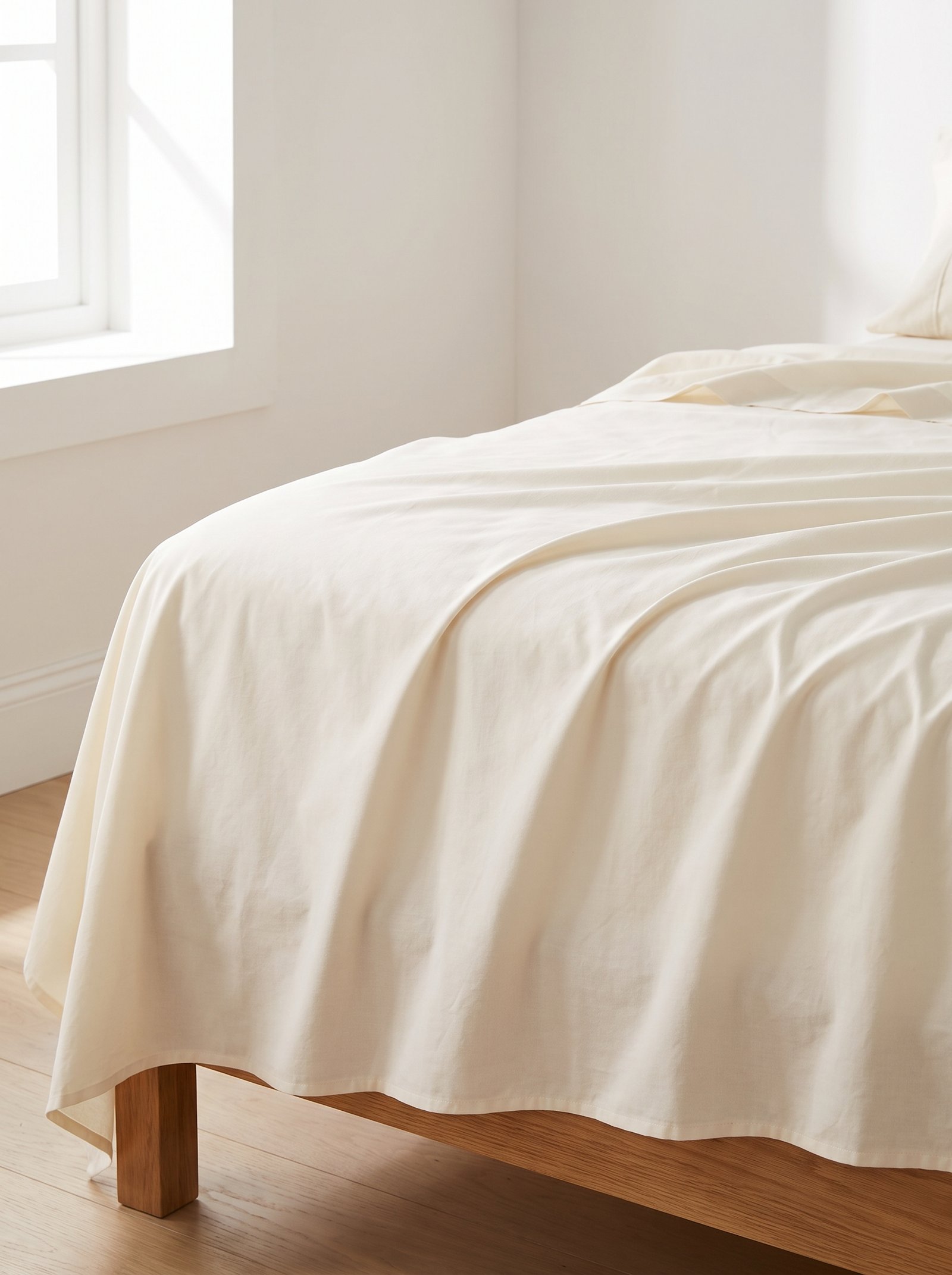
Everything about hotel-style bed-making falls apart if the fitted sheet is loose. Pull each corner tight, give the sides a hard tug, and tuck any excess fabric back under the mattress. The flat, tight base is what makes the layers above it sit cleanly rather than wrinkle up through the night. Loose fitted sheets create ripples that no amount of styling above can hide — the whole bed reads sloppy from across the room no matter how perfectly the duvet is layered on top.
If your fitted sheet is old and stretched out from years of washing, replace it before you buy anything else for the bedroom. A $35 new fitted sheet does more for the look of your bed than a $500 duvet set over a saggy base ever will. Deep-pocket versions designed for thick mattresses or pillow-top beds are worth the small premium.
Natural fibers — cotton percale, linen, cotton sateen — hold the tight corners better than microfiber alternatives. The slight structure of woven cotton or linen means the sheet grips the mattress corners rather than sliding off during the night.
2. Layer a Flat Sheet, Even If You Don’t Use One
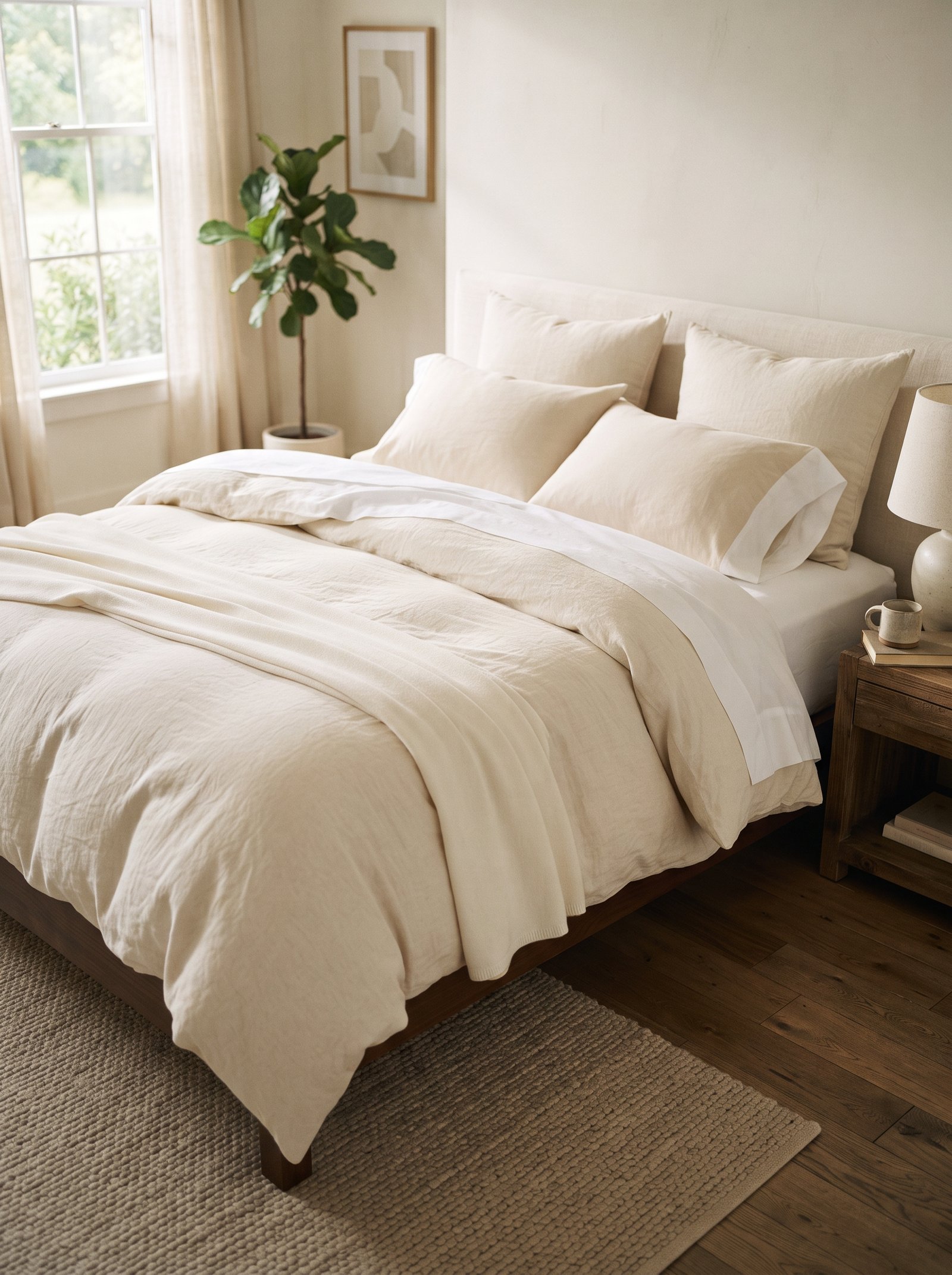
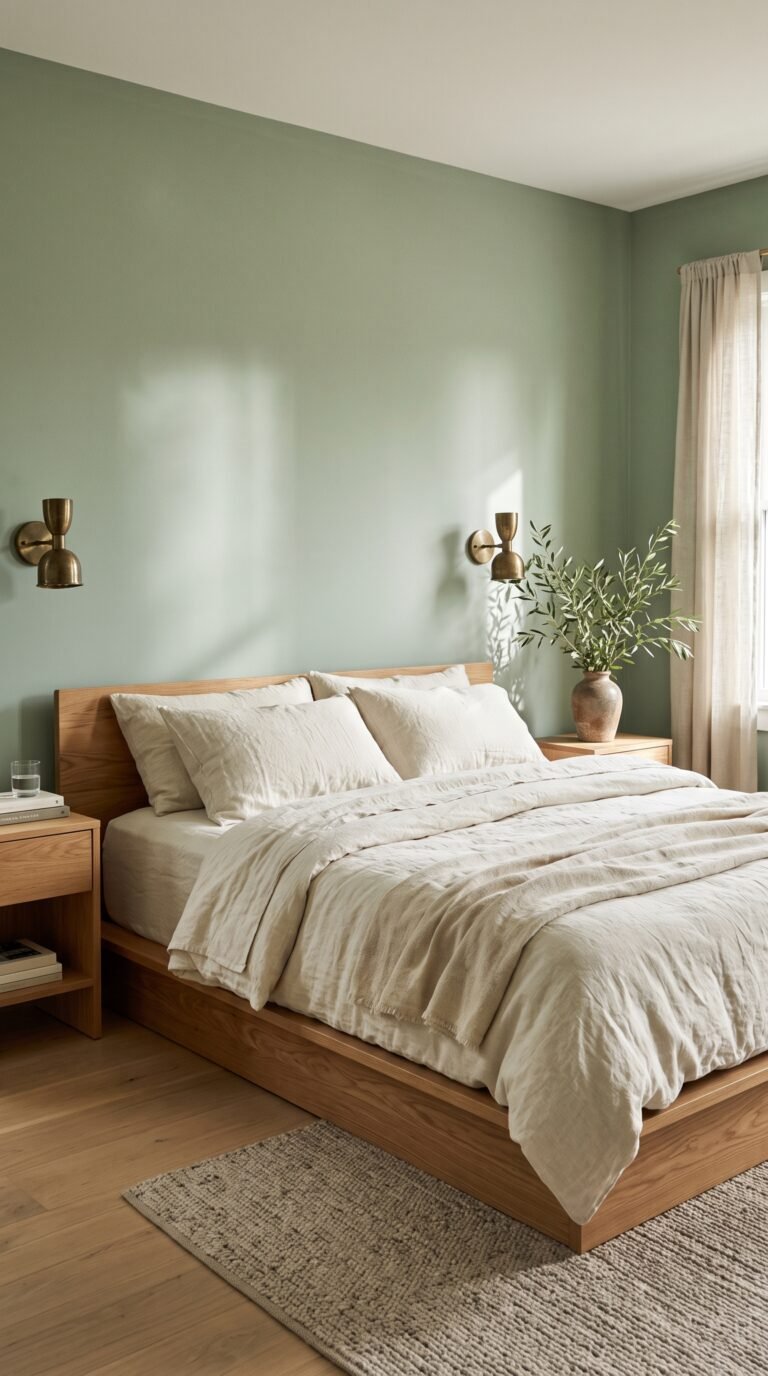
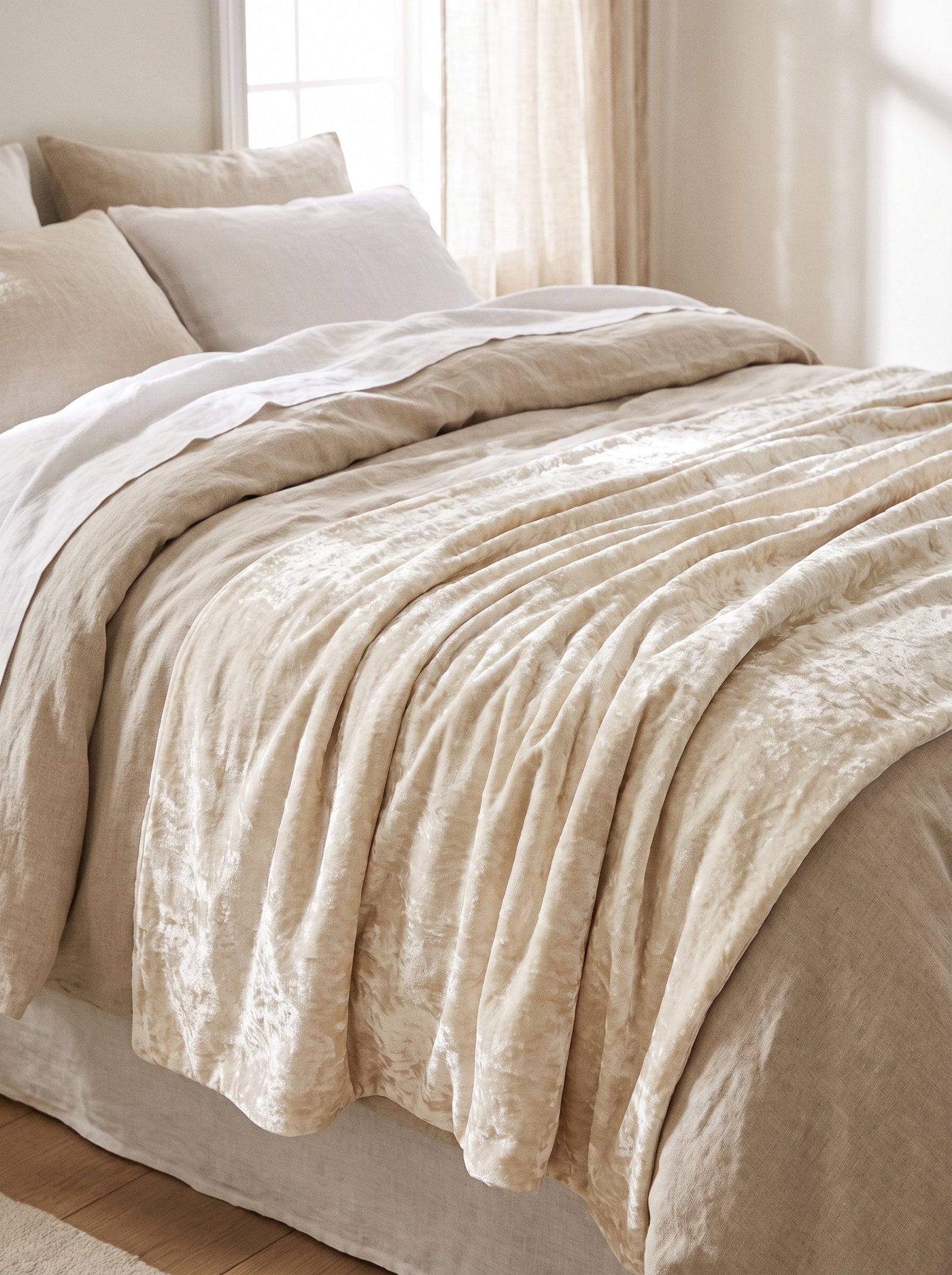
A flat sheet, folded back over the duvet to create a visible cuff of fabric at the top of the bed, is the single most hotel-looking move you can make. It introduces a layer, adds texture, and gives the eye something clean to land on where the pillows meet the duvet. The cuff is the detail that reads “someone made this bed properly” from the moment you walk into the room.
Even if you sleep without a flat sheet — many people prefer just a duvet and fitted sheet — keep one on the bed purely for daytime styling. Fold it back about twelve inches below the pillows and press that fold flat with your hand. At night you can push it down or ignore it entirely; in the morning, re-fold it as part of the bed-making routine.
Choose a flat sheet one color lighter than the duvet. White sheet with cream duvet, oatmeal sheet with warm beige duvet, cream sheet with soft black duvet. The slight tonal contrast between the cuff and the duvet is what reads sophisticated.
3. Choose a Duvet One Size Up
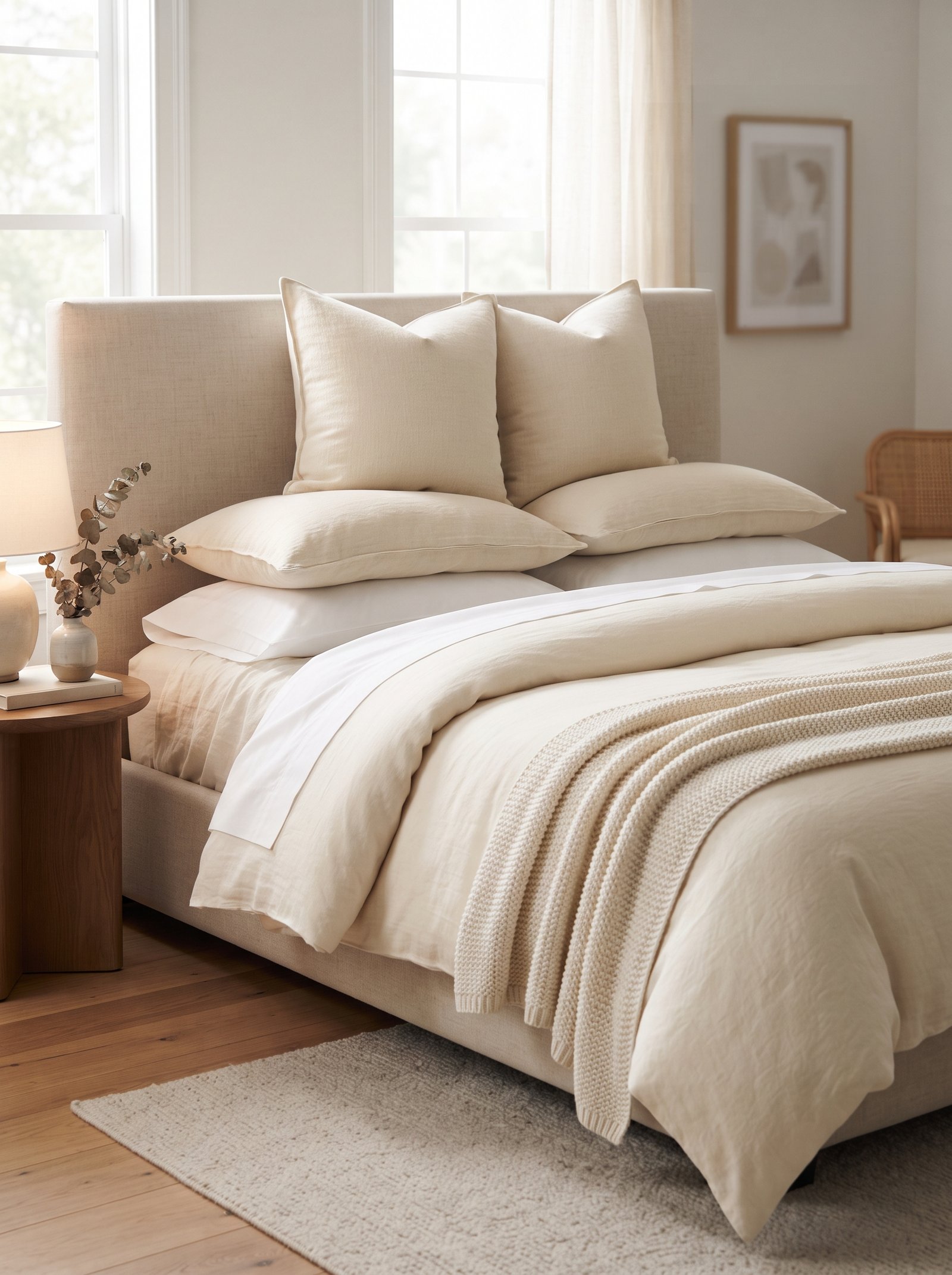
If you have a queen bed, buy a king duvet. If you have a king, buy a California king. The oversized duvet drapes generously over the sides of the bed instead of ending flat at the mattress edge, and that drape is seventy percent of what makes a hotel bed read as plush and inviting. Correctly-sized duvets look flat and institutional; oversized ones look generous and expensive.
The extra fabric also means the duvet does not get yanked off one person during the night — a quiet relationship upgrade that nobody writes about in design magazines. Both sleepers can grab their share and still have enough duvet left to cover both bodies.
Choose a duvet insert with real weight and loft. A thin, flat insert makes even the largest duvet cover look deflated. Down, down-alternative, or quality cotton-wrapped microfiber all provide the loft that makes the duvet drape beautifully rather than lie limp.
4. Fluff and Karate-Chop Your Pillows
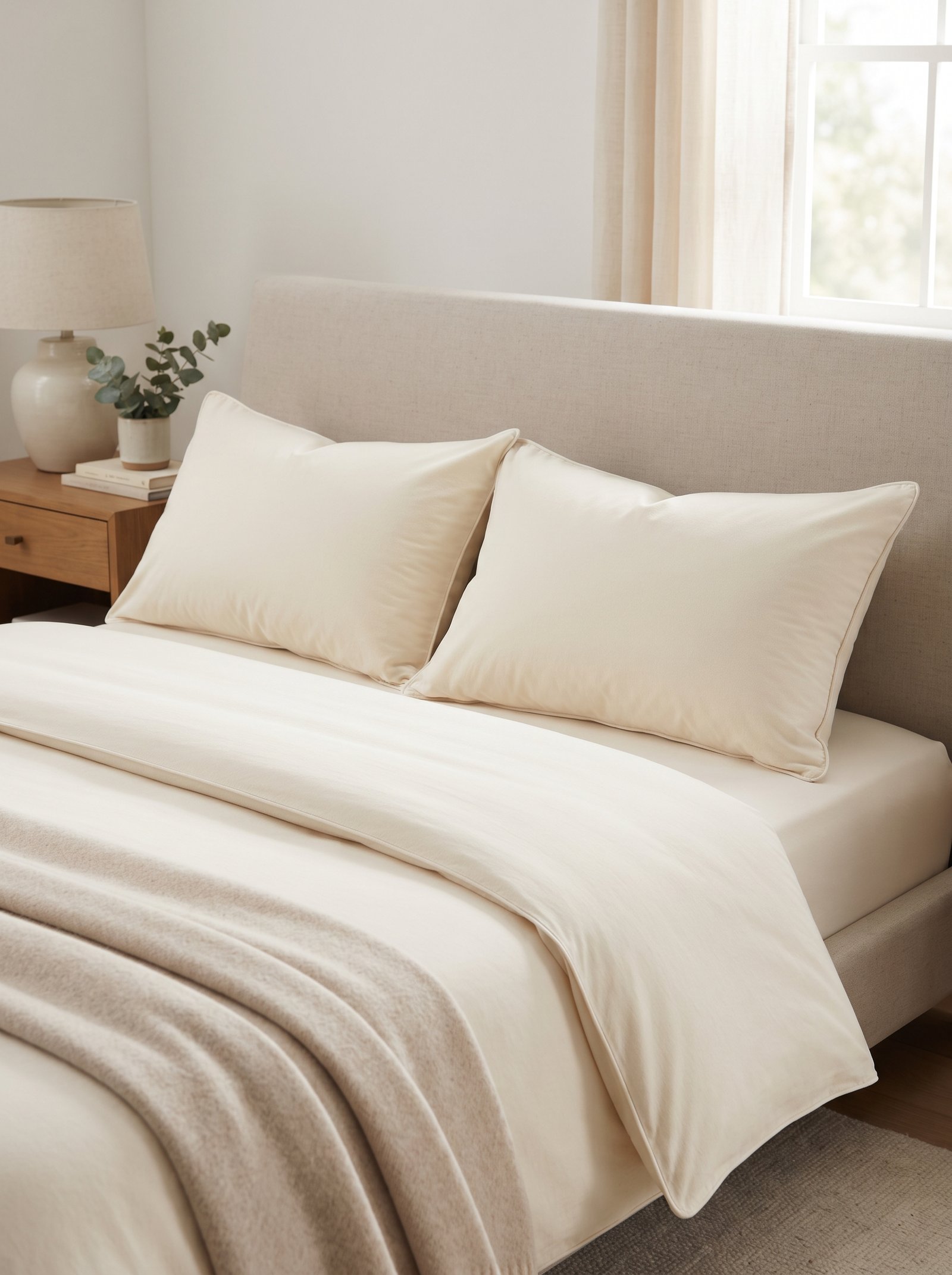
Shake, fluff, and squeeze each sleeping pillow to redistribute the fill. Then — and this is the signature hotel move — give each pillow a karate chop down the top center with the side of your hand. The resulting slightly dented, tailored shape reads as styled rather than slept-on. It takes four seconds and photographs beautifully.
Even cheap pillows look expensive after this treatment. The karate chop is the single highest-leverage move in all of bed styling because it costs nothing, requires no new purchases, and transforms the visual quality of the pillow stack immediately.
Repeat the fluff-and-chop every morning as part of the bed-making routine. Pillows settle into flat shapes overnight; the morning restoration brings them back to styled form.
5. Add Euro Shams Behind Sleeping Pillows
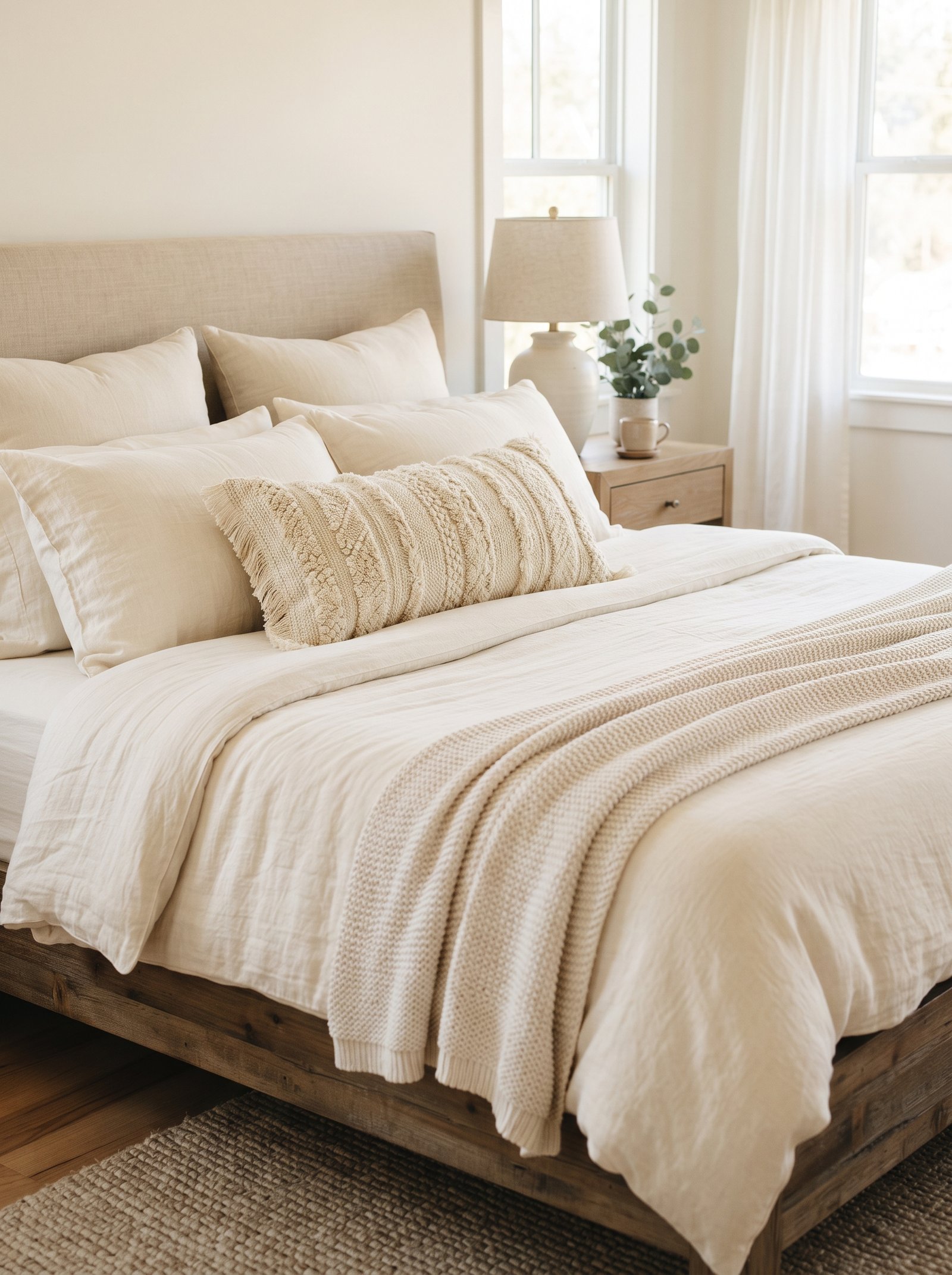
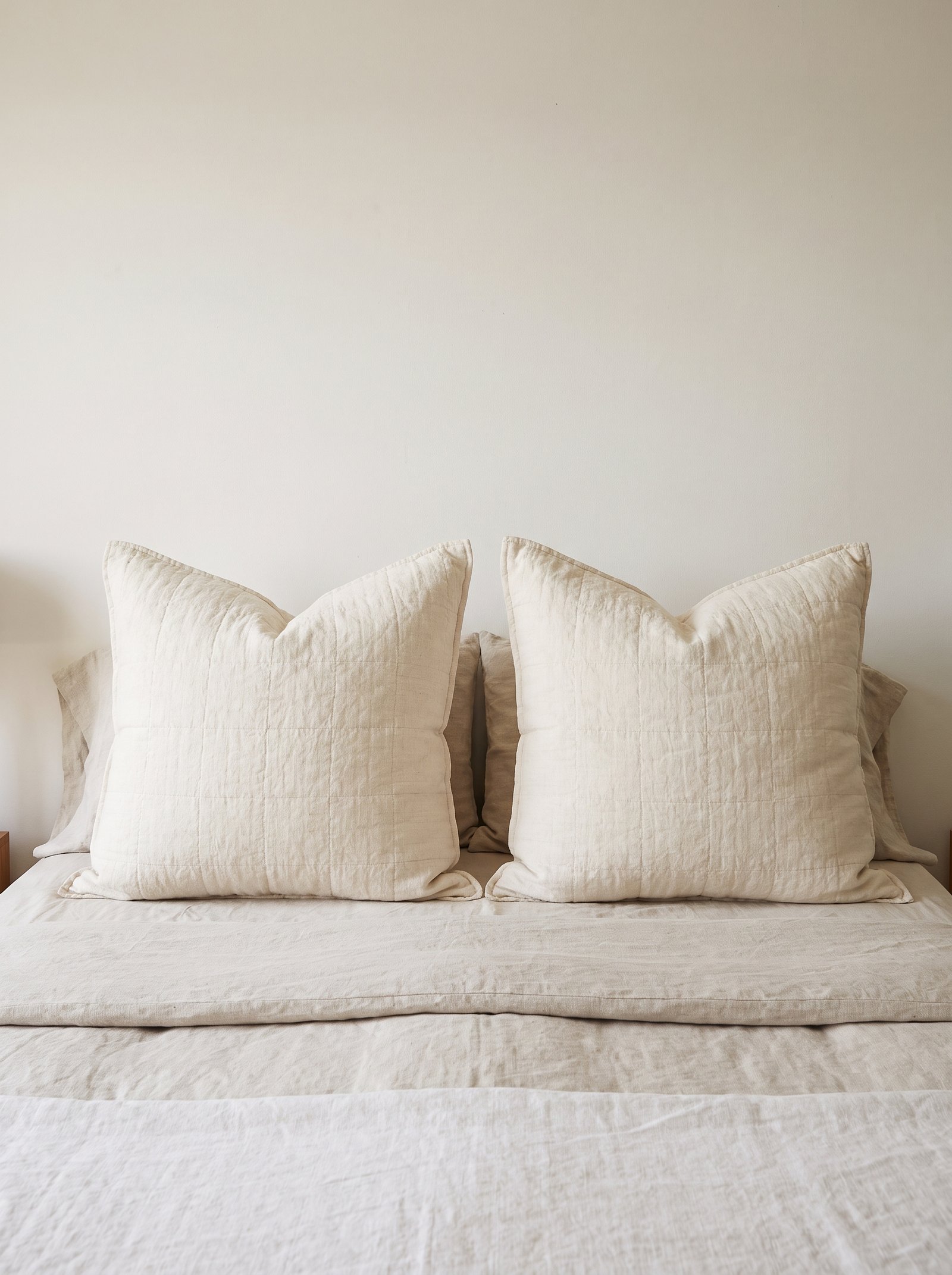
Two large square pillows (twenty-six by twenty-six inches, called “euro” shams) propped against the headboard behind your sleeping pillows add the vertical mass that makes a hotel bed feel architectural. Without them, the pillow stack flops forward and loses its structure. The euros are the structural foundation of every hotel-quality bed; everything else layers in front of them.
A pair of white or neutral linen euros is the base version of this trick. More layered looks add a second pair in a textured or patterned fabric placed in front of the first pair, which creates visual depth before the sleeping pillows even enter the composition.
Match the euro sham fabric to the duvet cover texture or color for cohesion. Linen euros with linen duvet. Cotton percale euros with cotton percale duvet. The material consistency reads intentional; mismatched textures across the back of the stack read assembled rather than designed.
6. Use the Pillow Formula: 2+2+2+1

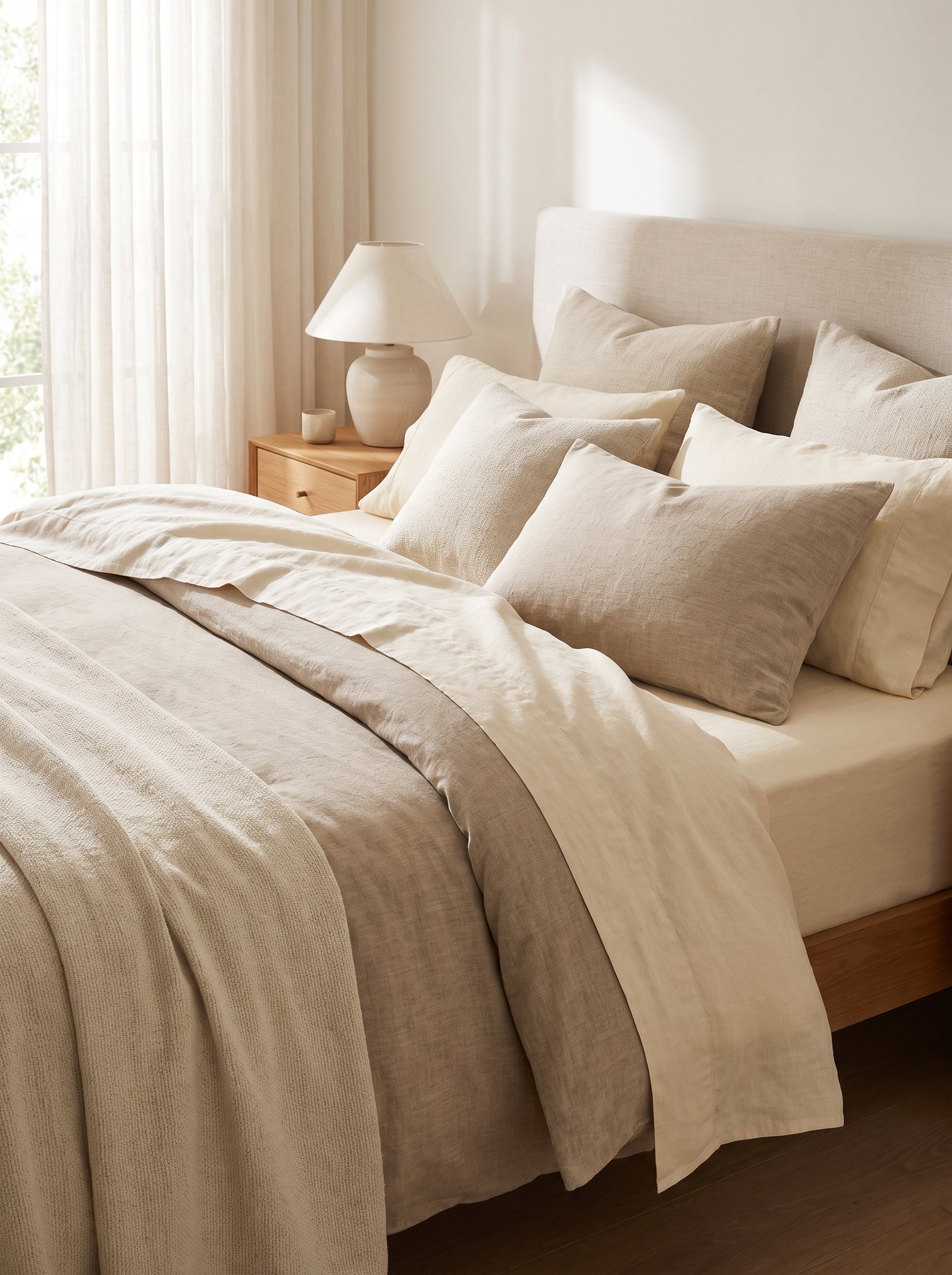
The hotel-standard pillow stack for a queen or king bed goes like this, back to front: two euro shams against the headboard, two sleeping pillows, two decorative shams (slightly smaller than the sleepers), one lumbar or accent pillow in front. Seven pillows total, built in pairs, finished with one odd piece. The symmetry of the pairs reads formal and considered; the single lumbar in front breaks the symmetry just enough to feel intentional rather than rigid.
For a full-size bed, drop one euro and one decorative sham — formula becomes 1+2+1+1 (five pillows total). For a twin, use 1+1+1 and skip the lumbar (three pillows). The pairs are what the eye reads as composed; losing the paired structure loses the hotel look.
Our free Pillow Formula Calculator gives you the exact stack for your bed size and style preference, with a shopping list and a visual placement diagram.
7. Keep the Pillow Palette Mostly Neutral

Hotel beds almost always keep the main pillow mass in creams, whites, soft tans, and muted grays, with any color saved for the single front accent pillow. That restraint is what lets the layering do the work without the bed turning into a pile of competing colors fighting each other for attention. The neutral mass reads expensive; the single color pop reads styled.
If you want color, let it show on the throw blanket or the accent pillow — not on four pillows at once. Loud colored shams age a bed instantly and tie the entire bedroom palette to a specific color choice that becomes difficult to update without replacing everything.
Textural variation within the neutral palette prevents the stack from reading flat. Linen euros, cotton percale sleepers, boucle decoratives, velvet accents all share the same neutral tones but offer different surfaces to the eye. The texture variety is what reads layered.
8. Add a Throw Draped at an Angle

A throw blanket draped diagonally across the foot of the bed — not folded squarely, not laid flat — adds movement and softness that a perfectly symmetrical bed lacks. The intentional-casual drape is a hotel-styling move borrowed from editorial photographers who understand that too much symmetry reads stiff and performative while slight asymmetry reads lived-in and inviting.
Linen, boucle, waffle cotton, and lightweight wool are all solid throw choices for the diagonal drape. The weight should be substantial enough to drape with intention — thin blankets flutter and look flimsy; mid-weight throws fall into natural folds that photograph beautifully.
Avoid shiny faux fur throws — they date the bed and show every speck of pet hair within minutes of being draped. Natural fibers develop better patina and photograph better in all lighting conditions.
9. Iron or Steam the Duvet Cover

You do not need to iron the entire duvet cover crisp. A pass with a handheld steamer, or ten minutes with a hot iron on just the top third of the duvet cover, flattens the wrinkles that make a bed look slept-in. Hotels iron everything. You can iron the parts that show. The visible third is where the eye lands when walking into the room; the parts covered by pillows or hidden against the mattress do not need the same treatment.
A thirty-dollar handheld steamer is the single bed-styling tool that pays for itself in a week of use. Keep it in the closet nearest the bedroom so the morning routine includes a quick pass over the duvet without any setup friction.
Linen duvet covers wrinkle more than cotton percale ones, but the wrinkles on linen read “intentionally relaxed” rather than “poorly made” the way wrinkles on cotton do. Choose the fabric that matches your tolerance for ironing: cotton percale for crisp hotel look, linen for relaxed sophisticated look.
10. Use a Bed Scarf or Runner
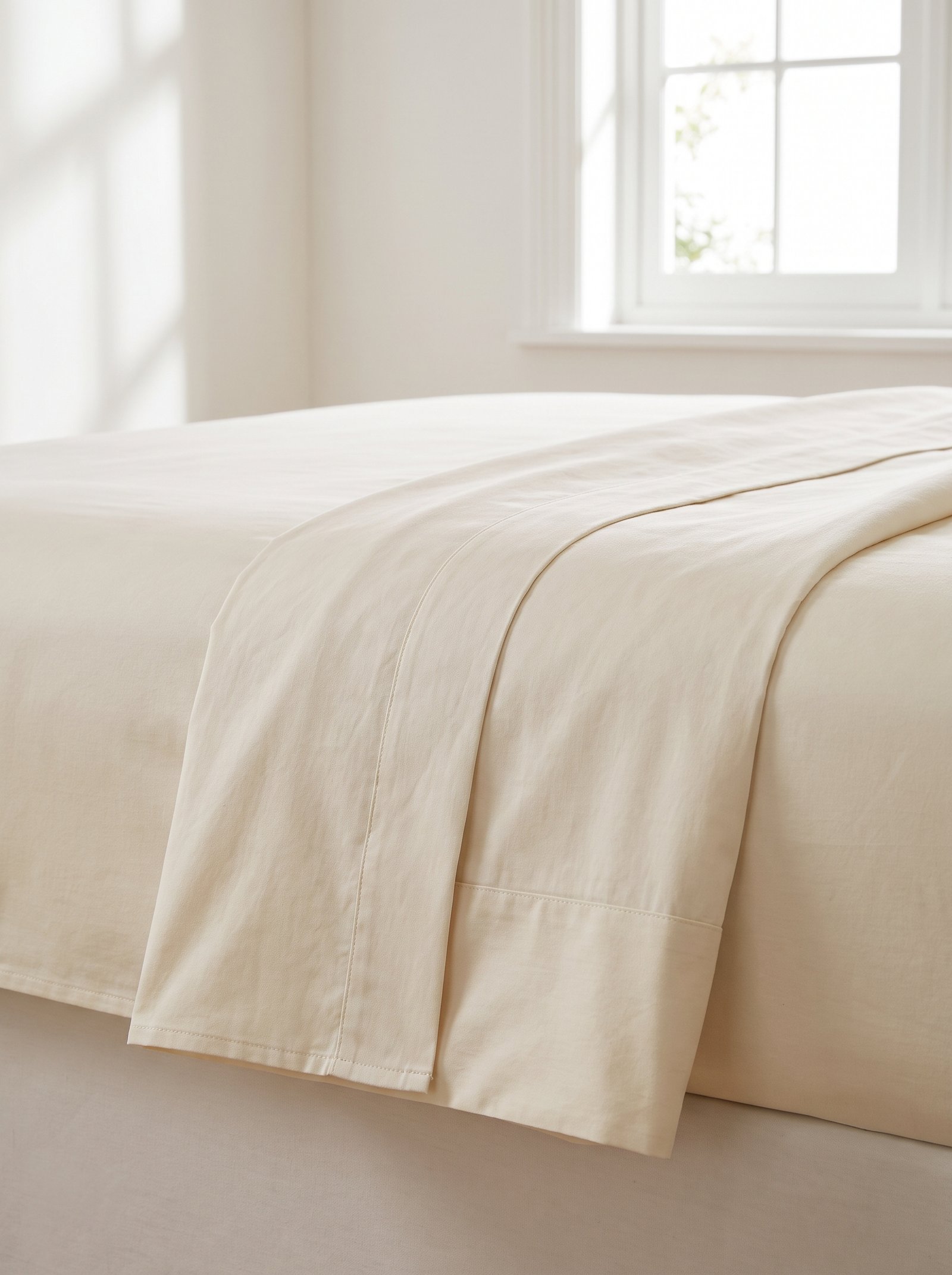
A bed scarf — a long rectangular textile laid flat across the foot of the bed — adds a hard horizontal line that visually divides the bed into zones and anchors the whole composition. It is a hotel-signature detail you almost never see in private homes, which makes it the move that most clearly reads as “someone who understands bed styling made this bed.”
Natural linen, mudcloth, or a block-printed cotton all work beautifully as bed scarves. Keep the scarf narrower than a quilt (eighteen to twenty-four inches wide) and let it hang evenly on both sides of the bed. The dimensions matter: too wide and it reads like a short blanket; too narrow and it reads like a towel.
Position the scarf about one-third from the foot of the bed, parallel to the headboard. The placement creates visual division between the pillow zone (upper two-thirds) and the foot zone (lower third) that gives the bed architectural structure.
11. Tuck in the Flat Sheet Military-Style
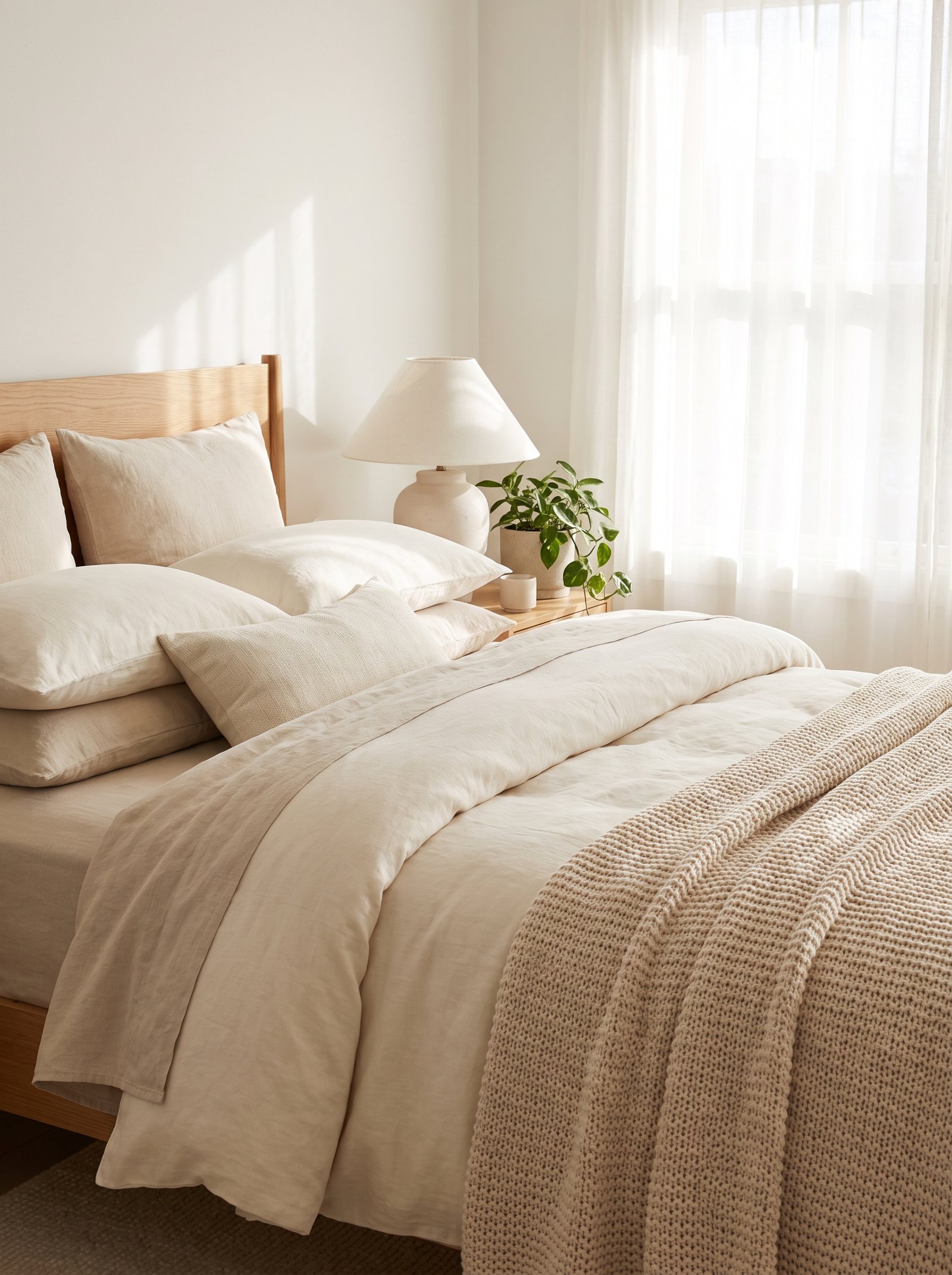
Hospital corners — the forty-five-degree fold tuck used by hotel housekeepers everywhere — give the sides of your bed a crisp, almost upholstered look. YouTube has one-minute tutorials; the technique becomes muscle memory after making the bed three or four times. Once learned, hospital corners add no extra time to the daily routine and dramatically upgrade the finished bed.
The visual difference between a hospital-corner bed and a sloppy-tucked one is the difference between a hotel suite and a college dorm. Same sheets, same bed. Different fold technique. The corners read as professional training even in a casually styled room.
If your mattress is too thick for traditional hospital corners (common with pillow-top mattresses), modified versions work almost as well. The key is pulling the sheet taut and keeping the side-of-bed fabric smooth rather than bunched.
12. Match Pillow Cases to the Fitted Sheet
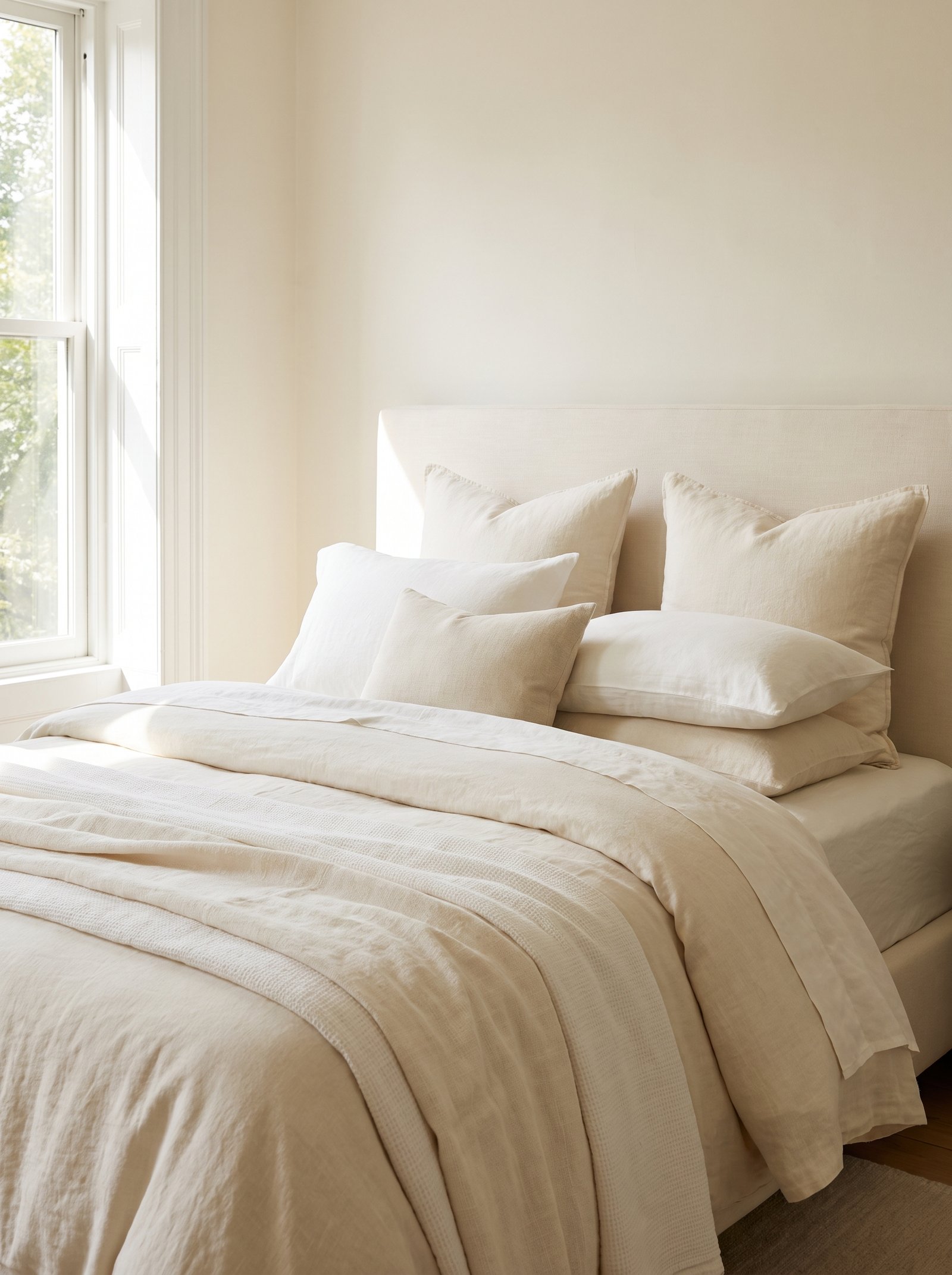
Your two sleeping-pillow cases should match the fitted sheet. Your decorative shams can be different. This small consistency reads as a bedding set even when you have assembled yours from three different brands over the years. The matched sleeping pillows plus fitted sheet create visual coherence at the core of the bed; the decorative pillows then provide the layered variation that reads styled.
The eye forgives mismatched decorative pillows but notices mismatched sleeping pillows immediately. The two sleepers sit in the center of the composition at the exact height your eye lands when walking into the room; any color or texture mismatch there reads as random pile-up rather than intentional styling.
Buy an extra set of matching pillowcases and fitted sheet so you always have a backup when one set is in the wash. Nothing kills a styled bedroom faster than being forced to use a mismatched sheet because the matching set is drying.
13. Center the Headboard, Center the Bed

Measure before you push the bed into place. The headboard should sit dead-center on the wall it faces, and the bed itself should have equal space on both sides when the room allows. Off-center beds broadcast “I just moved in” even when you have lived in the room for five years. The symmetry is a free upgrade that nobody notices consciously but everybody feels subconsciously.
If there is a window in the bedroom, center the bed between two windows or directly under the center of a single window. Alignment between the bed and the architecture of the room is what makes any bed look designed into the space rather than placed into it arbitrarily.
Nightstands flank the bed symmetrically. Same height, same approximate size, same placement distance from the bed. The symmetry is where most of the “hotel feel” of a bedroom comes from, and it costs nothing beyond careful measurement.
14. Add a Lumbar Pillow as the Finishing Note

The single lumbar pillow in front of the pillow stack is the “accent” moment every hotel bed uses. It is where you can bring in a bold color, a graphic pattern, or a tactile fabric (velvet, boucle, fringe) without overpowering the rest of the layering. The lumbar is the exclamation point at the end of a well-constructed pillow sentence.
Scale matters: a lumbar should be roughly the width of your pillow stack, maybe slightly narrower. Smaller and it looks lost; larger and it crowds the duvet cuff below and competes with the overall composition. Standard lumbar dimensions are fourteen by thirty-six inches, which works for queen and king beds.
The lumbar is often the piece worth splurging on. A beautiful handmade lumbar in silk, velvet, or vintage fabric reads as the room’s signature and anchors every other styling choice around it.
15. Use a Weighted-Looking Duvet Insert
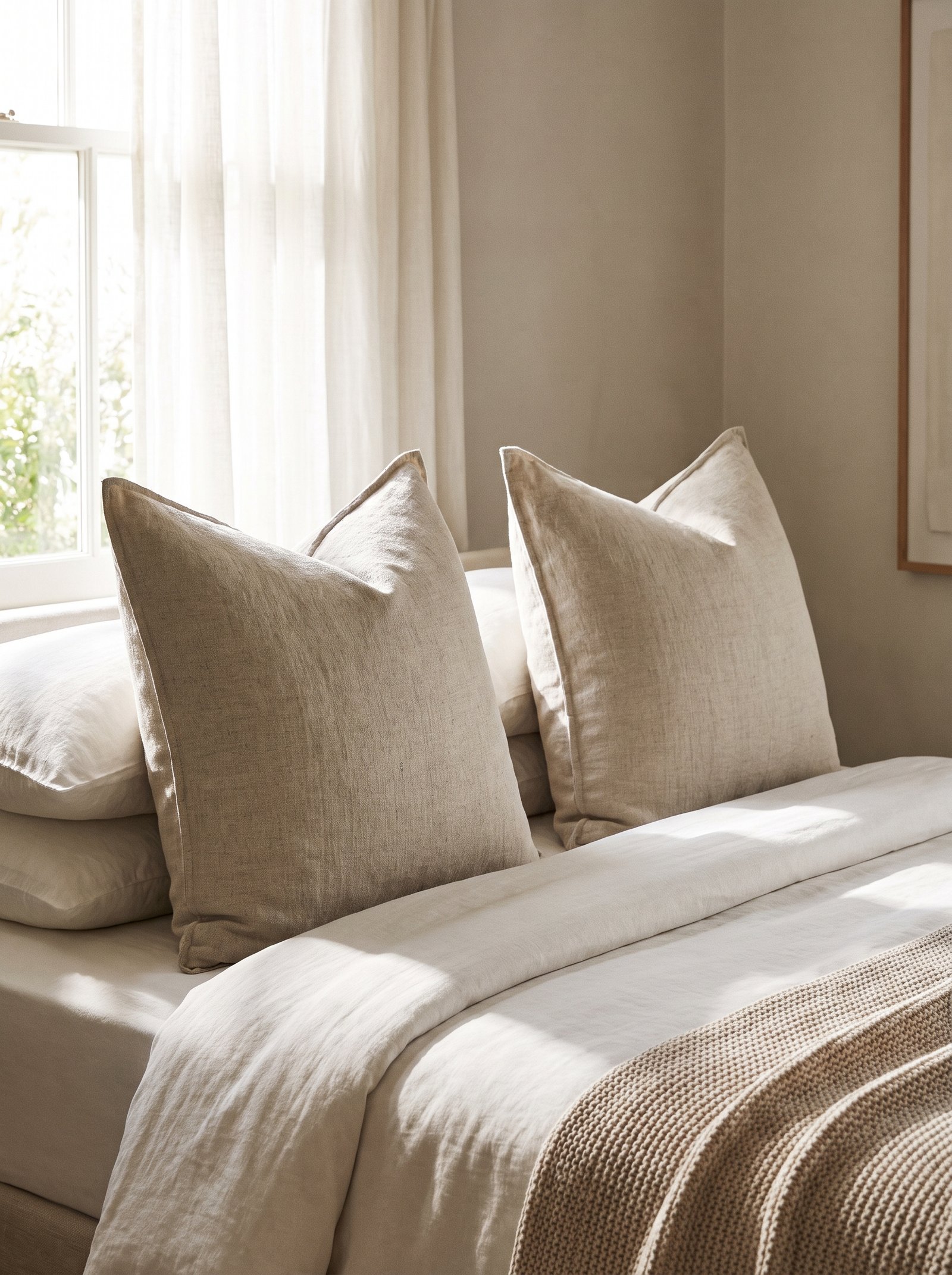
A thin, flat duvet insert makes the whole bed look deflated no matter how much you style everything above it. Upgrade to a heavier insert — down, down-alternative, or a cotton-wrapped microfiber with substantial loft — and the duvet drapes with weight the way hotel bedding does. The insert is the invisible foundation; everything else on top depends on it looking right.
You do not need true luxury hotel weight (those inserts are triple-stuffed and run hundreds of dollars), but you want enough fill that the duvet holds its shape when you shake it out and settles into generous rolls rather than flat creases when draped over the bed.
Shake the duvet out every morning before replacing it on the bed. The daily fluff keeps the fill distributed evenly rather than migrating to one corner over weeks of use, which keeps the duvet looking full and consistent.
16. Add a Bench or Trunk at the Foot
A low bench, upholstered ottoman, or small storage trunk at the foot of the bed grounds the bedroom composition and gives you somewhere to drape yesterday’s clothes without piling them on the duvet. Every hotel room has one; most bedrooms do not, which is one of the easiest upgrades you can make to shift a bedroom from residential to boutique-hotel feel.
Scale the bench to about two-thirds the width of the bed and keep it in a complementary fabric — not matching the duvet, just related. A cream boucle bench with a cream linen duvet works beautifully; the fabrics share a palette while providing textural contrast.
The bench also serves as a landing zone for the decorative pillows at bedtime. Scoop the decoratives off the bed, drape them on the bench, climb in. Morning routine reverses the process. The bench makes the decorative-pillow problem solvable.
17. Hang Art Above the Headboard

One large horizontal piece of art centered above the headboard anchors the bed and makes the whole wall feel composed. Hotels almost always do this because it is the fastest way to turn a wall-plus-bed into a scene rather than a collection of pieces. The art provides the top of the bed’s visual composition and prevents the wall above the headboard from reading as empty.
Scale is non-negotiable: the art should be at least two-thirds the width of the headboard. Small art floating above a king bed looks like a postage stamp on an envelope. Oversized art reads intentional; undersized art reads tentative.
Choose art with a palette that complements the bedding without matching too precisely. If the room is mostly cream, choose art with warm earth tones. If the bedding is deep green, choose art with cream and gold accents. The art should harmonize, not duplicate.
18. Flank the Bed With Symmetry

Matching nightstands with matching lamps on both sides of the bed is the single most hotel-looking move in a bedroom. The symmetry calms the eye and makes the whole room read as considered rather than assembled piece by piece over years. Mismatched nightstands can work in deliberately eclectic rooms, but matching ones always read as the safer, more polished choice.
If budget is tight, start with matching lamps on mismatched nightstands — the symmetry at eye level does most of the visual work. The lamps are what you see first when walking into the bedroom; the nightstands register as background furniture.
The lamps should be substantial enough to read as architecture. Small table lamps on either side of a king bed look like accessories; medium-to-large lamps anchor the bed as the room’s architectural centerpiece.
19. Keep Nightstand Styling Minimal
One lamp, one book, one small object or vessel for a glass of water. That is the hotel-minimal nightstand formula. Anything more and the bedroom starts to feel busy; anything less and it feels unused. The three-object rule applies here with special importance because the nightstand is at eye level when you climb into or out of bed.
Hide chargers, meds, remotes, tissues, and readers inside the nightstand drawer. The surface stays clean; the function stays accessible. The combination is what makes bedrooms feel designed rather than survival-mode.
If the nightstand has no drawer, use a small lidded box or ceramic jar on the surface to hide the small daily items that would otherwise clutter the top. The box becomes part of the styling; the clutter disappears.
20. Use a Rug Under the Lower Two-Thirds of the Bed

A rug that runs under the lower two-thirds of the bed — not under the nightstands, not just a tiny mat beside the bed — grounds the whole room and gives your feet somewhere warm to land every morning. This is a design-store move that hotels adopted decades ago and that transforms a bedroom from assembled to designed.
Minimum size for a queen bed: eight by ten feet. For a king: nine by twelve feet. Smaller rugs make the bed look like it is floating on an island of carpet rather than resting on a foundation. Our free Rug Size Calculator gives the exact sizes for your bed and room dimensions.
Position the rug so twenty-four inches of rug extends past the bed on both long sides and the foot. The generous overhang is what reads luxurious; stingy overhang reads like a corner-cutting compromise.
21. Add Blackout Curtains, Then Layer Them

Hotel sleep quality comes partly from the blackout drapes. At home, layer blackout panels underneath softer linen or cotton drapes so you get darkness at night and soft diffused light during the day without compromising either function. The visible layer during daylight is the soft linen; the blackout layer activates only when you close everything for sleep.
Hang the rod wide and high — wider than the window frame and nearly to the ceiling — so the windows read bigger than they actually are and the fabric puddles slightly on the floor. The high-and-wide curtain mounting is a free upgrade that transforms the perceived size of any window.
Choose cream, oatmeal, or soft gray for the linen layer. Dark heavy drapes make bedrooms feel smaller even when the window is covered; light-colored drapes keep the room feeling airy.
22. Change the Sheets Every Four Days

Hotels change sheets daily; most of us will not. But swapping fitted and flat sheets every three to four days (and pillowcases every two) keeps the bed feeling hotel-fresh and dramatically extends the life of your bedding by distributing wear across multiple sets rather than concentrating it on one. Rotate two or three full sets so one set is always clean and ready.
Wash on cold with a scent-free or gently-scented detergent. Harsh detergents break down fibers faster and introduce chemical smells that fight any linen spray or candle you want to use for the bedroom’s intended scent profile.
Hang the duvet cover inside-out on a sunny day when possible. The sun bleaches residual stains naturally and leaves the fabric smelling like a boutique hotel at no additional cost.
23. Spritz Linen Spray at the End
The final hotel detail that nobody consciously sees but everyone subconsciously notices: a light spritz of linen spray over the duvet and pillows after you make the bed. Lavender, cedar, sandalwood, or a soft musk — a scent you associate with rest and the end of the day. It is the sensory equivalent of fresh towels at a boutique hotel.
Make your own linen spray with distilled water, a few drops of essential oil, and a small amount of vodka or witch hazel as a dispersant. Total cost under five dollars; result is better than most commercial sprays because you control the scent intensity and purity.
Keep the spray bottle on the nightstand so the pre-sleep ritual becomes part of the routine. The scent builds association with sleep over time, which can genuinely improve how quickly you fall asleep each night.
24. Store Extra Pillows in a Basket
Decorative pillows do not belong on the bed at night — they end up on the floor and get smashed. A tall woven basket beside the bed is where they live at bedtime. It also doubles as a hamper for the throw blanket when it is not in use. The basket becomes functional storage disguised as decor.
Pick a basket in a natural fiber (seagrass, rattan, jute) that complements the bedroom’s textures. A woven basket next to a styled bed reads as part of the room’s intentional design; a plastic laundry hamper reads as compromise.
Line the basket with a soft cloth or scrap of linen to protect the decorative pillows from the rough basket fibers over months of use. Small protection, substantial payoff in pillow longevity.
25. Make the Bed First Thing Every Morning

None of the styling above matters if the bed stays unmade until noon. Making it immediately after you get up — even badly — keeps the room from spiraling into clutter and sets the tone for the rest of the day. It takes four minutes once you have the routine, and the difference between a made bed and an unmade bed is the difference between a bedroom you want to enter and one you avoid.
Treat the pillow karate-chop and the throw drape as the two non-negotiables of daily bed-making. Everything else — the perfect hospital corners, the exact pillow stack, the linen spray — is optional on busy mornings. The chop and drape take under thirty seconds combined and deliver eighty percent of the hotel-styled effect.
Making the bed also provides a tiny daily discipline that other small habits can anchor to. The two-minute bed-making ritual becomes the first completed task of the day, which starts the day with momentum rather than overwhelm.
Common Bed Styling Mistakes to Avoid
The most common bed styling mistake is using too few pillows. A bed with just two sleeping pillows looks unmade even when it is technically made. The visual mass of a proper pillow stack is what makes a bed read as styled; two lonely pillows read as a daily surrender rather than a daily achievement.
The second common mistake is matching every element too precisely. Matching duvet, euros, sleepers, decoratives, lumbar, bed scarf, and bench upholstery reads as a bedding set from the catalog page, not as a collected designed room. Mix fabric textures within a tight color palette for the layered expensive look.
The third mistake is placing a king duvet correctly on a king bed. Counterintuitive but true: king duvets on king beds end flat at the mattress edge, which looks institutional. Buy California king duvets for king beds, king duvets for queens, queen duvets for fulls. The size-up strategy delivers the drape.
Finally, avoid dark heavy bedding in small bedrooms. Dark duvets absorb light and visually weigh the room down; cream, oatmeal, and soft neutral bedding keeps even small bedrooms feeling light and spacious.
Bed Styling by Bedroom Style
A minimalist bedroom benefits from a stripped-down pillow stack — two euros, two sleepers, maybe one lumbar. Skip the decorative shams entirely. Monochrome bedding in cream or oatmeal; one subtle textural throw. The restraint reads calm and considered rather than empty.
A boho bedroom benefits from the full pillow stack plus a body pillow or bolster at the base. Mix patterns intentionally — one block print, one solid, one woven texture. Add a vintage kilim or Suzani textile as the bed scarf. The layered textures and patterns are the whole point.
A farmhouse bedroom benefits from matching but relaxed bedding — crisp cream linens, chunky knit throw, a pair of ticking stripe decorative shams. Keep the color palette tight (cream, warm wood, matte black) and let the natural fabric texture carry the whole look.
A classic bedroom benefits from formal symmetry — matching pairs everywhere, velvet or silk decoratives, tasseled trim on shams, deep traditional colors (burgundy, navy, forest green) in small accents. The formality reads sophisticated rather than stuffy when kept within tight color limits.
Bedding Fabric Guide — What Each Fiber Does
Cotton Percale: Crisp, cool, hotel-standard. Reads clean and classic. Best for people who like a tightly-made bed with sharp folds. Washes beautifully and lasts years.
Cotton Sateen: Slightly silkier and warmer than percale. Reads more polished and formal. Better for cooler climates or sleepers who prefer a smoother surface against skin.
Linen: Textured, breathable, lived-in look. Wrinkles become part of the aesthetic. Best for Mediterranean, Scandinavian, or boho bedrooms. Gets softer with every wash across years of use.
Boucle: Nubbly, textured, modern. Reserve for decorative pillows and throws, not sheets. Reads expensive against smoother bedding fabrics beneath.
Velvet: Rich, saturated, dramatic. Best for lumbar accents and bed benches in classic or boho bedrooms. Shows every speck of dust and pet hair.
Keeping Your Styled Bed Looking Right Over Time
Styled beds degrade quickly without a daily and weekly maintenance routine. Daily: make the bed, karate-chop pillows, re-drape throw. Weekly: swap sheets, re-iron the duvet cover top, refill linen spray if empty. Monthly: dust the headboard, wash the throw blanket, rotate pillow inserts to prevent flat spots. Seasonally: swap decorative pillow covers for seasonal variations, deep-clean the duvet insert.
The maintenance routine takes under ten minutes total per day and about thirty minutes weekly. In exchange, the bedroom consistently reads as a boutique hotel room rather than a slept-in bedroom, which affects mood, sleep quality, and how guests perceive your home.
Where to Shop Hotel-Quality Bedding
For crisp cotton percale similar to what boutique hotels use, look at Boll & Branch, Brooklinen, Parachute, and Riley Home. All deliver hotel-grade fabric at direct-to-consumer prices substantially lower than retail luxury alternatives.
For washed linen in warm neutral tones, Rough Linen, MagicLinen, and Linoto all deliver quality that improves with every wash. Expect to pay more upfront but save on replacements across years.
For duvet inserts with real loft, down from Pacific Coast or down-alternative from Buffy both deliver the plush drape that budget inserts cannot replicate. The insert is where to spend if you spend anywhere.
For decorative pillows, Etsy sellers and small-shop boutiques outperform big-box retailers consistently. Expect to pay $40-80 per decorative pillow for genuinely well-made covers in natural fabrics.
Pulling the Hotel Bed Look Together
A boutique hotel bed is really just a bed with better layering, better pillow math, and a little more fabric than you would think necessary. Oversized duvet, flat sheet folded back as a cuff, euro shams in the back, karate-chopped sleepers, a decorative pair in front, one lumbar as the accent, and a throw at an angle across the foot. Add a bench, a rug that extends well past the bed, and a lamp on each side — now the whole bedroom reads as a suite rather than a standard room.
Start with the easiest wins. The karate chop. The oversized duvet. The flat sheet cuff. The diagonal throw drape. Those four moves alone transform almost any bed in under five minutes with zero shopping. The remaining twenty-one ideas layer in over time as you refine the look.
The underlying principle is simple: a styled bed should feel inviting rather than performative. Every rule above exists to make the bed more comfortable and more beautiful at the same time, not to force those two goals into opposition. A properly styled hotel-feel bed is also a more comfortable bed to sleep in because the layered bedding warms better, the oversized duvet covers both sleepers properly, and the pillow stack provides sitting-up support when you want to read in bed.
For more bedroom styling across the whole room, see our guides on making a small bedroom feel bigger, master bedroom boutique hotel decor, sage green bedroom ideas, summer bedroom refresh ideas, and our free Pillow Formula Calculator that generates the exact pillow stack formula for your specific bed size and style preference.
Bed Styling FAQs
How do you style a bed like a hotel?
Use the pillow formula: 2 euro shams in back, 2 sleeping pillows (karate-chopped), 2 decorative shams, 1 lumbar in front. Add an oversized duvet one size up from your bed. Fold the flat sheet back as a visible cuff. Drape a throw diagonally across the foot.
How many pillows should be on a queen bed?
The hotel formula for queen is 7 pillows: 2 euro shams, 2 sleeping pillows, 2 decorative shams, and 1 lumbar accent. For minimalist styling, drop the decoratives to 5 total. For boho layered looks, add a body pillow at the base for 8 total.
What size duvet for a king bed?
Use a California king duvet on a standard king bed. The oversized duvet drapes generously over the sides instead of ending flat at the mattress edge, which creates the plush hotel look. Correctly-sized duvets look flat and institutional.
What is the karate chop on hotel pillows?
A karate chop is a hand-edge dent made in the top center of each sleeping pillow after fluffing. It creates a tailored shape that reads styled rather than slept-on. It takes four seconds per pillow and dramatically upgrades how the bed photographs.