
25 Thrift Store Home Decor Flip Ideas That Look Expensive
The best-styled rooms in the most expensive-looking homes are rarely furnished entirely from catalogs. If you look carefully at the editorial spreads in design magazines or the behind-the-scenes shots in your favorite interior designers’ Instagram feeds, you will see the same quiet pattern repeating: one incredible vintage lamp with a new linen shade, one solid-wood mid-century dresser with the hardware swapped, one leather wingback chair that was reupholstered a decade ago. The common thread is that most of these pieces came from a thrift store, estate sale, or Facebook Marketplace listing — and then got the one or two small upgrades that turned them from secondhand finds into statement furniture.
Thrift stores are the raw material; the flip is where the room reads custom. The reason flipped thrift pieces look so good is that most of them started life as higher-quality items than anything you can buy new at that price. Solid-wood dressers from the 1960s are built better than most big-box dressers available today. Vintage brass lamps have real weight and real patina that no mass-produced reproduction can fake. Old leather wingbacks have broken-in leather that reads expensive the moment anyone sits in them. All of this is sitting in local thrift stores, estate sales, Goodwill ReStores, Habitat for Humanity shops, and Facebook Marketplace listings right now — usually for less than ten percent of what the same quality would cost new.
The 25 thrift store home decor flip ideas below are the ones that genuinely transform a piece — projects you can finish in a weekend, usually with under $50 in supplies and tools most people already own. Each flip ends with a piece that reads as a specialty-shop find rather than a secondhand save. Pick the one or two that match the thrift store treasures already sitting in your garage or that you’ve been eyeing on Marketplace. The result will outperform anything comparable at the big-box stores — and the room you build around it will look like it was designed by someone with real taste rather than someone with a store credit card.
1. Flip a Vintage Brass Lamp With a New Shade

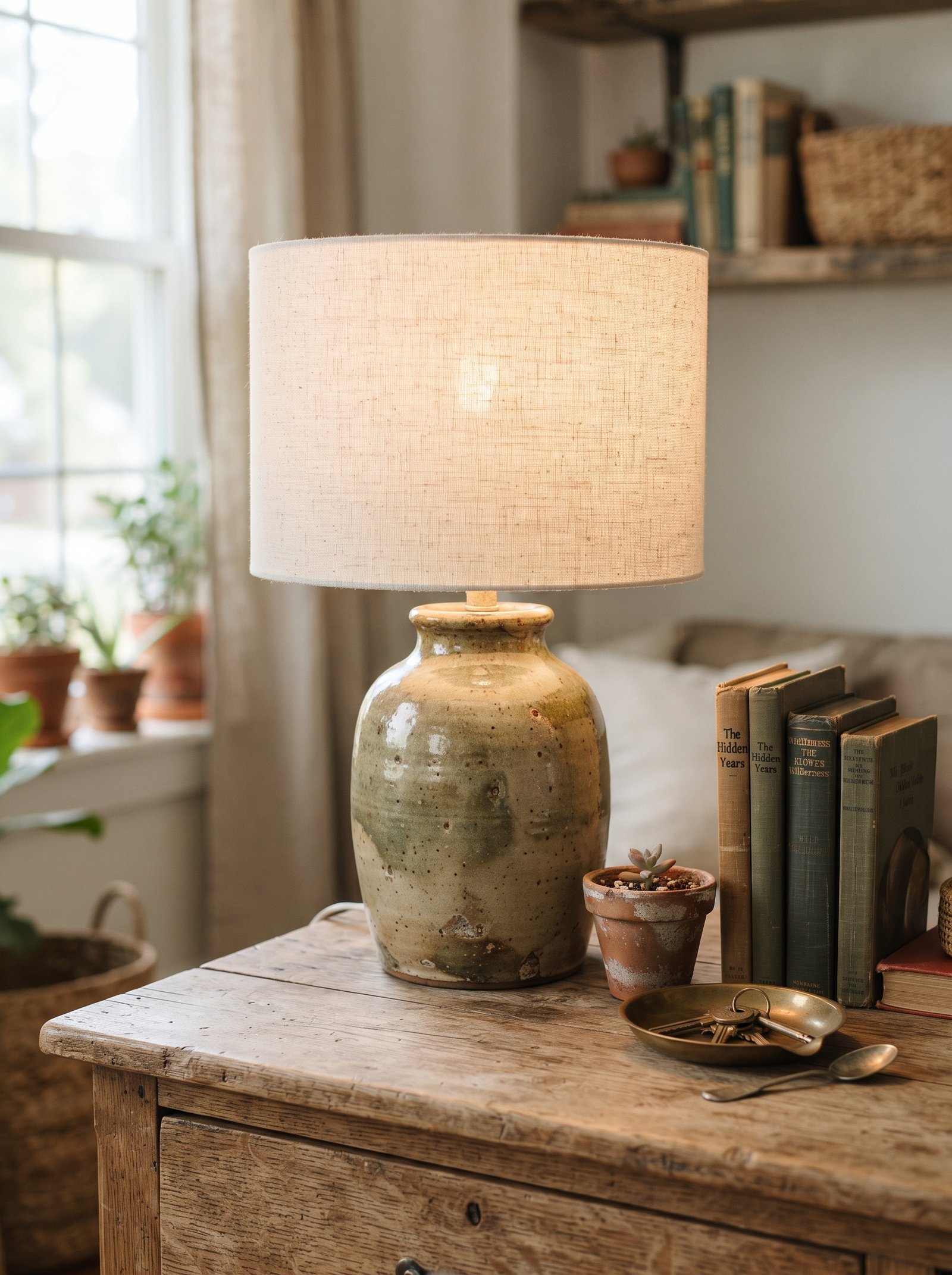
Vintage brass lamps are everywhere in thrift stores for under $15. Most of them have beautiful heavy bases with real patina, interesting shapes, and solid construction — and most of them are hiding under cheap paper shades that make them look dated. Buff off any tarnish with a soft cloth, pair the base with a modern pleated linen shade in cream, warm sand, or soft black, and the lamp instantly reads as a $300 boutique piece.
The hunt for the right shade matters more than the lamp itself. A beautiful brass base with the wrong shade still looks like a thrift store lamp; the same base with a pleated or oversized shade in natural materials becomes a design piece. Shop shades at specialty lampshade stores, Etsy sellers like Lampshade Lounge or Lamp Shade Pro, or small boutiques that stock vintage-style shades.
Scalloped-edge shades, pleated silk, oversized drum shades in linen, and burnish lamp-base-matched silk shades all work beautifully. Avoid flimsy stock shades that come with cheap lamps and avoid stark white shades which read sterile against warm brass.
If the lamp cord is dated or damaged, rewiring kits cost $15 at any hardware store and the project takes 20 minutes. The upgraded cord in brown cloth or black fabric adds another layer of sophistication that the stock plastic cord simply cannot match.
2. Reupholster Dining Chair Seats in Linen or Boucle
Thrifted dining chairs with solid wood frames and dated upholstered seats become expensive-looking with a $8-per-yard upgrade in boucle, performance linen, or velvet. Unscrew the seat from underneath (usually four or six screws), lay the fabric over the existing cushion, pull it tight, and staple to the underside of the seat. Reattach. Twenty minutes per chair, and the chair reads completely transformed.
Buy fabric from the remnant bin at your local upholstery shop, JOANN Fabrics, or online specialty stores like Spoonflower. Remnants are often 50-80% off retail prices and come in sizes perfect for a dining chair seat. Each chair costs under $10 to transform and looks like it came from Pottery Barn or Serena & Lily.
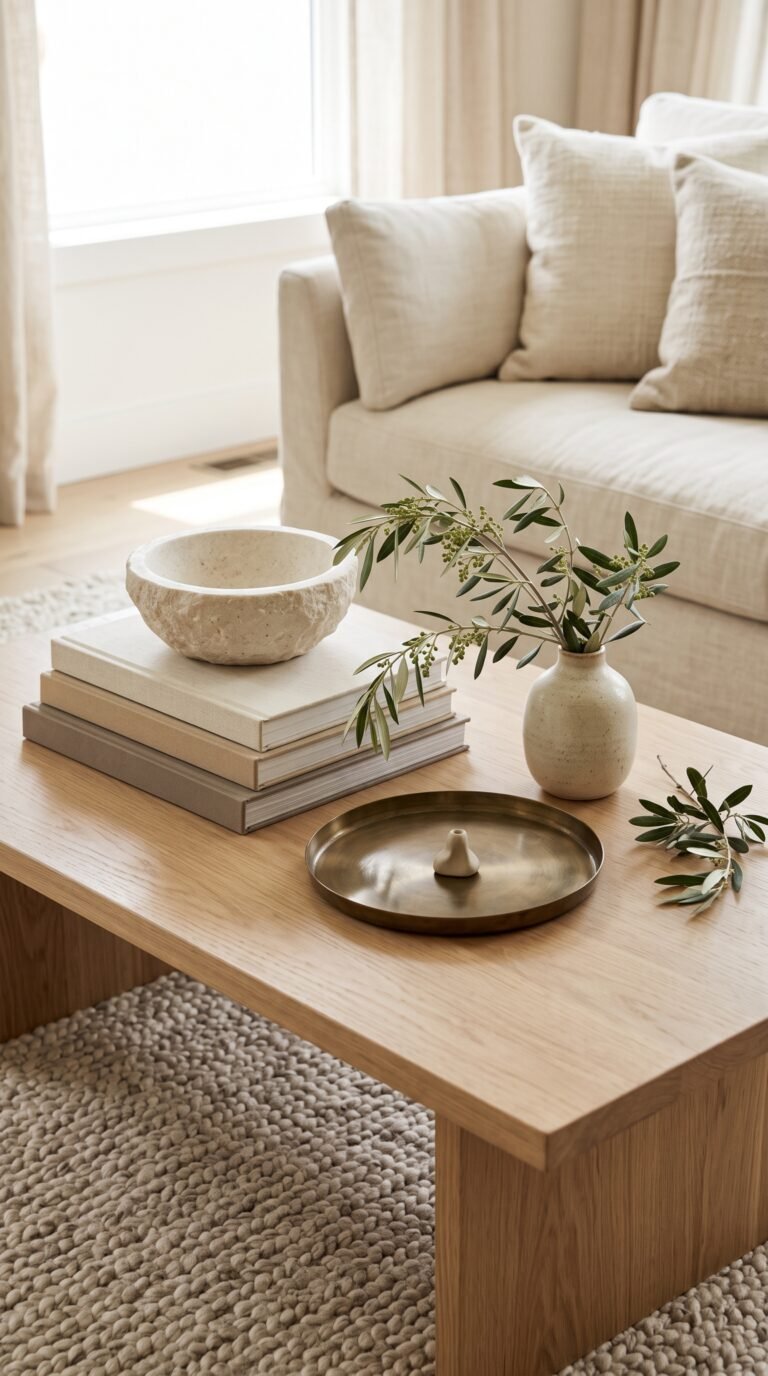
If the chair seat has sagging foam, replace it at the same time. A single roll of 2-inch high-density foam at a craft store costs $20 and will reseat four or five chairs. The combination of fresh foam plus new fabric makes thrifted chairs more comfortable than they ever were, in addition to looking better.
Choose neutral upholstery that matches your dining room’s palette — oatmeal linen, cream boucle, muted taupe velvet, or soft black. Loud patterns date quickly; solid naturals in high-quality texture age gracefully across years of use.
3. Sand and Oil a Wooden Mirror
Carved or framed wooden mirrors in dated finishes are frequent thrift-store finds, especially in the $15-40 price range. Sand off the glossy varnish or peeling paint with 120 and then 220 grit sandpaper, apply a few coats of warm wood oil (teak oil, Danish oil, or linseed oil with a soft cloth), and the piece reads as a hand-carved artisan mirror rather than a 1980s big-box remnant.
Round or arched shapes work best for modern rooms. Rectangle mirrors with heavy ornate frames usually read dated no matter the finish — the shape itself has baggage from the Reagan era that no refinishing can quite shake off.
Hunt specifically for mirrors with interesting carved details, inlaid wood patterns, or unusual natural-wood frames. These were often expensive originals that have simply been painted over the decades; stripping back to the wood reveals the craftsmanship.
Hang the finished mirror where it catches daylight — above a console in an entryway, on a bedroom wall opposite a window, or in a bathroom reflecting a sconce. The warm wood finish glows beautifully in natural light and reads completely different from any machine-made mirror available today.
4. Repaint a Solid Wood Dresser in a Modern Color

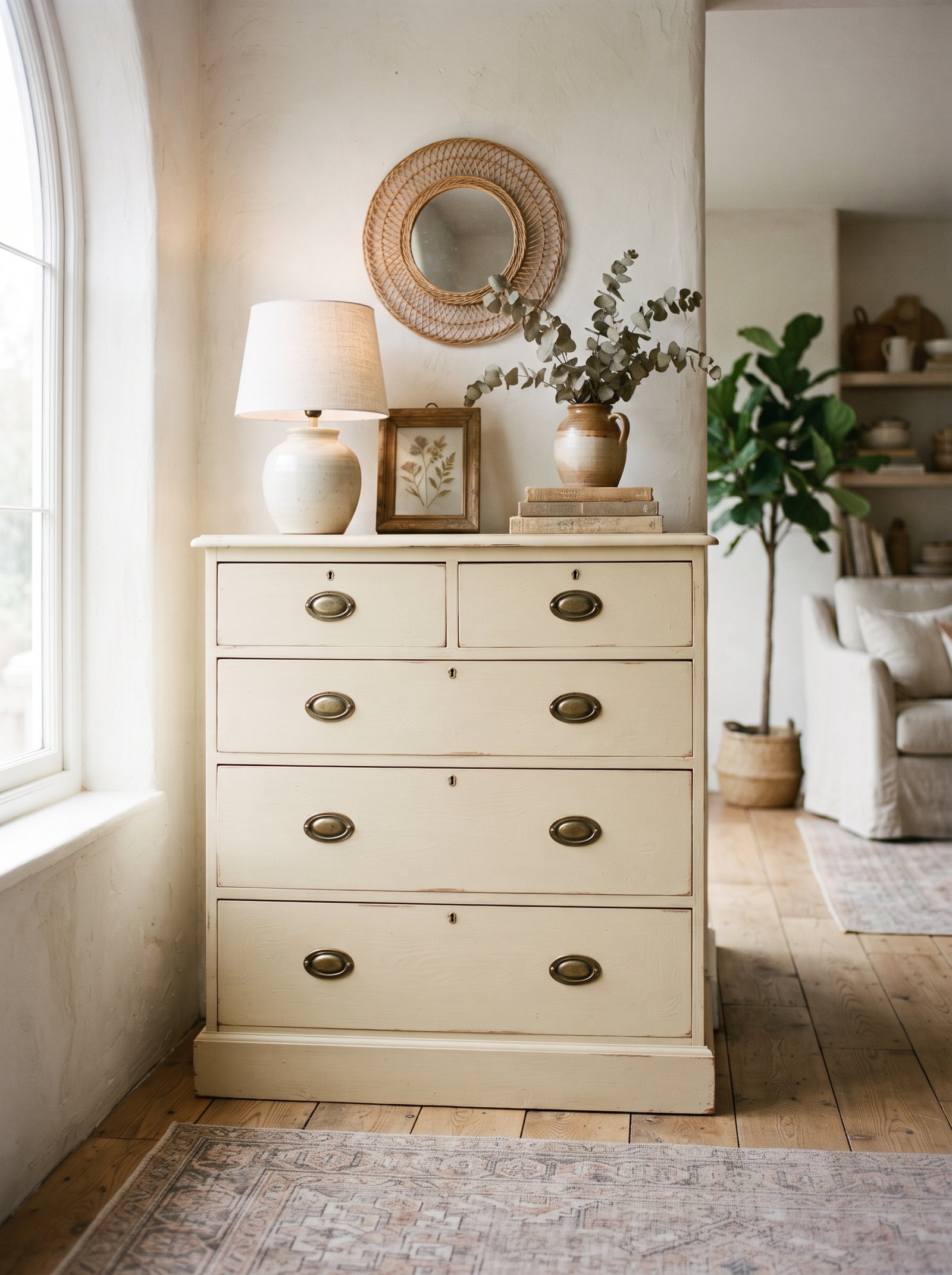
A solid-wood dresser in oak-stain or stained pine, repainted in warm cream, soft black, deep olive, or terracotta becomes a statement piece. Sand the surfaces lightly with 220 grit sandpaper, prime with a bonding primer like Zinsser BIN, apply two coats of eggshell paint. Total cost under $30 for a dresser that would retail $800 or more if you bought the equivalent new.
Swap the hardware for aged brass or leather pulls as part of the same project. The hardware is often what dates a thrift-store dresser faster than the finish does — stock 1990s brass or dark bronze pulls read decade-specific, while new unlacquered brass or leather tabs read timeless.
Choose paint colors that will age well across styling choices and room changes. Deep olive, soft black, muted terracotta, and warm cream all work beautifully across many design directions. Loud teals, bright corals, and saturated yellows tend to feel of-the-moment within a year or two.
For the highest-end finish, use chalk paint or milk paint instead of latex. Both products are forgiving (minimal prep required), self-leveling (no visible brush strokes), and age with character rather than chipping. A single $35 can of chalk paint covers a dresser plus most of a nightstand.
5. Hang a Collection of Mismatched Vintage Plates

Mismatched vintage plates in cream, blue, or earth tones hung in a loose grid on a dining wall or above a buffet read as collected over decades. Thrift stores sell individual plates for $1-5 each, and a collection of 8-12 varied sizes costs under $30 total. The visual impact is dramatic — a plate wall becomes the dining room’s signature feature.
Use plate hangers or small adhesive discs to mount them. The arrangement doesn’t need to match perfectly — the uneven mix is the whole point. Vary the plate sizes (small, medium, large), group them with intentional spacing, and the whole wall becomes a composition.
Hunt for plates with hand-painted details, interesting rim patterns, or unusual shapes. Transferware, ironstone, early American stoneware, and vintage European china all have distinct character that mass-produced plates lack entirely. Estate sales and Facebook Marketplace often have whole lots of mismatched plates for $20-40.
Mount the arrangement on a wall painted in a soft contrast color — deep green, warm taupe, soft black — so the cream and earth-toned plates stand out. Plate walls on bright white or stark neutral walls disappear visually; plate walls on a painted feature wall become focal points.
6. Flip a Dated Wicker Chair With Fresh Paint
Dated wicker chairs in natural or dark-stained finishes become modern in matte black, soft cream, or deep olive paint. Spray-paint works best for the woven surfaces because it reaches into every crevice; apply in thin coats on a drop cloth outside, let each coat dry fully between applications. Add a sheepskin or boucle cushion and the chair reads $500 instead of the $20 you paid for it.
Choose a chair with good bones — tight weave, sturdy frame, intact structure. Loose or broken wicker isn’t worth the paint even if the price is right. Give the chair a gentle shake in the store to test for structural soundness before committing to the project.
Matte paint reads modern; glossy paint reads dated. Spray lacquers in satin or matte finish are the best choice for wicker because they soak into the woven surface slightly rather than sitting on top as a visible layer.
For the fully custom look, add a loose linen or boucle cushion on top. A round sheepskin draped over the seat creates a textured focal point that photographs beautifully and makes the chair instantly more inviting.
7. Turn a Vintage Ladder Into a Blanket Rack
Wooden ladders from thrift stores, estate sales, or barns become beautiful blanket racks or towel storage. Sand lightly to remove splinters, apply a wash of oil or paint, and lean against a wall. Drape blankets, throws, or linen towels across the rungs for a styled piece that reads warm and lived-in without any custom work.
Antique wooden step ladders also work beautifully, especially in bedrooms (holding bedding throws) or bathrooms (holding towels). Choose shorter 4-6 foot pieces for a bedroom or bathroom; taller 7-8 foot pieces work for a living room corner where the vertical scale draws the eye up.
Oil-finished ladders develop beautiful patina over months of use. The combination of a vintage wooden ladder plus a few folded linen throws in warm neutral tones reads as the exact styling move that defines modern-rustic interiors.
For stability, prop the ladder slightly against the wall at the top (not fully vertical) so the weight settles securely. A small rubber grip at each foot prevents sliding on hard floors.
8. Reframe Mediocre Thrift Store Art
Mediocre thrift-store art becomes genuinely good art when reframed. A $4 landscape painting from Goodwill, placed in a $30 modern wood frame with a quality mat, reads as a gallery find. Even the ugly art of childhood often has interesting composition, color palette, or texture that a frame upgrade reveals and showcases.
Standard frame sizes are the hunt — 11×14, 16×20, 18×24, 20×24 are common and keep framing costs low. Hunt for thrift-store art that already fits these standard sizes to avoid the premium cost of custom framing.
Modern frames in natural oak, walnut, matte black, or warm brass all elevate thrifted art. Avoid ornate gold frames or heavily carved vintage frames unless the art specifically asks for that treatment; most mid-century and modern-style thrift finds look best in restrained contemporary frames.
The mat matters enormously. A quality off-white or soft cream mat (3-4 inches wide) around the art adds presence and makes any painting feel more considered. Pre-cut mats from online framing stores run $8-15 and transform the whole piece.
9. Convert a Dresser Into a Bathroom Vanity
A solid-wood thrift dresser becomes a custom bathroom vanity with a vessel sink installed in the top. Cut the hole with a jigsaw according to the sink manufacturer’s template, run plumbing through the back of the dresser, and the result is a $2,000-looking vanity for under $150 all-in including the sink and fixtures.
Seal the top with marine varnish or polyurethane to protect from water splashes. Multiple thin coats of marine varnish applied over three to four days create a bulletproof surface that resists water damage for years.
The vintage dresser plus modern vessel sink combination is a defining feature of expensive-looking modern bathrooms. The warm patina of the wood against the clean lines of a contemporary ceramic vessel creates visual contrast that reads unmistakably as high design.
Pair with warm brass or matte black bathroom fixtures to complete the custom-vanity effect. The hardware choice is the final polish that transforms the dresser-to-vanity hack from DIY project to signature bathroom feature.
10. Build a Floor Lamp From a Vintage Base
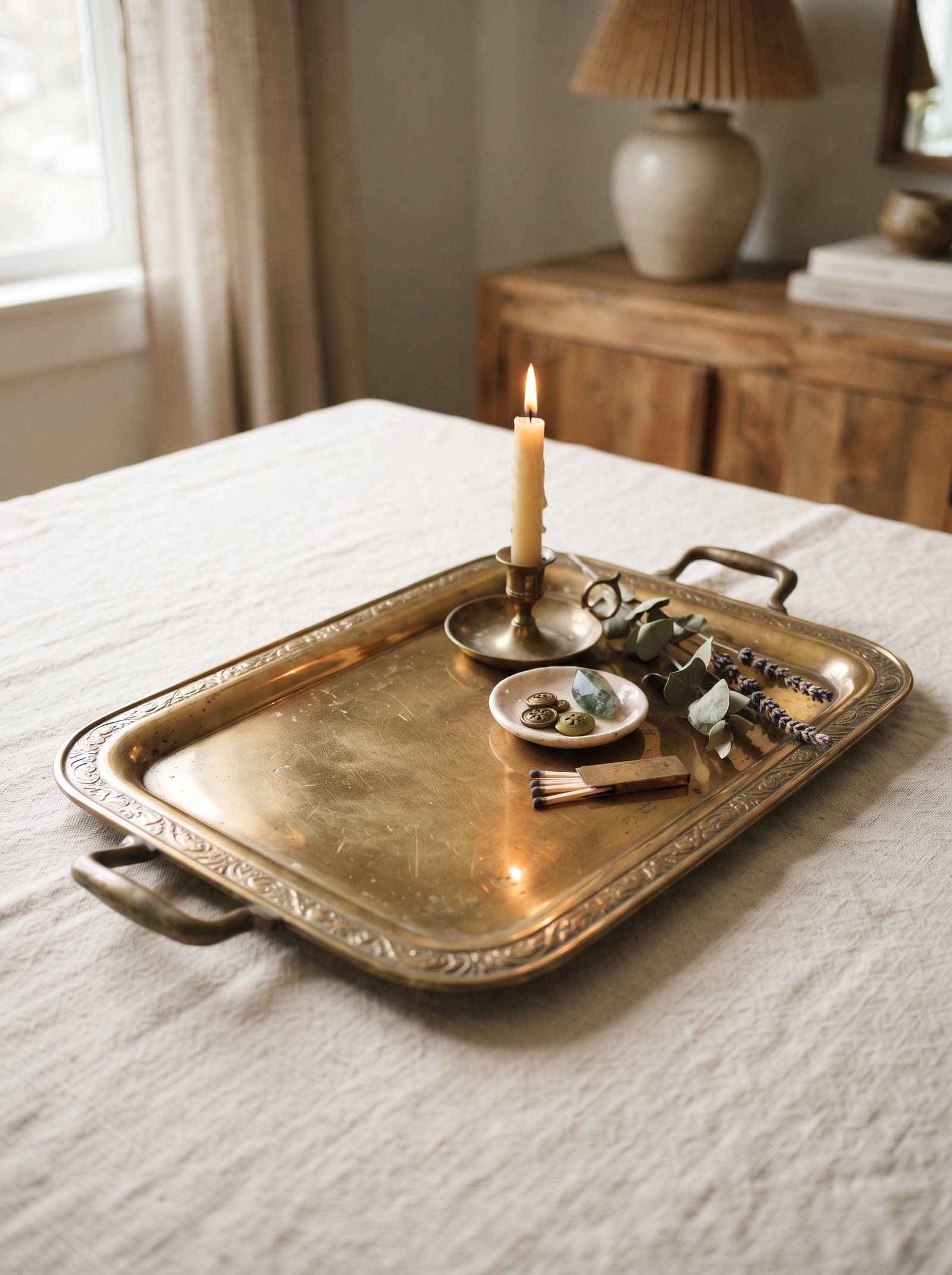
A heavy brass or wooden floor lamp base from a thrift store, rewired with a modern cord and paired with a large pleated or oversized shade, becomes an architectural lighting piece. Rewiring kits cost $20 at hardware stores and the project takes 30-45 minutes with basic tools.
The shade is usually the make-or-break — spend $60-80 on a quality oversized shade (16-20 inches diameter) and the whole lamp reads expensive. Undersized shades on a substantial base make the whole lamp look wrong; the right-sized shade transforms it entirely.
Hunt for solid brass or heavy wooden bases with interesting silhouettes. Mid-century modern bases from the 1950s and 60s are especially good candidates for this flip because the sculptural forms hold up beautifully with contemporary shades.
Replace the cord with a cloth-covered twisted cord in warm brown, black, or oatmeal rather than stock plastic. The cord upgrade is a small detail but adds the sophistication that signals custom craftsmanship.
11. Flip a Coffee Table With New Legs
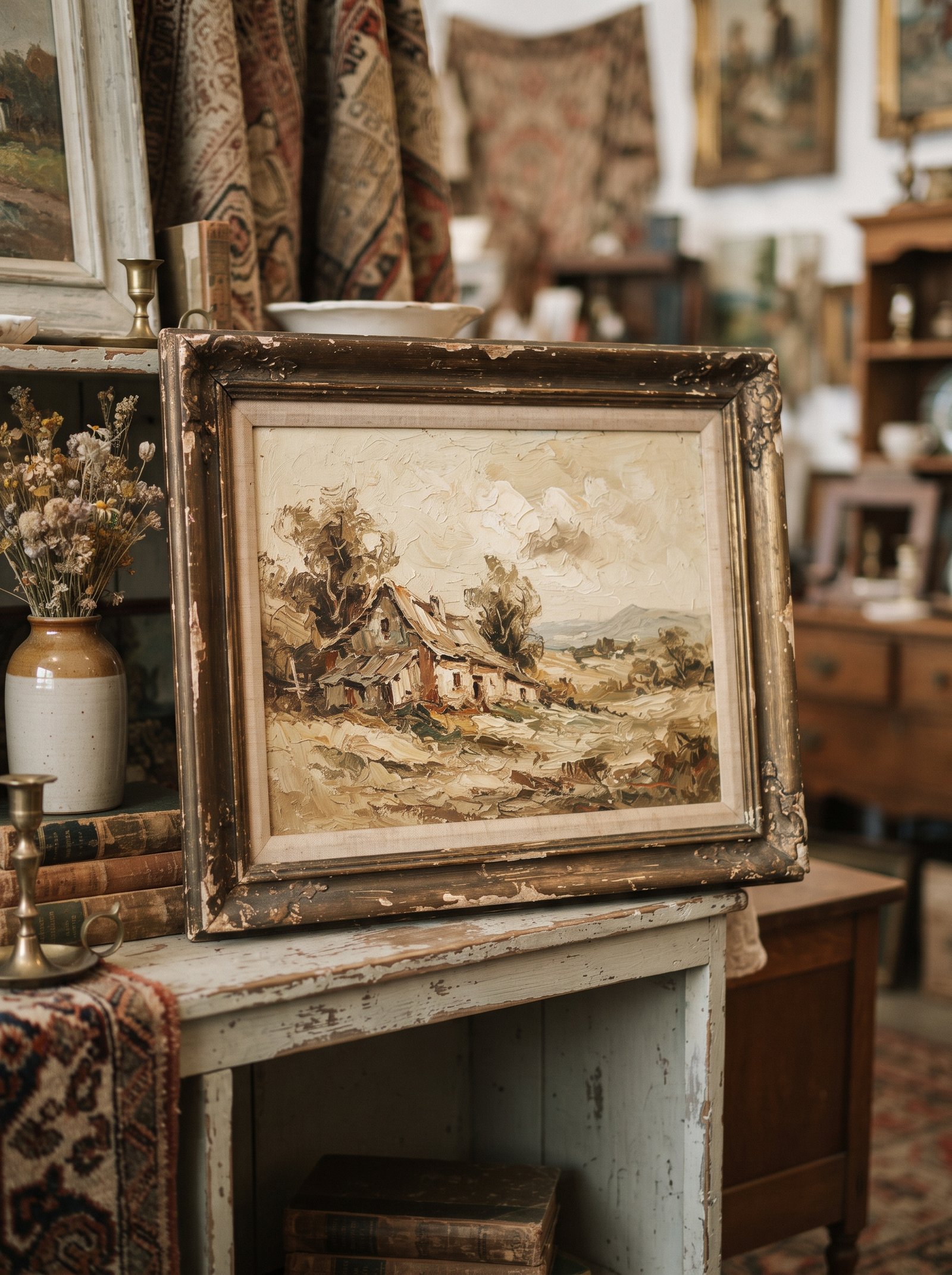
Thrifted coffee tables with dated legs become modern with hairpin, tapered walnut, or splayed brass legs. Unscrew the originals, attach replacements with mounting plates. Twenty-minute project for an unrecognizable result that costs $40-80 for the legs plus whatever you paid for the thrifted table.
Painting or oiling the top at the same time doubles the transformation. A thrifted oak coffee table top sanded, oiled, and paired with mid-century splayed walnut legs reads as a $600 designer piece.
Hairpin legs are the fastest and most forgiving swap because they attach with just four screws through a pre-made plate. Mid-century splayed legs with angled hardware are slightly more work but produce the most dramatic transformation.
Vary the leg lengths to adjust the table’s height to your room. Standard coffee table height is 16-18 inches; raising to 20 inches gives a modern designer feel and works especially well with lower sofas.
12. Collect Vintage Ceramics as a Grouping

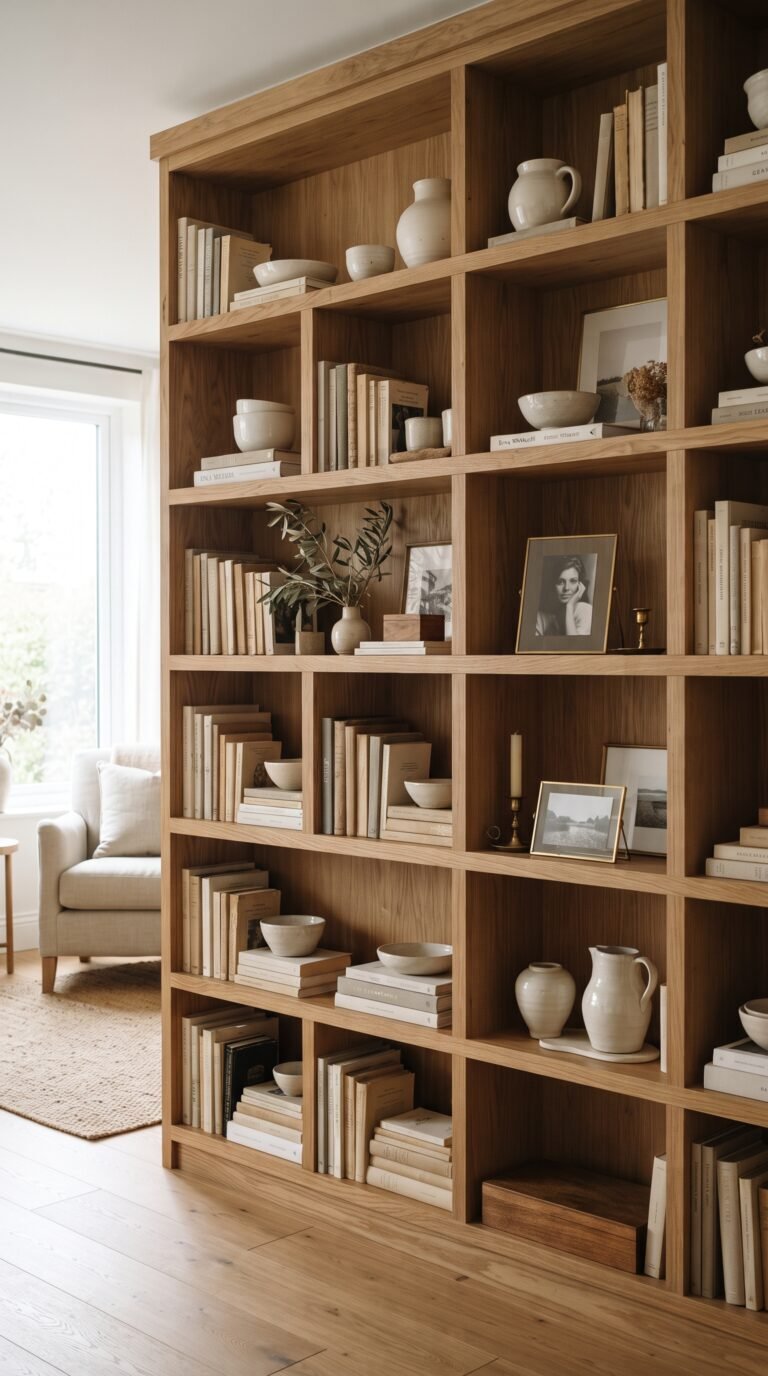
Earth-tone and cream ceramics — bud vases, small bowls, hand-thrown vessels, carved wooden forms — thrifted individually for $2-10 each become an expensive-looking collection when grouped on a shelf or coffee table. The mismatched hand-made quality is the point; the irregularity reads as decades of thoughtful collecting.
Look for signed pieces, hand-carved marks, or uneven glazes. Mass-produced ceramic pieces don’t age the same way — they stay perfect and plastic-looking forever. Hand-made pieces develop character, patina, and small imperfections that read as valuable rather than defective.
Group the pieces in threes or fives for the composed vignette effect. Vary heights (tall, medium, short) and keep the color palette tight (all earth tones, all creams, all muted blues) so the grouping reads as a composition rather than a random collection.
Style on a tray for the maximum impact. The tray creates a visual frame around the grouping that reads as intentional. A $12 wooden or brass tray from the same thrift stores where you found the ceramics is often enough.
13. Paint a Wooden Chair in Matte Black

Any wooden chair — dining, accent, reading — in dated oak or honey stain reads modern in matte black. Spray-paint with 2-3 thin coats, let dry overnight, add a leather or sheepskin seat throw. Total project cost under $20 and the chair looks completely transformed.
Matte, not glossy. Glossy black on wood reads 1980s executive office furniture. Matte reads modern Scandinavian or Japanese-inspired. The finish choice is the single most important decision in this flip.
Prep the chair properly for durability — sand lightly with 220 grit, wipe with tack cloth to remove dust, apply a thin coat of bonding primer before painting. The prep work takes 20 minutes extra but ensures the paint will hold up to years of use.
Group two or three matching matte black chairs around a cream pedestal dining table or beside a warm oak coffee table for the full designed-room effect. The repetition of black chairs reads as a decisive design choice.
14. Hang a Vintage Textile as Wall Art
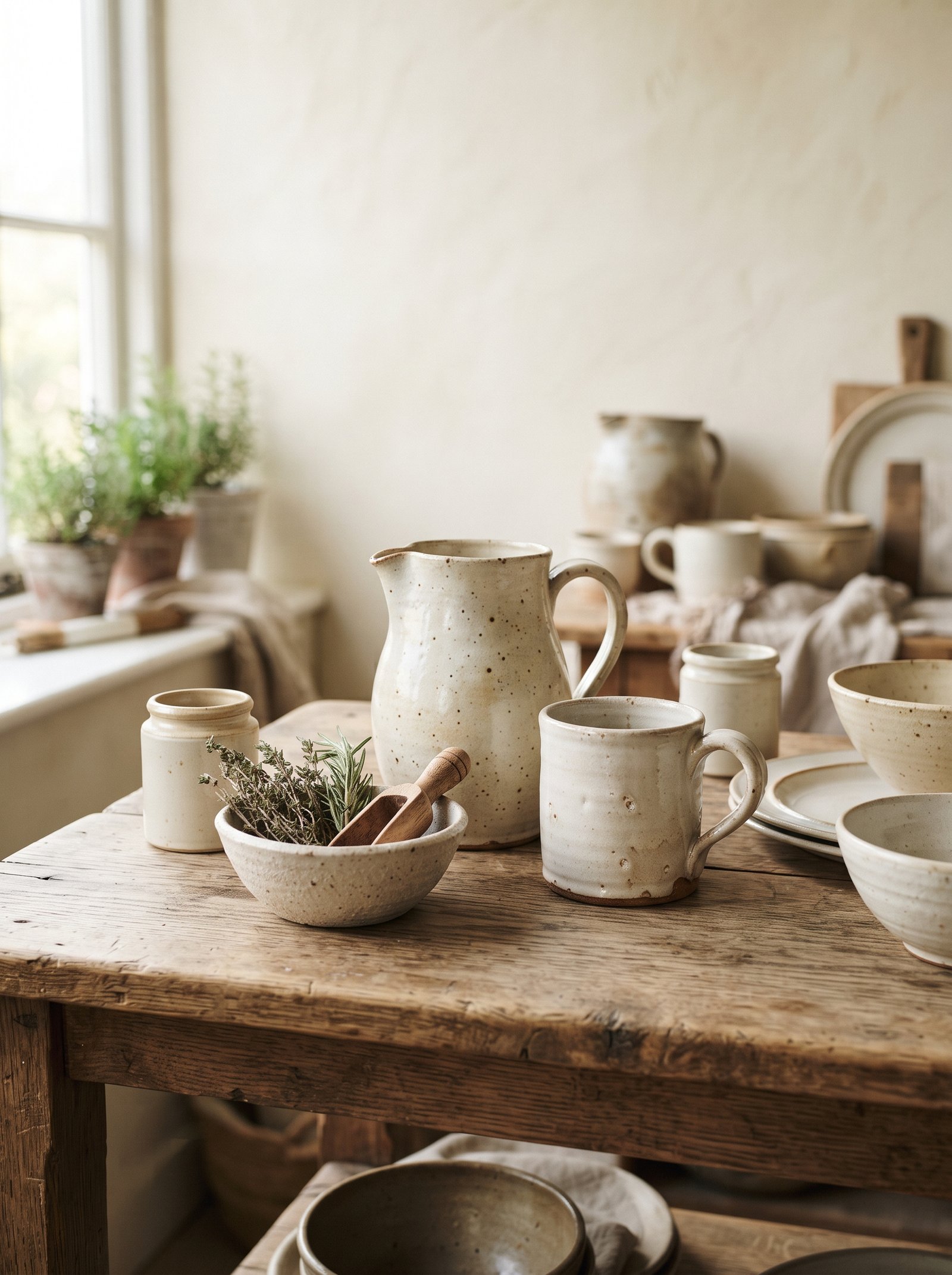
A vintage kilim, Suzani, or hand-embroidered textile hung on a wall becomes a $500-looking piece of wall art for the $15-40 textile cost. Mount with a wooden dowel at the top (sewn into a small sleeve) for the casual approach, or stretch over a canvas frame for a cleaner gallery finish.
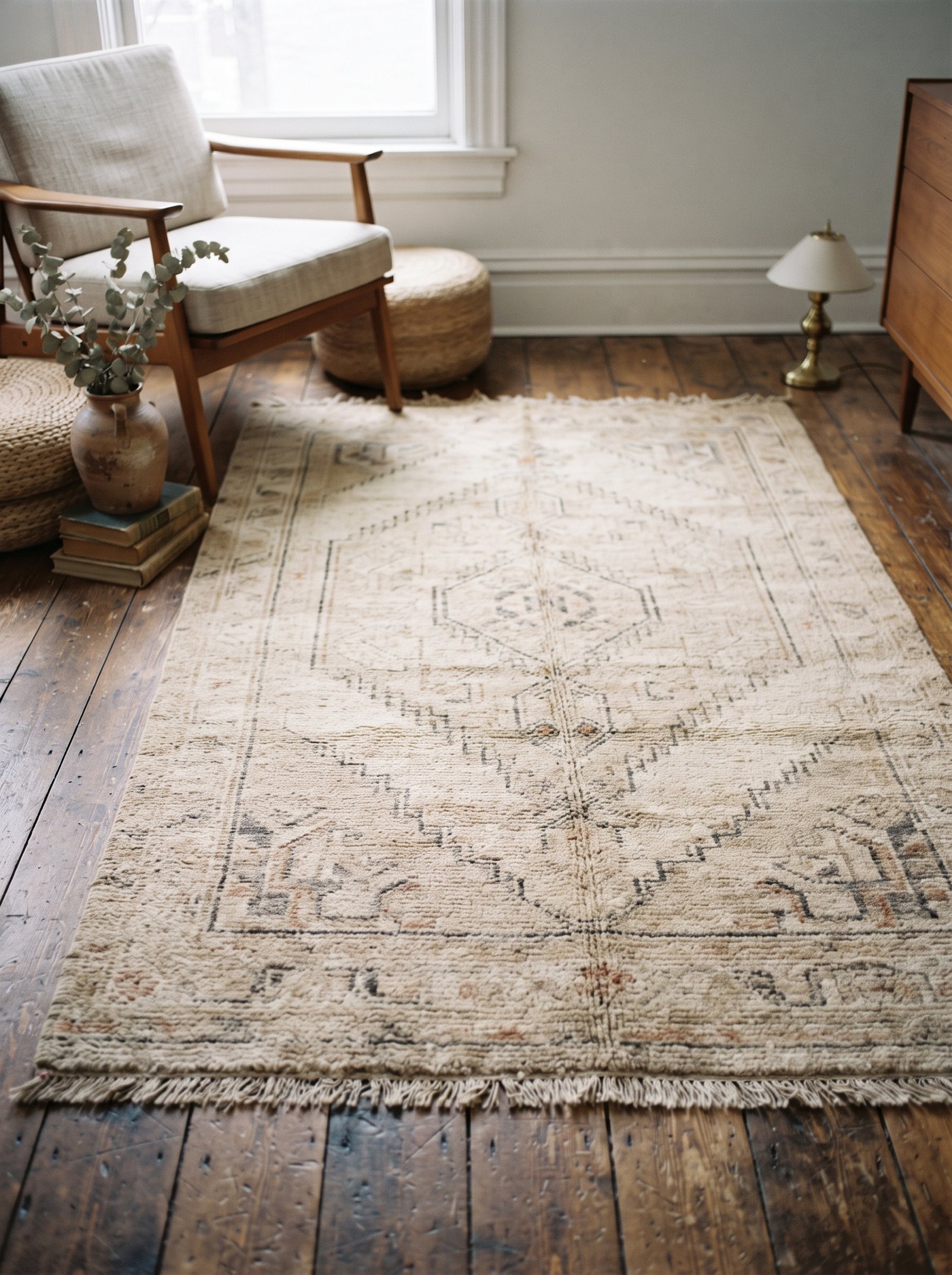
Thrift stores and estate sales regularly have these; search Facebook Marketplace for vintage rugs under $50 and estate sale listings in your area. Rugs that are too damaged for the floor often work beautifully as wall art because the wear reads as patina rather than damage.
Scale the textile to the wall. A small Suzani on a huge empty wall reads as an afterthought; a 4×6 kilim fills a space above a sofa or bed beautifully. Measure before hunting so you know what size you’re looking for.
The textile wall-art move pairs beautifully with surrounding neutral walls. Hang the textile against a cream, warm white, or soft taupe wall and the colors in the textile become the focal point of the whole room.
15. Flip a Brass Candlestick Collection
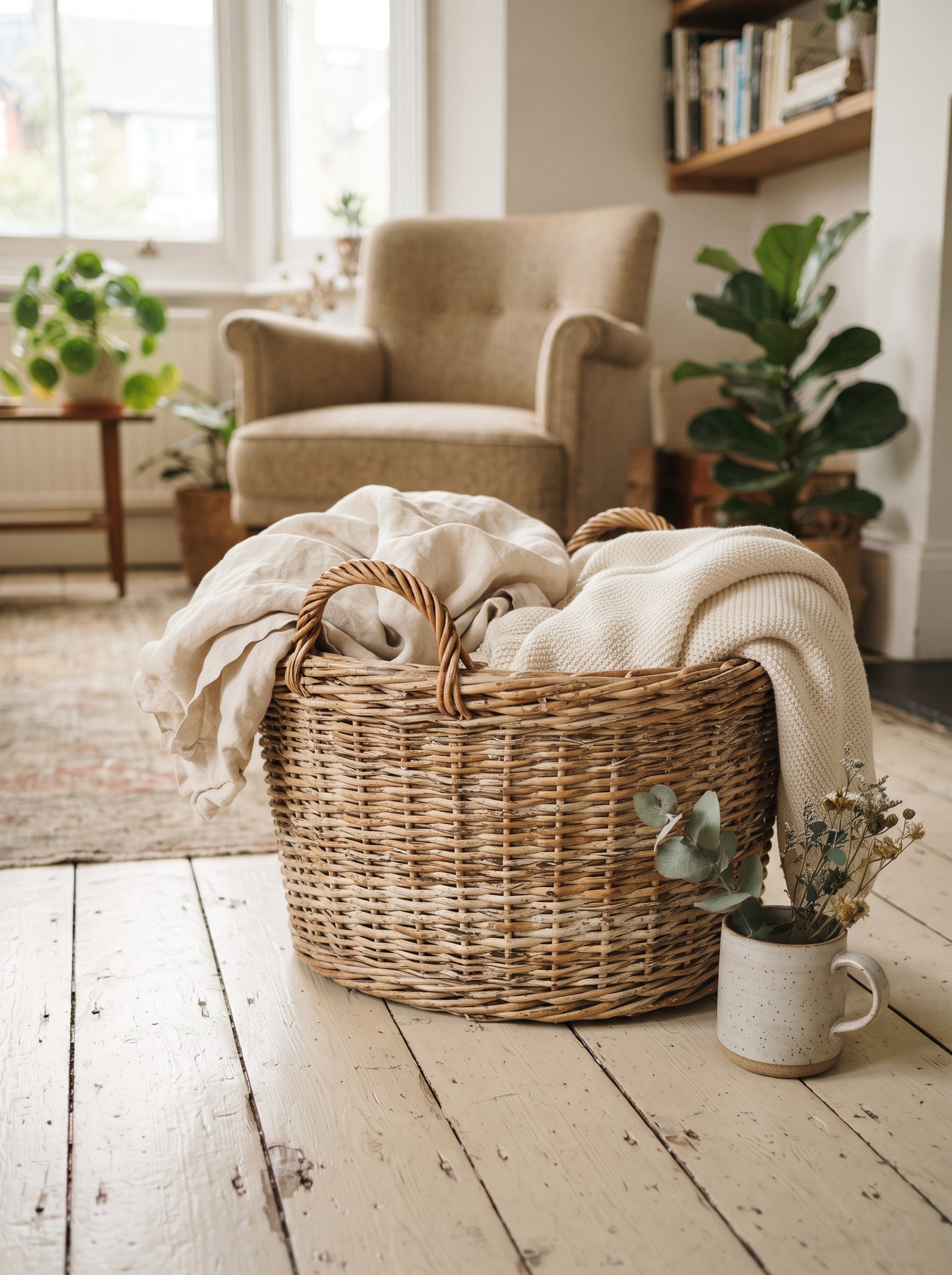
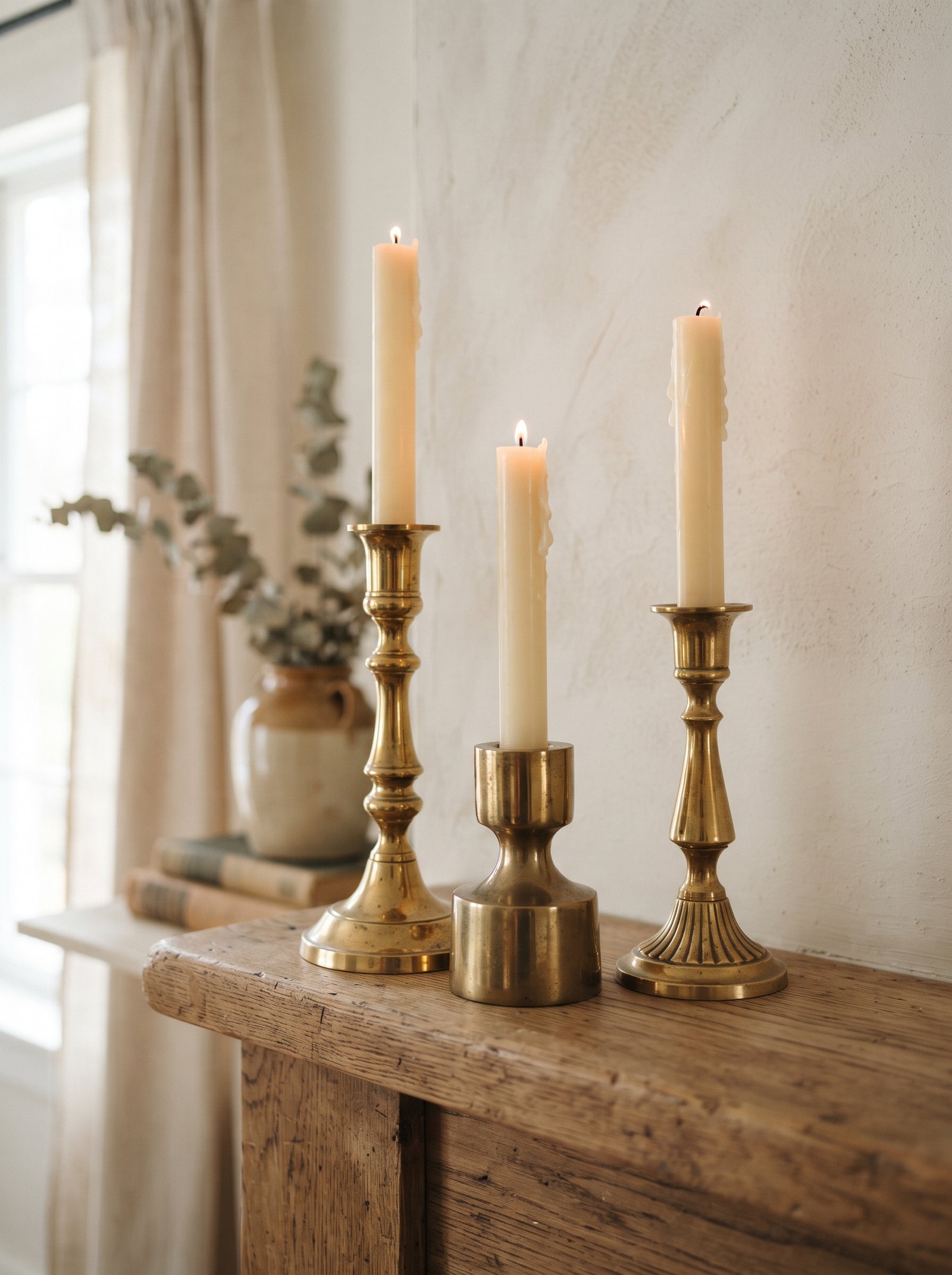
Mismatched brass candlesticks grouped in threes or fives on a mantel, dining table, or coffee table read as styled and collected. Thrift them for $2-8 each; polish lightly to remove green patina or leave the natural aging if you prefer the vintage feel. One grouping of five costs under $20 and photographs beautifully in any room.
Vary the heights — short, medium, tall — for the visual rhythm that makes any grouping of three or five objects read as composed rather than random. Matching sets of identical candlesticks look stiff and over-coordinated; varied heights read collected and interesting.
Choose candle colors in restrained tones — cream, warm white, taupe, soft black, or terracotta. Loud colored candles compete with the brass and the overall grouping reads cheaper. Neutral candles let the brass bases be the hero.
Burn the candles so the tips become uneven and lived-in. A grouping of pristine untouched candles reads staged; the same grouping with slightly used candles reads as actually part of someone’s life.
16. Reupholster a Wingback Chair
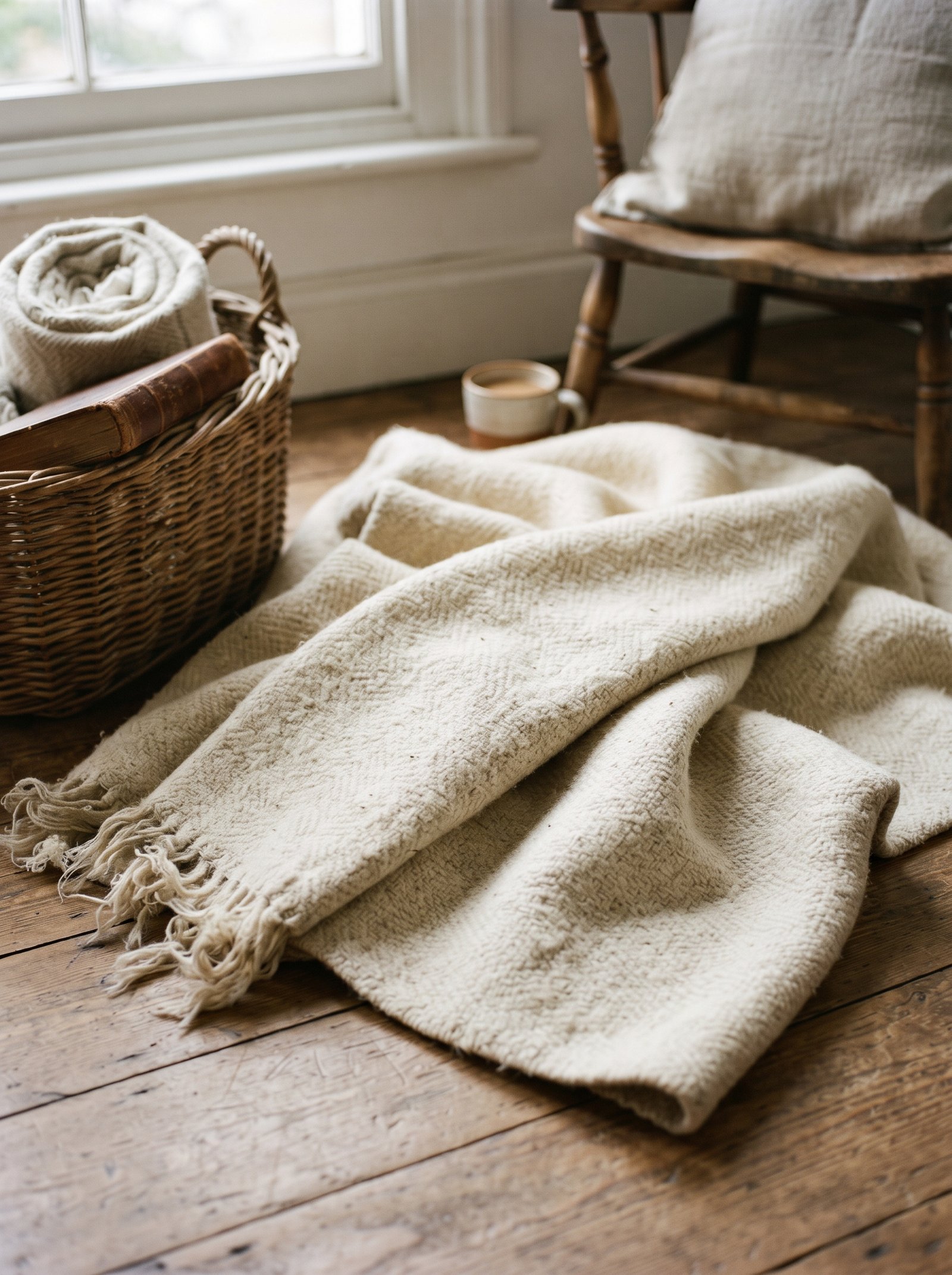
Classic wingback chairs with dated upholstery (worn florals, 1980s stripes, exhausted velvet) are often $30-80 at thrift stores. Reupholstering with a plain boucle, oatmeal linen, or warm neutral tweed delivers a $1,500-looking chair for under $200 total in materials.
Hire a local upholsterer if the DIY feels intimidating; even upholstery labor costs on a thrift wingback usually run under $300 for a complete redo. The combined cost of chair plus professional upholstery is almost always less than half the retail price of a comparable new chair.
Choose fabric that will age well. Mid-weight boucle, linen, or performance tweed in neutral colors (cream, oatmeal, soft black, warm beige) look better and better over years of use. Loud patterns and bright colors feel trendy for a season and then feel dated.
The wingback silhouette is classic for good reason — it works in almost any room style from traditional to modern-eclectic. A refreshed wingback in cream boucle beside a reading nook, in a bedroom corner, or in an entryway reads as a decisive statement piece.
17. Make a Side Table From a Stack of Books

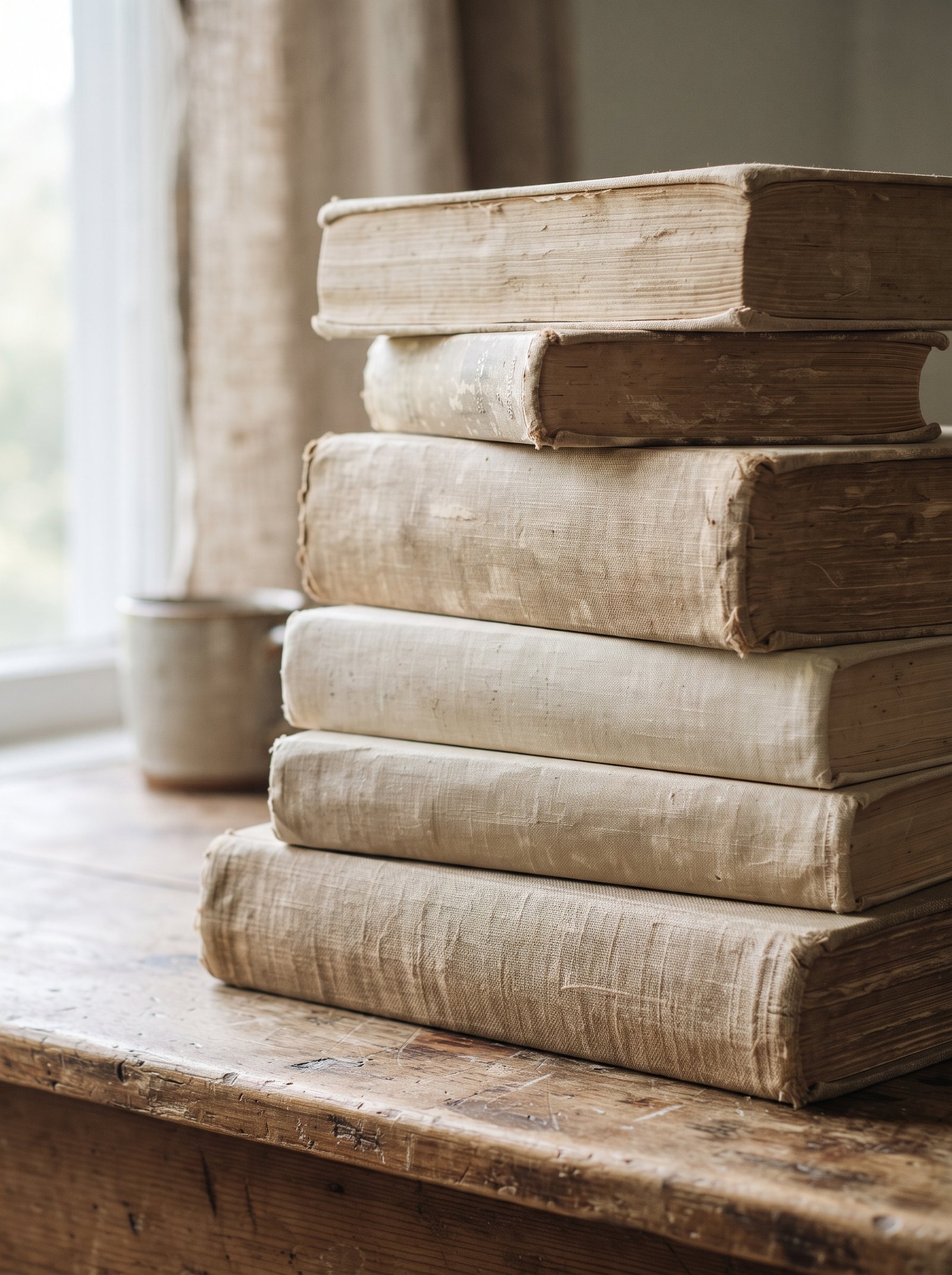
Three or four large hardcover books stacked, topped with a small round tray or wooden disc, becomes an improvised side table. Thrift the books for $1-3 each, add a $8 tray on top. The piece reads intentional and quirky in a corner beside a chair, in a bedroom beside a bed, or in a reading nook.
Weight the stack with the biggest book on the bottom and a shorter one on top for stability. Choose books with similar spine colors or complementary tones so the stack reads as a composition rather than random.
The book-stack side table is especially effective in small spaces where a traditional side table might feel too formal or take up too much floor space. The compact footprint and visual lightness make it perfect for apartment living.
Style the tray on top with the usual small moments — a candle, a small vase, a coaster for a drink. The tray becomes a tiny vignette, and the whole piece reads as an inventive design decision rather than a cost-saving measure.
18. Flip a Rattan Peacock Chair
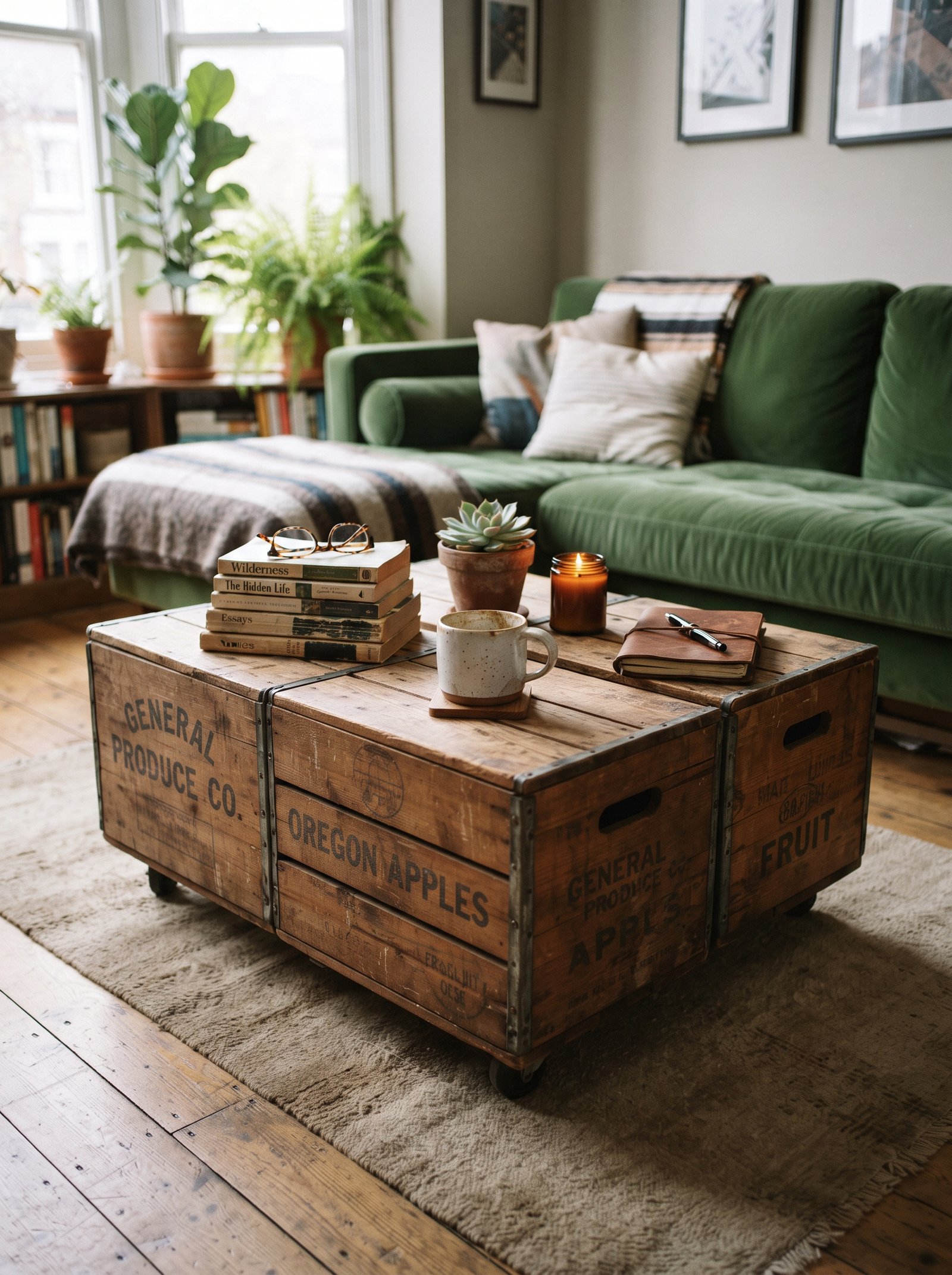
Vintage rattan peacock chairs are iconic and often thrifted for $40-80. Spray-paint white, cream, or matte black depending on the room, add a boucle or linen cushion, and the chair becomes the signature piece in a living room or bedroom corner.
Check the weave carefully before buying — repairing damaged rattan is harder than painting it. Give the chair a gentle shake and inspect the weaving for breaks, loose strands, or structural damage. Minor cosmetic wear is fine; structural damage usually isn’t worth the fix.
The peacock chair silhouette is distinctive and has been popular across multiple decades for a reason — the dramatic fan-shape back reads sculptural and architectural from across a room. A refreshed peacock chair becomes the room’s conversation piece.
Pair with a trailing plant beside it, a soft area rug underfoot, and warm lighting nearby. The whole corner becomes a styled vignette worthy of a magazine spread.
19. Convert a Shutter Into a Mail Organizer

A single vintage wooden shutter mounted horizontally in an entryway becomes a mail and key organizer. The slats hold envelopes slipped between them; hooks screwed into the frame hold keys and dog leashes. Oil or paint the shutter to match the entryway, and the piece reads custom rather than cobbled together.
Thrifted shutters cost $5-15 individually from reclamation yards, Habitat ReStores, and estate sales. One shutter is enough for the entire entryway function; two mounted side by side create a larger organizer for a family entryway.
Add a small shelf beneath the shutter for the full custom entryway effect. A thin wooden shelf (6 inches deep) mounted below the shutter creates a landing zone for sunglasses, pocket contents, and small daily items.
Mount with heavy-duty wall anchors; shutters are heavier than they look and will pull out of drywall without proper anchoring. Use toggle bolts or find studs when possible.
20. Build a Headboard From Reclaimed Wood
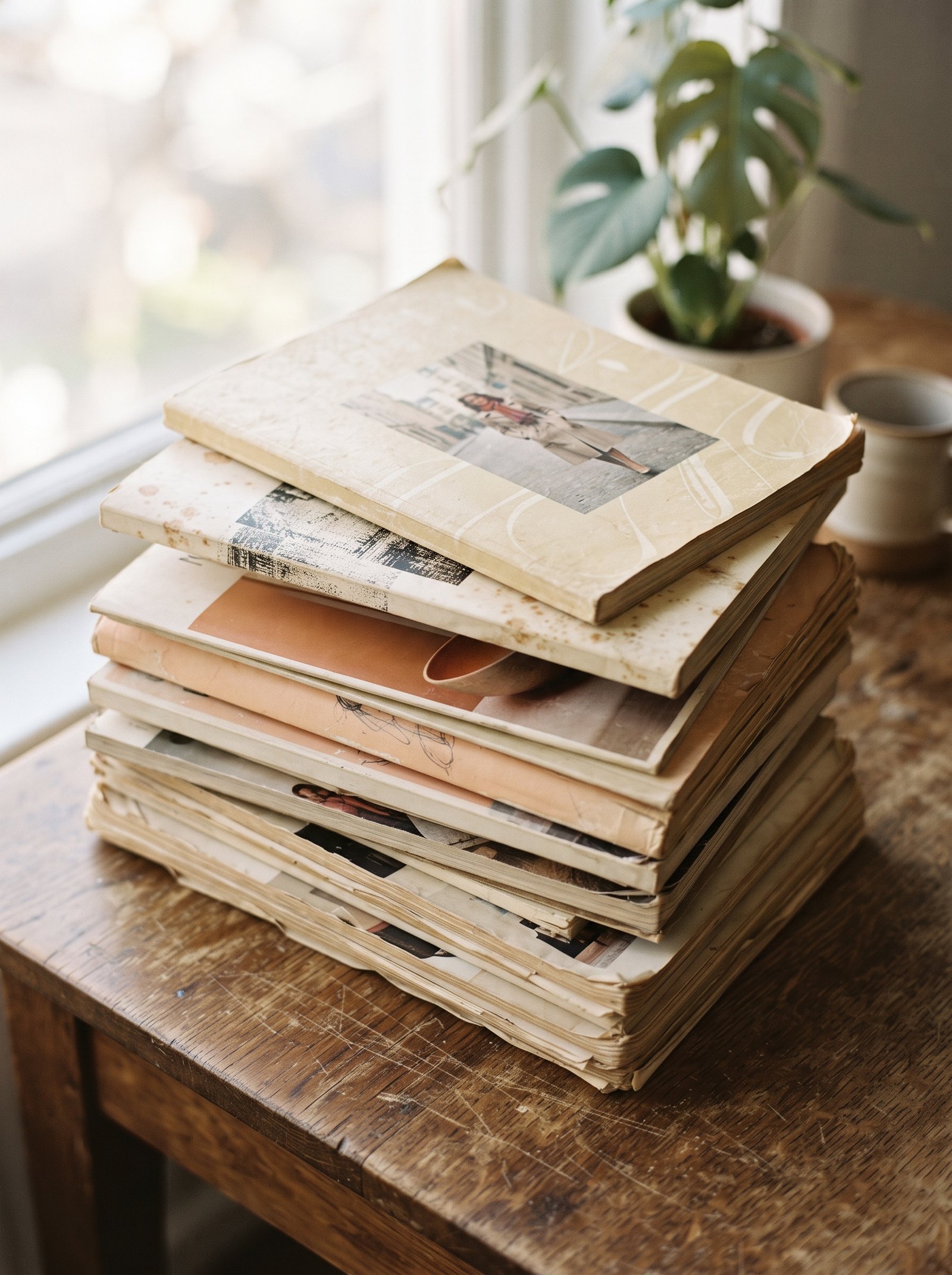
Thrifted or scavenged old barn wood, old flooring, or old doors mounted together behind a bed becomes a reclaimed-wood headboard that reads as rustic-modern. Cost: often under $40 for materials plus a few hours of mounting and finishing.
Sand lightly to smooth any splinters, oil with a matte wood finish (Rubio Monocoat or Osmo), and mount directly to studs behind the bed. The headboard can be as simple as six or seven boards arranged horizontally, or more complex with a pattern like herringbone or vertical boards of varying widths.
The character of reclaimed wood — nail holes, natural variation, decades of patina — is impossible to replicate with new lumber. One good reclaimed-wood headboard anchors a whole bedroom and reads as the single most expensive-looking piece in the room.
Scale the headboard to the bed. A king bed needs a headboard that extends past the mattress on both sides for the proportion to work; a queen bed looks best with a headboard that matches the mattress width or extends slightly beyond.
21. Transform a Plain Lamp With Caning
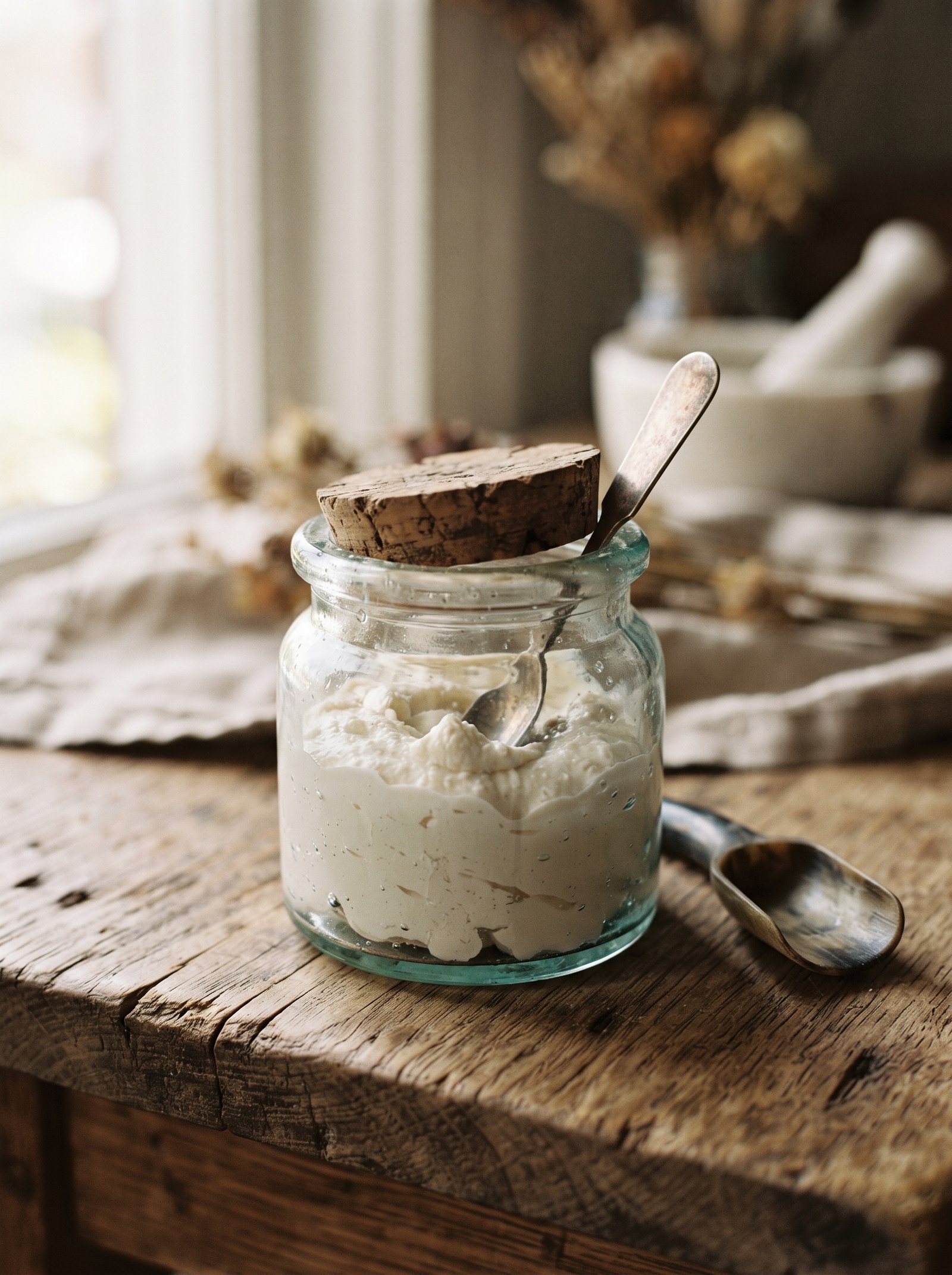
A thrifted lamp base in a boring finish wraps beautifully with pre-cut cane sheets or rattan paper. Glue strips of cane around the base with wood glue or hot glue, trim the edges carefully with a sharp utility knife, let dry fully. The lamp becomes a textured custom piece that pulls the eye.
Pair with a cream linen or pleated shade. The combination of cane and linen is unmistakably modern-boho and reads as if the lamp came from a specialty boutique rather than a thrift store with a $5 price tag.
Cane sheets are available at craft stores and online specialty suppliers. A single large sheet is often enough to wrap two or three lamp bases, which makes this one of the most cost-effective flips on this entire list.
Soak the cane in warm water for 15-20 minutes before wrapping; it becomes more pliable and conforms to the lamp shape without cracking. Let dry fully (overnight at minimum) before using the finished lamp.
22. Flip a Vintage Trunk Into a Coffee Table

Steamer trunks, vintage leather trunks, and old wooden chests make statement coffee tables with built-in storage. Thrift for $30-80 at estate sales and antique markets, oil or paint to taste, add felt pads under the corners to protect flooring. The combination of visible age and functional storage creates a piece that is both beautiful and useful.
The character of a vintage trunk — leather straps, metal corner protectors, decades of travel stickers or wear patterns — is impossible to replicate with new furniture at any price point. One good trunk anchors a whole living room and becomes the conversation piece guests always notice.
Clean the exterior gently with a soft cloth and leather conditioner for leather trunks, or wax polish for wooden ones. Avoid over-restoring; the patina is what makes the piece valuable. Fresh paint on a vintage trunk often destroys the character.
Style the top with a small tray, a stack of books, and a candle grouping. The styling turns the trunk from storage into furniture; without styling, it reads as a box in the middle of the room.
23. Hang a Vintage Mirror Gallery

A grouping of 5-8 small to medium vintage mirrors in mismatched frames hung on a feature wall becomes a styled gallery that costs under $60 total. The reflective surfaces bounce light around the room; the mismatched frames read as collected rather than coordinated.
Spray-paint all the frames one unified color (soft black, warm brass, or cream) to tie the collection together without losing the shape variety. The uniformity of color plus the variety of silhouettes is the exact formula that reads as intentional composition.
Arrange the mirrors in a loose grid rather than perfect alignment. Vary the heights slightly, group smaller mirrors near larger ones, and leave organic spacing between pieces. A perfectly aligned grid reads as a store display; a loose arrangement reads as personal taste.
Hang the collection on a feature wall above a console table or across an empty wall that lacks a focal point. The mirror gallery can anchor a whole wall by itself and transforms the room’s sense of light and space.
24. Reclaim an Old Wooden Door as a Headboard

An old solid wood door — paneled, carved, or distressed — mounted horizontally behind a bed becomes a one-of-a-kind headboard. Thrift stores, Habitat ReStores, and architectural salvage shops stock these for $20-100 depending on size and condition.
Sand lightly to remove splinters and old peeling finish, oil or paint according to your room’s palette, mount to studs behind the bed with heavy-duty hardware. The result is a custom-feeling bedroom piece for under $150 all-in including hardware.
The paneling on vintage doors creates built-in architectural texture that mass-produced headboards simply cannot match. The symmetry of the panels reads as decisive design rather than default; the slight weathering of the wood adds the patina that gives the whole bedroom its character.
Scale the door to the bed width. A standard interior door is 32-36 inches wide — perfect for a twin or full bed as a vertical headboard. Larger exterior doors (36-42 inches) work beautifully mounted horizontally behind a king bed, where the longer dimension extends past the mattress on both sides.
25. Finish Any Flip With Warm Layered Lighting

The single detail that makes every thrift-store flip look expensive is warm layered lighting around it. A 2700K bulb in a nearby lamp, a candle on an adjacent surface, or a picture light mounted above transforms the piece from “painted thrift find” to “styled vignette.”
Cool lighting flattens flipped furniture and reveals the economy of the materials. Warm lighting flatters paint, wood, brass, and leather alike — exactly the finishes you tend to apply in flips. The lighting choice is often the difference between a flip that reads custom and one that still reads as thrift store find.
Layer at least two or three light sources around every major flipped piece — overhead ambient light, a table lamp or floor lamp for mid-level warmth, and candle light or picture light for the final glow. The combination of three light sources at different heights creates the layered illumination that defines expensive-looking rooms.
Pay particular attention to lighting in the evening. Thrift-flipped pieces look their best in warm evening light where small imperfections become patina rather than defects. Install dimmers wherever possible so you can tune the room’s lighting mood from bright practical daytime to warm atmospheric evening.
Pulling the Thrift-Flip Look Together
The expensive look rooms get from thrift flips is really the look of patina, variety, and intention. Pieces chosen slowly, finished carefully, and styled together read as decades of collecting instead of one shopping trip to a big-box store. Each flip costs a weekend and under $50 in supplies; the result compounds over time, with every room gaining more character as more flipped pieces accumulate.
The strategy underneath every flip is the same: identify what makes the thrift piece look dated or cheap (the paint color, the hardware, the finish, the fabric, the shade) and change only that one detail. The underlying piece is almost always better-made than its current appearance suggests, and the fix is almost always under $50 in materials and under one weekend of work.
Start with the easiest flip that matches your room’s needs. Hardware swaps require only a screwdriver. Paint projects require basic surface prep and spray cans or small foam rollers. Reupholstering a dining chair seat takes 20 minutes per chair. Any of these entry points will produce a piece that reads custom and gives you confidence to try the next flip.
Across a whole room, the compounded effect of several thrift flips becomes dramatic. A living room with a reupholstered thrift wingback, a lamp-flipped vintage brass base, a repainted thrift dresser, and a mirror gallery of thrift finds reads as a thoughtfully-designed space that would cost tens of thousands if sourced new from retail. The same room furnished entirely from big-box stores at the same budget reads as rental staging. The flips are what create the difference.
For more affordable decor approaches that pair beautifully with thrift flips, see our guides on IKEA hacks that look custom, modern terracotta home decor, renter-friendly no-damage wall decor, peel and stick wallpaper ideas, and rental kitchen makeovers that need zero paint. Each of those guides shares the same underlying philosophy — that beautiful, considered interiors are built from small decisions and careful finishing rather than large budgets and brand-new furniture.
Take our 2-minute Decor Style Quiz
Answer 10 quick questions and discover whether you’re Modern Boho, Scandinavian Minimalist, Modern Farmhouse, Mediterranean, Japandi, or Classic Traditional — plus your color palette and 3 articles made for you.
Our interactive tools can help
Take the style quiz, generate a beige wall color palette, or calculate the perfect pillow stack for your bed — all free, all in under 2 minutes.