30 Small Living Room Ideas That Make 150 Square Feet Feel Twice As Big
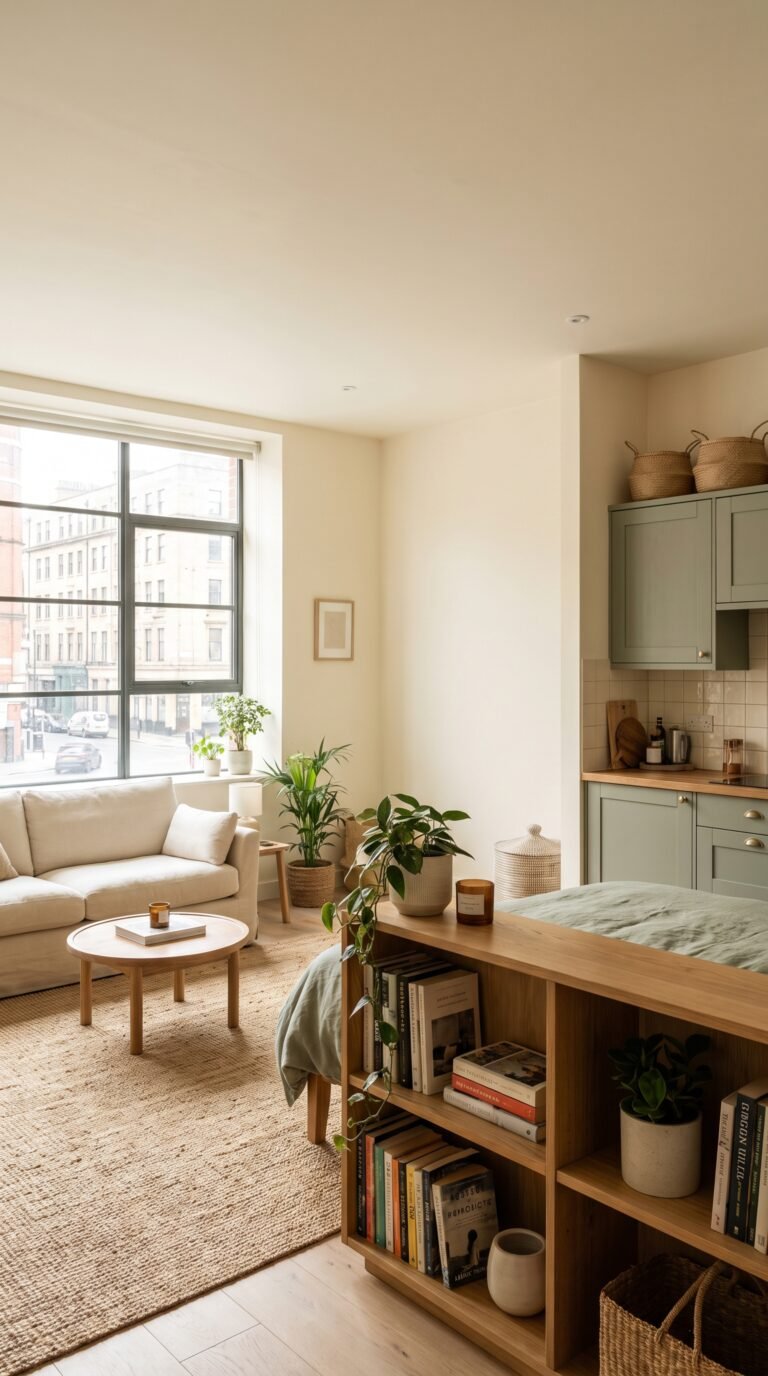
The first thing to know about small living rooms is that “small” is not the problem. The problem is almost always the proportion — the wrong-scale sofa, the too-tall floor lamp, the coffee table that seemed fine in the showroom and now takes up half the floor. A well-designed 140 square-foot room can feel airier and more welcoming than a 400 square-foot one that is stuffed with pieces the room can’t hold.
The other thing to know is that every trick below is reversible and rental-safe. Nothing here requires knocking down a wall or hiring a contractor. Some ideas take twenty minutes on a Saturday; a few take a weekend if you go all in. Pick two or three that address your specific problem — dark walls, no natural light, an awkward corner — and you will see a difference by the end of the day.
The ideas are grouped loosely from lightest touch to biggest transformation. Paint and lighting are first because they compound everything else you do. Furniture scale and layout come next. The last third is styling — the small choices most people skip, and the ones that make a room feel finished. Read the whole list once, then start wherever the pain is loudest.
1. Paint two shades lighter than you think
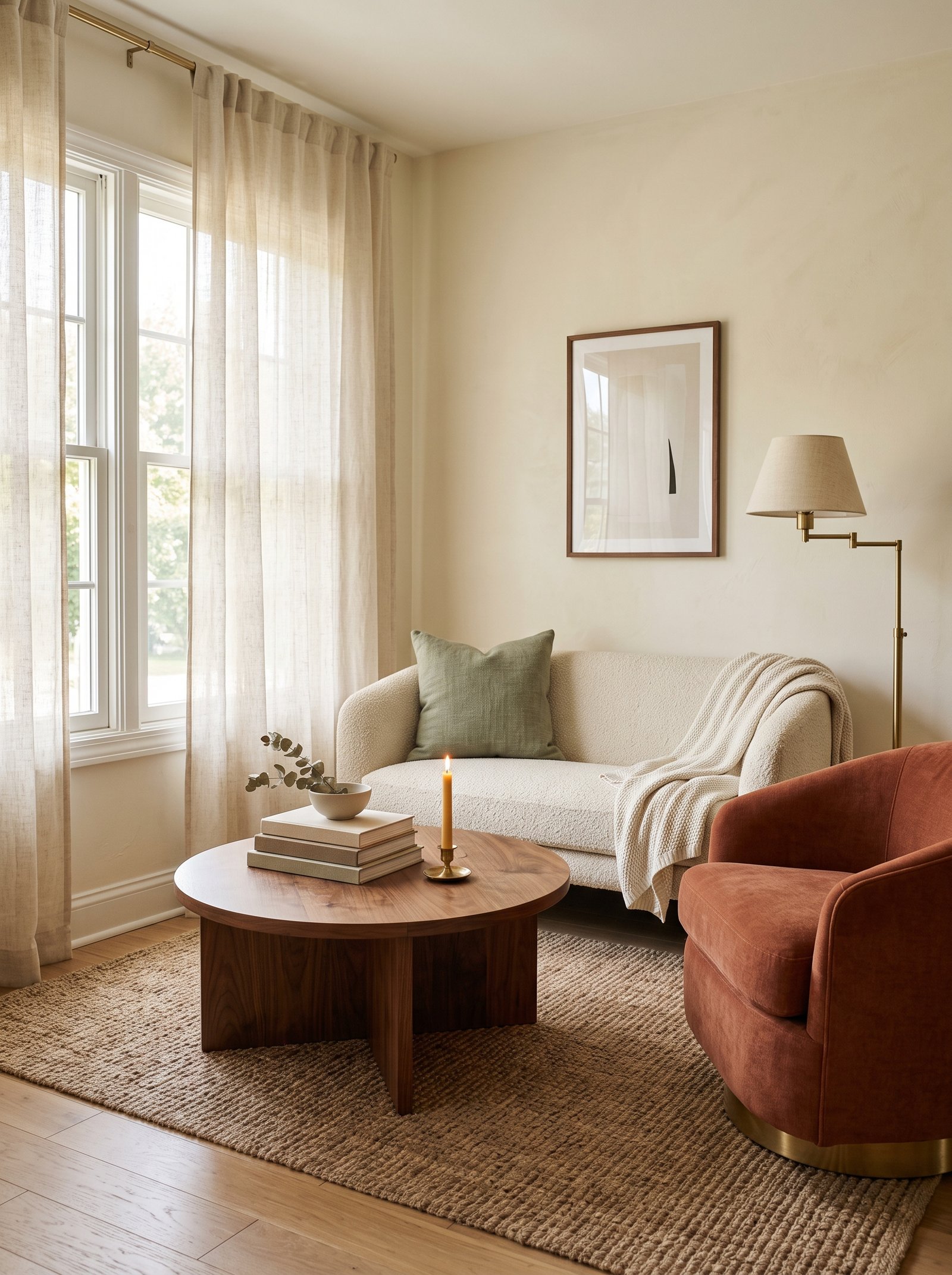
The single fastest way to make a small living room feel twice its size is to lighten the walls. Not stark white — that reads institutional. Look at the cream and warm off-white samples in the store and pick the one two shades lighter than what you first pulled toward. A room that gets modest natural light needs the extra lift; a room that only sees evening lamps needs it even more.
Cream shades in the “warm neutral” family — think Farrow & Ball’s Slipper Satin, Benjamin Moore’s Soft Chamois, Sherwin Williams’ Alabaster — all read as elegant and grown-up rather than beige-apartment. They reflect light without going cold, and they make wood tones and greenery look their best. If you rent and can’t paint, ask your landlord — many will approve neutrals in writing, and even offer to reimburse the paint.
Paint the trim and ceiling the same color as the walls, one shade lighter if you want more depth. Contrasting white trim visually chops a small room into pieces; the same tone makes the whole envelope feel like one continuous space. This is the single trick professional designers use most often in small rooms, and it is almost free to do.
Give it a full weekend and two coats. Do the trim and ceiling first with a small brush, then roll the walls. Wait until the paint is completely dry before you move furniture back — dragging a sofa across drying paint will leave marks that take weeks to fade. Bring in the sofa last, and stand back at the door. You will see the change immediately.
If you can only paint one wall this weekend, paint the wall behind the sofa. It’s the wall you see from the entry, the wall that anchors every photograph, and the wall that most affects how big the room reads. Even a single lightened wall shifts the balance more than most people expect.
2. Swap every bulb for a warm 2700K LED
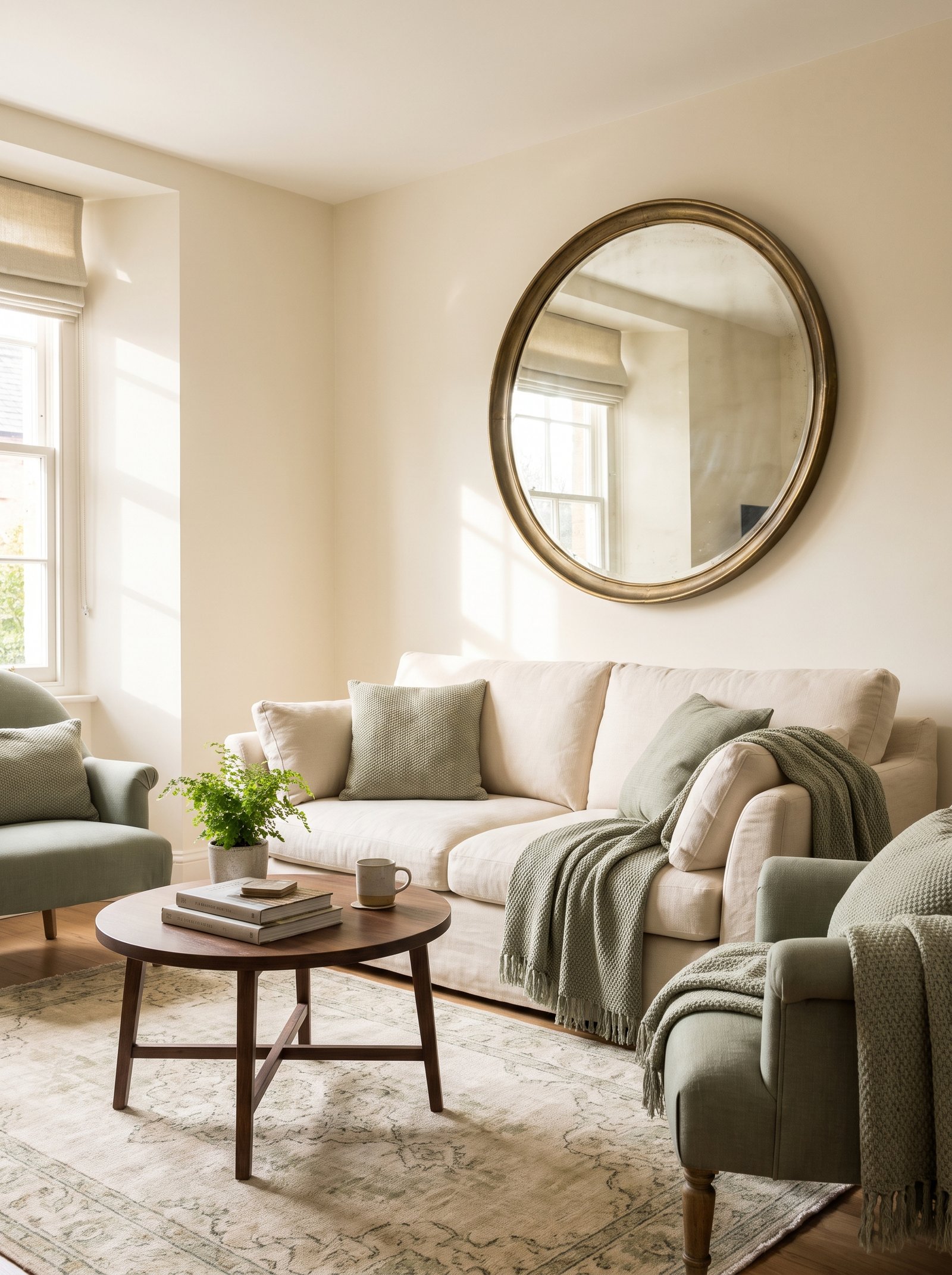
Builder-grade bulbs almost always ship at 3500K or 4000K, which reads as fluorescent-office lighting and makes every fabric, every wood tone, every skin tone look worse than it should. Twenty dollars of 2700K warm-white LEDs will do more for the mood of a small living room than a hundred dollars of throw pillows. This is not an exaggeration.
Count every socket in the room — ceiling fixtures, table lamps, floor lamps, wall sconces, the light in the bookshelf if you have one — and buy one 2700K warm-white LED per socket, plus two spares. Look for the “2700K” or “soft white” marking on the box and ideally a color rendering index (CRI) of 90 or above. High-CRI bulbs make food look appetizing, plants look alive, and your décor colors read the way they were meant to.
Once every bulb is swapped, walk around the room at night with all the lamps on and no overhead lights. This is how small living rooms should be lit — from many low sources rather than one bright ceiling fixture. Multiple pools of soft warm light make even a tight room feel spacious and layered; a single overhead makes it feel like a doctor’s waiting room.
Add a dimmer if you can — even a plug-in dimmer for a lamp works. The best small living rooms shift from bright and workaday during the day to soft and intimate at night, and the switch is what makes it happen. Even one dimmed lamp in a corner changes the whole reading of the room.
If you rent and can’t rewire, use smart bulbs. Philips Hue, Wiz, and Kasa all offer bulbs that dim from bright warm white down to a candle-warm 1800K glow, controlled from your phone or a voice assistant. Set a scene called “evening” that dims everything to 40% at 6pm and 25% by 9pm. Your small living room will feel bigger, calmer, and more expensive within a week.
3. Hang curtains near the ceiling and let them touch the floor
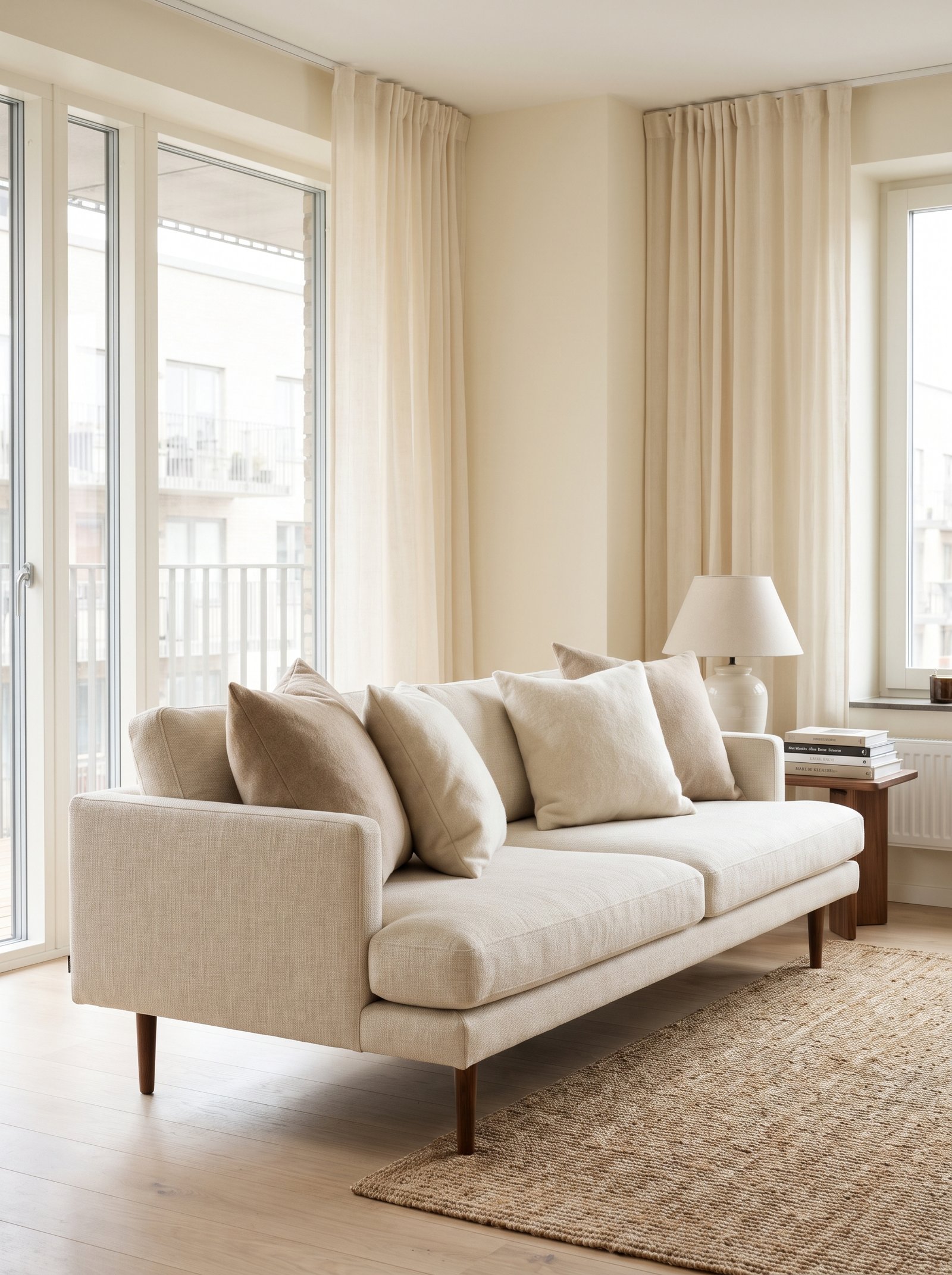
The single most common small-living-room mistake is a curtain rod mounted at the top of the window frame with panels that stop two inches above the floor. It chops the window into a small dark rectangle and makes the whole wall feel shorter than it is. Move the rod up to within four inches of the ceiling and get panels long enough to touch the floor, and the same window will suddenly look twice as tall.
Buy panels that are 96 or 108 inches long even if it seems like too much. Linen and cotton panels are inexpensive from IKEA, H&M Home, and Amazon, and you can hem the bottom with iron-on hem tape in twenty minutes if they’re too long. Panels that pool slightly on the floor look intentional; panels that hover above it look like they shrank in the wash.
For a small living room, always go for lighter colors — cream, off-white, oatmeal, soft sage, pale terracotta. Heavy dark curtains suck light and make a room feel smaller, even when they are open. If you need blackout for a bedroom-adjacent living room, look for blackout-lined light curtains rather than dark curtains with light lining.
Mount the rod six to twelve inches wider than the window on each side. When the panels are pulled open they should stack on the wall, not on the glass. This lets more daylight in during the day and makes the window appear wider than it is even when the curtains are closed.
If you rent and can’t drill, tension rods still work but only for narrow windows. For wider windows, use a Command hook system rated for the weight, or ask permission to install a rod — most landlords say yes to two small holes if you offer to spackle them on move-out.
4. Choose one big rug that goes almost wall to wall
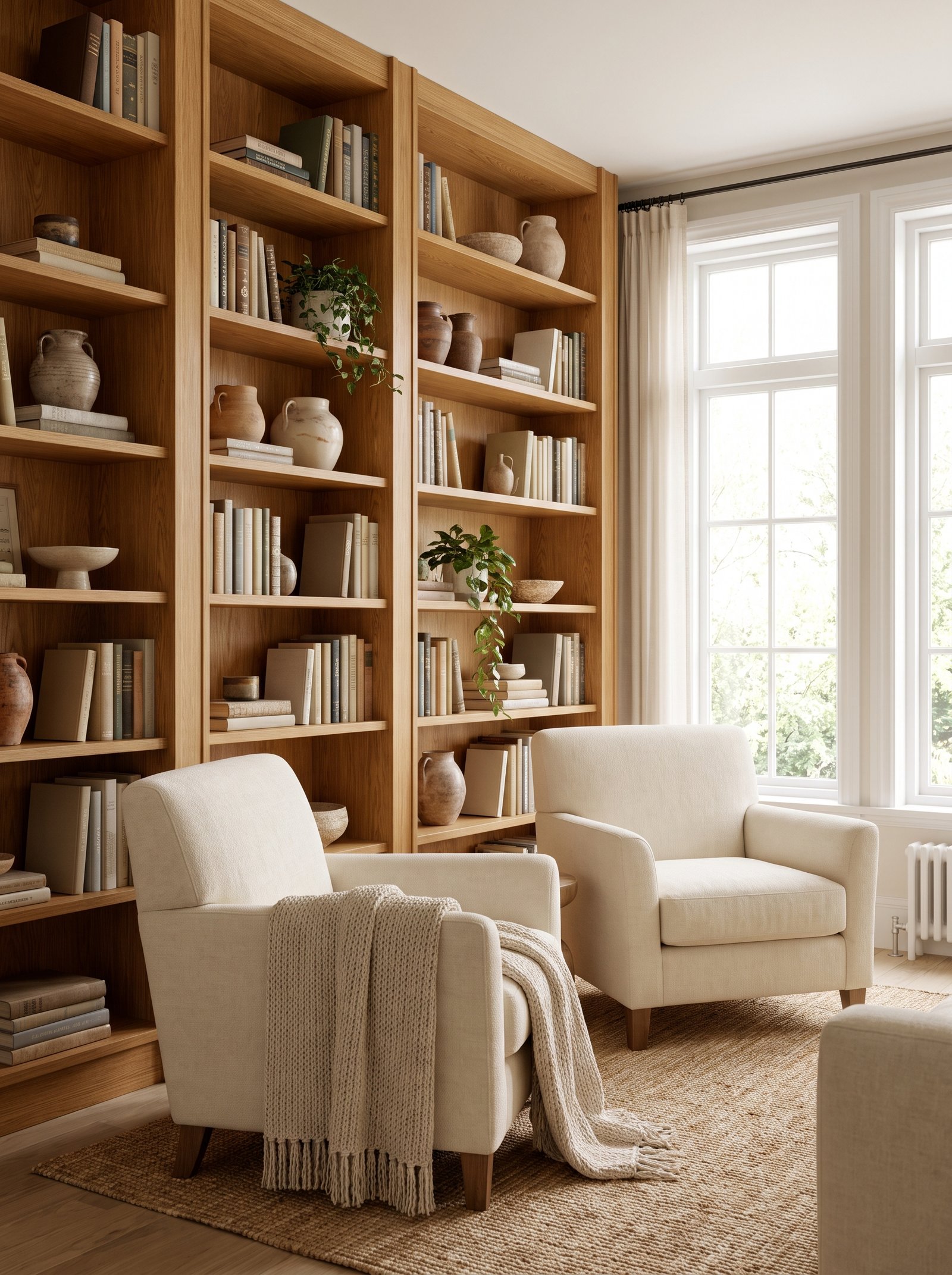
The rug in a small living room is the biggest visual anchor in the space. Get it wrong and everything else looks off; get it right and even mismatched furniture looks intentional. The rule is simple: bigger than you think, and preferably running under all four legs of the sofa and the front legs of the accent chairs.
In a small living room, an 8×10 rug is the minimum, and 9×12 is often better. Anything smaller floats in the middle of the room like a bath mat, and visually shrinks the whole space. Jute, sisal, and low-pile wool rugs in cream, oatmeal, and warm neutrals all work well; avoid busy patterns unless the rest of your room is very calm.
Layered rugs are the exception. A small vintage patterned rug in muted terracotta and cream tones layered over a bigger jute base looks intentional and adds warmth without overwhelming the space. Etsy and vintage shops on Instagram have hundreds of options under $200 that read as thousand-dollar rugs.
Leave a border of clean floor around the rug’s edge — ideally six to twelve inches on each side. This border is what tells the eye “the room is bigger than the rug.” When a rug goes truly wall to wall, the room reads as one flat surface. When there is a border of exposed floor, the room reads as bigger than the furniture arrangement.
If you cannot afford a big rug right now, buy the smallest jute rug you can find and put it under the coffee table. Do not put a small rug in the middle of the floor with furniture around it. A small rug next to the sofa is better than a wrongly-sized rug in the middle of a room every time.
5. Pick a sofa on visible legs, not skirted
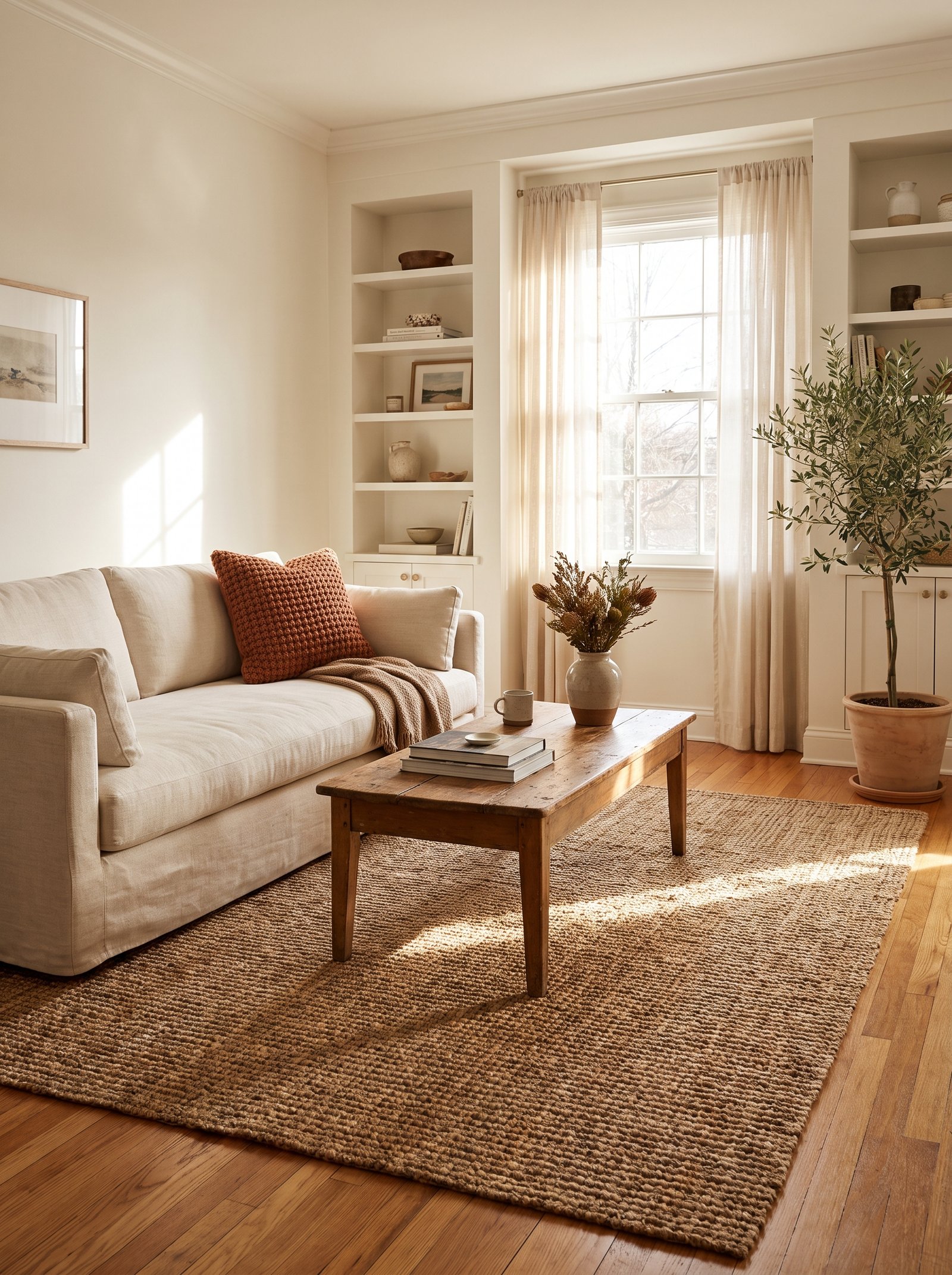
A skirted sofa — the kind where fabric goes all the way to the floor — visually sits on the floor and makes a small room feel heavy. A sofa on visible legs, ideally slim walnut or oak tapered legs, gives the eye a place to travel underneath. That extra visible floor space is what makes the sofa feel smaller and the room feel bigger, even though nothing has actually changed.
The best small-living-room sofas are three to seven inches off the ground on visible legs, in a light neutral color, and no wider than eighty inches for a room under 200 square feet. Article’s Sven, IKEA’s Kivik with wooden legs, West Elm’s Andes, and Room & Board’s Jasper all have small-scale versions that work.
Avoid sectionals in truly small rooms. They almost always take up more space than two separate pieces would. If you must have a sectional for the extra seating, get the smallest reversible model you can find — one that lets you swap the chaise from left to right when you rearrange.
If you already own a skirted sofa, buy slim-line clear plastic risers to lift it two inches off the floor, or replace the existing legs with taller ones. Almost every sofa has removable legs, and replacement legs cost $30 to $60 for a set. This one change can transform how the room reads.
Also pay attention to the arm width. Sofas with slim arms leave more actual seating space in the same footprint. A slim-arm sofa can be eight inches shorter than a wide-arm sofa and still seat the same number of people. In a small room, those eight inches matter.
6. Float the sofa off the wall by a few inches
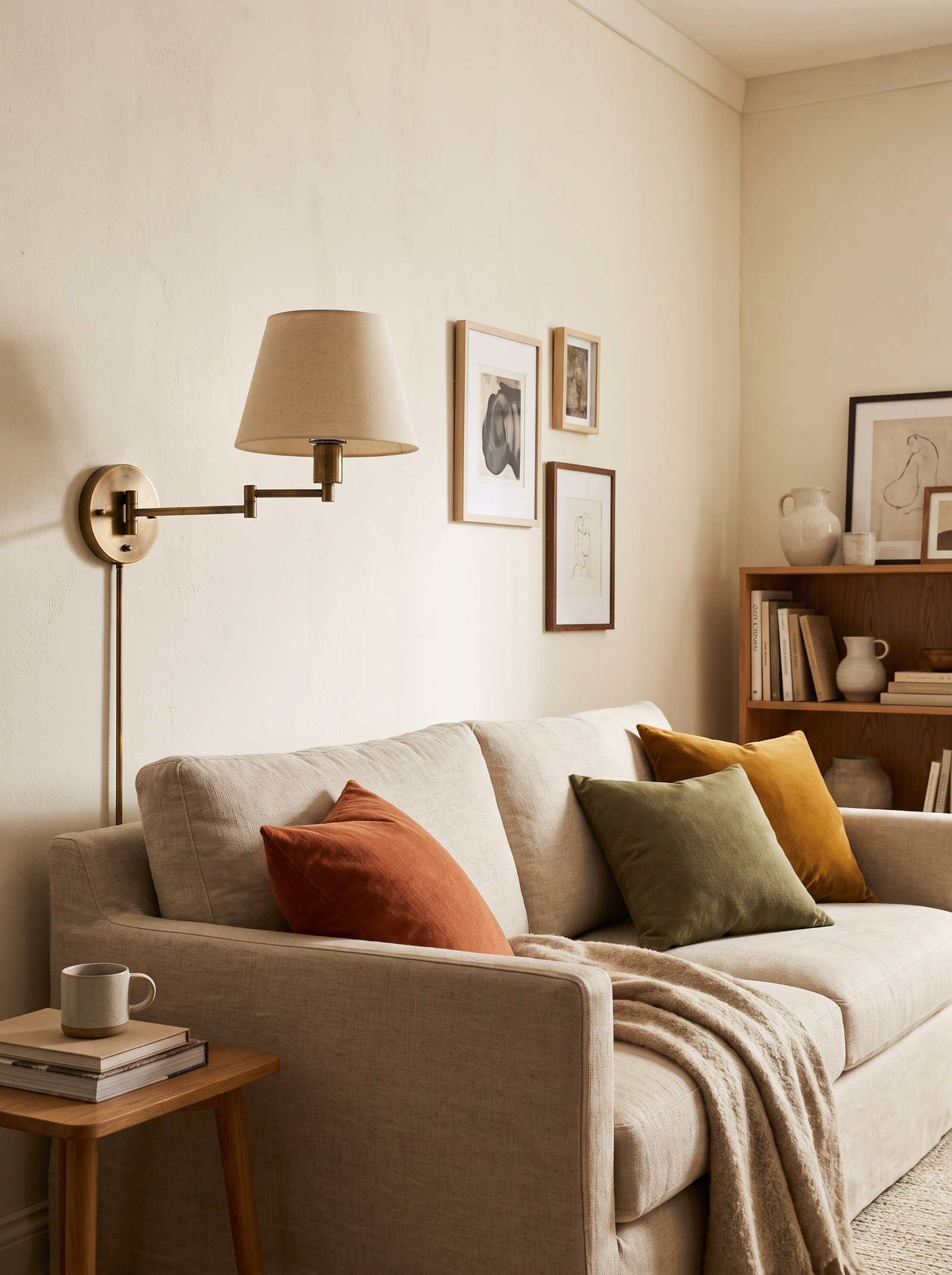
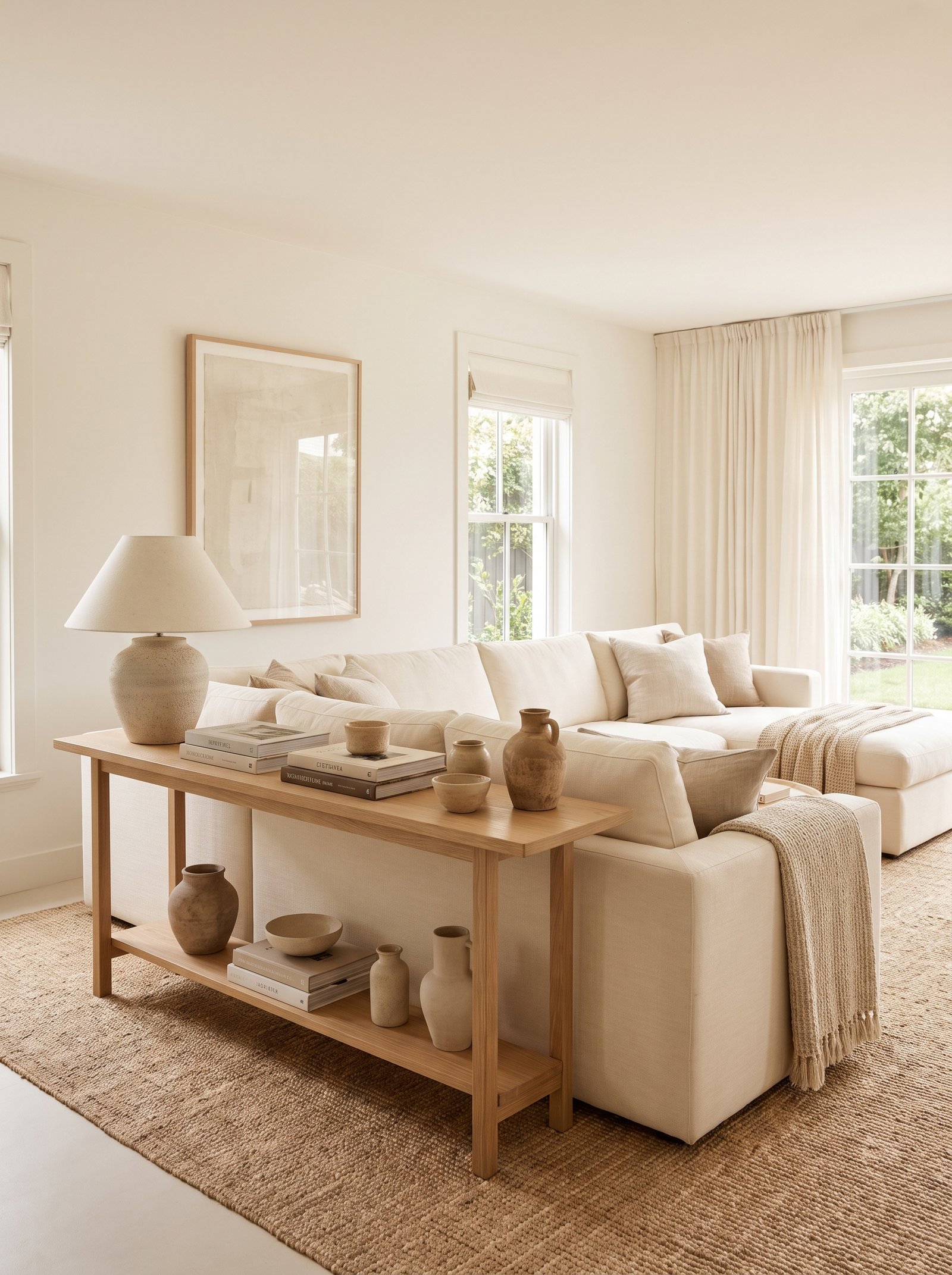
Most people put the sofa flush against the longest wall, which makes the room feel smaller because it draws attention to the walls as boundaries. Pulling the sofa six to twelve inches off the wall and adding a narrow console table behind it makes the room feel more expansive, even though you are technically using more floor space.
The console table behind the sofa can be anything narrow — ten to fourteen inches deep is ideal. Style it with a table lamp, a stack of books, a small tray, and a plant or bud vase. This one addition gives you extra surface space for drinks and phones, a place to plug in lamps without wires crossing the room, and a visual break that makes the whole area feel more intentional.
If a full console table is too much furniture, even a slim wall-mounted shelf behind the sofa serves the same purpose. IKEA’s Lack shelves, Nordli wall shelves, and similar options from H&M Home all work for under $30.
The floating-sofa arrangement works especially well in open-plan spaces where the sofa is dividing a living zone from a dining or kitchen zone. The console behind it becomes the divider and adds warmth to both sides.
Make sure the floating sofa still has an anchor. Either a large piece of art, a big mirror, or the console-and-lamp arrangement should sit behind it. A sofa floating without an anchor looks like the movers forgot to finish the job.
7. Replace the coffee table with an upholstered ottoman
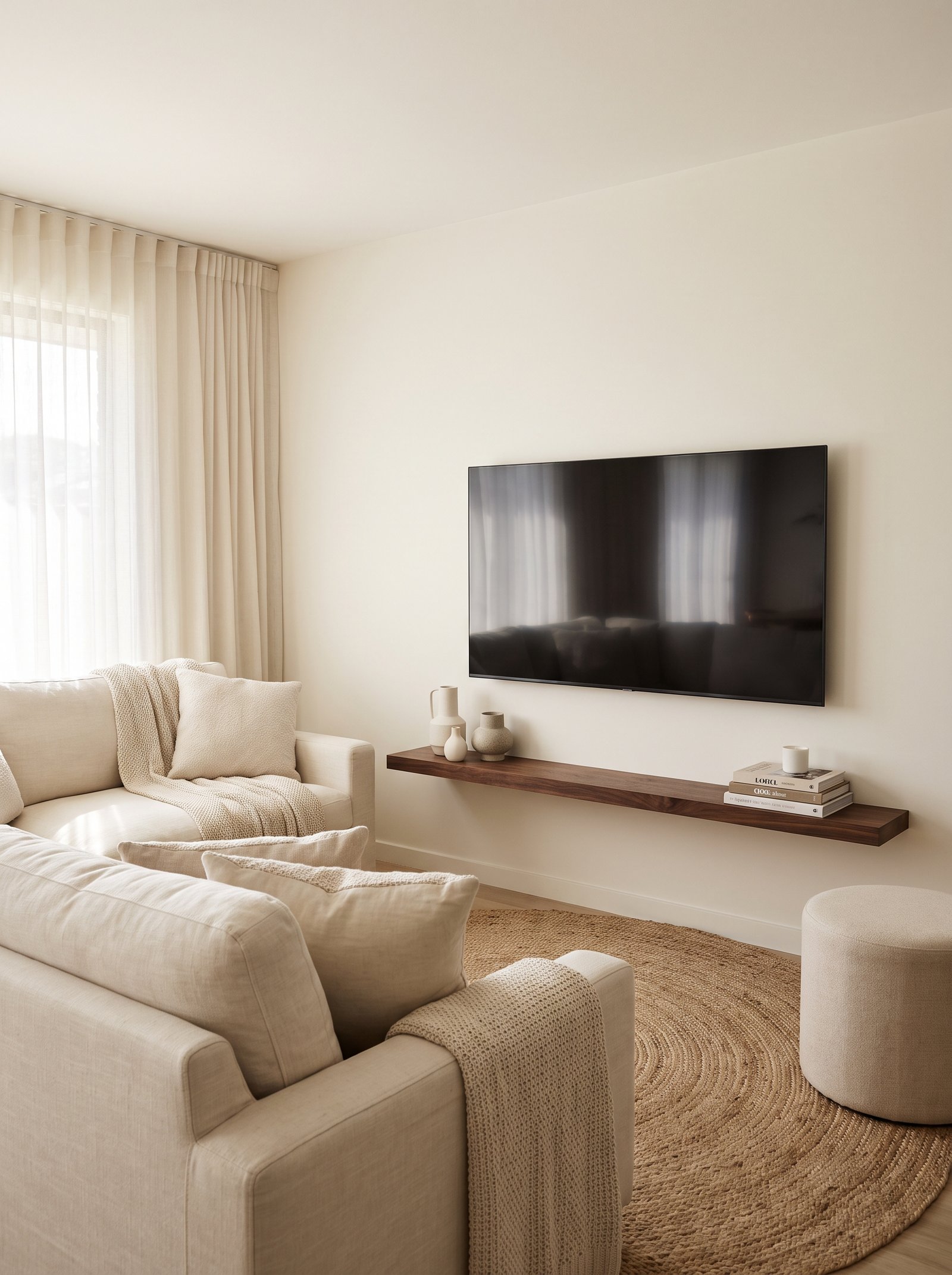
The coffee table you inherited is probably too big for your small living room. Coffee tables under 40 inches long that come as a set with a matching end table almost always look correct in the store and cluttered at home. Swap the coffee table for a rectangular or round upholstered ottoman in cream boucle or linen and the whole room breathes.
An ottoman does everything a coffee table does but with soft edges — you can prop your feet up, seat two extra people at a party, and stow a folded throw blanket inside if you buy the storage version. Put a large tray on top (24 inches long, at least) and it becomes a coffee table too. Stack a few books, a candle, and a small stone bowl or vase, and you have a fully styled surface.
The soft edges are what actually help small rooms. Sharp coffee table corners visually anchor the middle of the room; soft ottoman edges let the eye keep traveling around the space. This is why almost every small-space designer has quietly moved to ottomans as coffee tables in the last five years.
Buy an ottoman that is small enough to move — under 40 inches long and under 40 pounds. Then you can slide it out of the way to open up floor space when you want to spread out, do yoga, or seat more people. Rigid furniture that can’t be moved is a small-room problem.
If you cannot part with the coffee table you own, at least declutter the top. A single tray, a stack of three books, a candle, and one small object is more than enough. A crowded coffee table makes a small room feel smaller than any other single thing.
8. Use mirrors to bounce light around
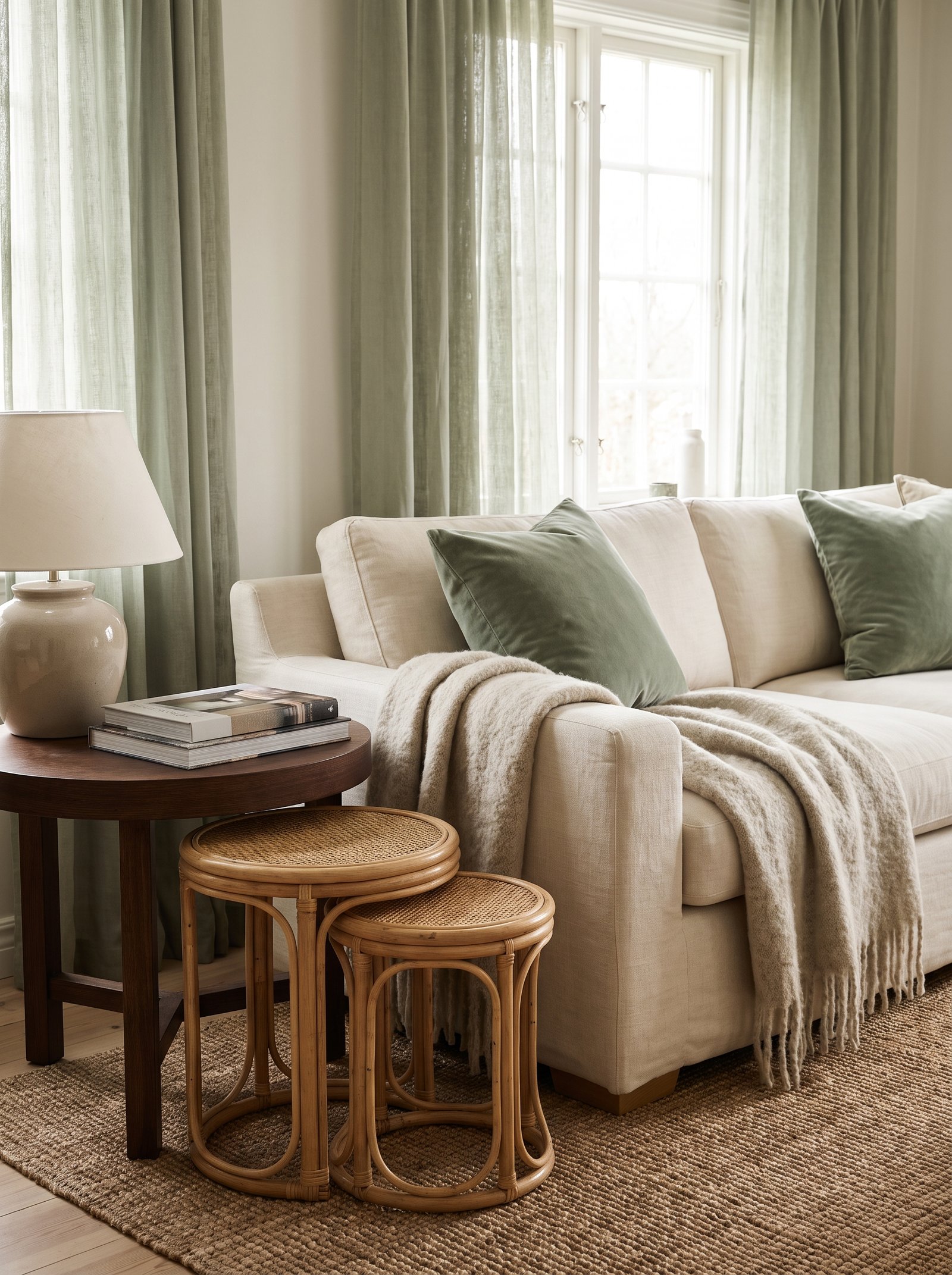
A mirror hung opposite or perpendicular to a window essentially doubles the amount of natural light in the room. This is one of the oldest small-space tricks and it still works because it is simple physics — the mirror reflects the light source back into the room instead of letting it be absorbed by walls and furniture.
The mirror should be big — at least three feet tall for a small living room. A tiny decorative mirror will not do the job. Vintage brass round mirrors, minimal black-framed rectangles, and antique mirrors from estate sales and Facebook Marketplace all work. Avoid busy ornate frames — they draw attention to the mirror as an object rather than letting it do its work.
If the wall opposite the window is where the sofa lives, hang the mirror above the sofa. If the sofa is between the window and the mirror wall, hang it above a console, a fireplace, or on the wall perpendicular to the window. Either arrangement doubles the light effect.
A floor mirror leaning against the wall is even better than a hung mirror in a rental — no drilling required. A full-length floor mirror in brass or oak framed leaned in the corner adds height, doubles the light, and can be moved without leaving marks. Look for ones between 60 and 72 inches tall.
Multiple smaller mirrors clustered gallery-wall style are the third option if you don’t have room for one big one. Three to five vintage mirrors in mixed brass and oak frames grouped together on one wall do almost the same job as one large mirror, and add character on top.
9. Go vertical with wall-mounted lighting
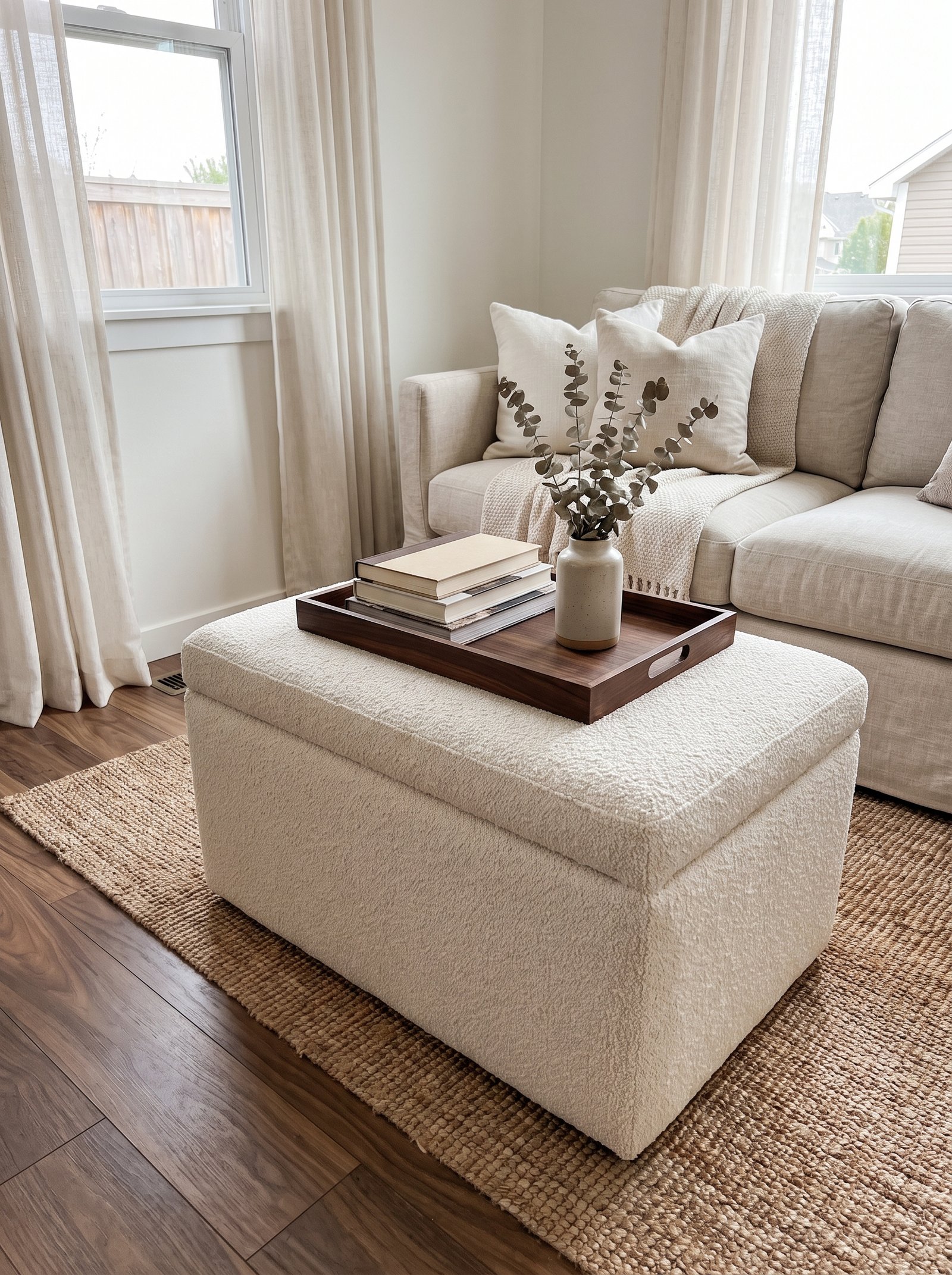
Every floor lamp is real estate a small living room can’t spare. Swing-arm wall sconces on the wall above your reading spot free up that floor space and give better light because they can be angled where you actually want it. Two wall sconces flanking a sofa is the small-room upgrade that most changes the character of the space.
Cordless plug-in sconces are the rental-friendly version — plug into the outlet directly below, run the cord down the wall neatly (there are cord covers in matching paint colors), and mount the sconce with Command strips or removable adhesive plates. Warm brass, aged bronze, and matte black finishes all read as elegant.
If a wall sconce is not workable, a floor lamp that arcs — like the West Elm arc lamp or Article’s Ivar — reaches over the sofa without taking up ground space next to it. The base is behind the sofa and the light is where you want it. Arc lamps are a small-space favorite for a reason.
Under-cabinet strip lights, under-shelf tape lights, and picture lights above art are all further ways to add layered lighting without adding footprint. In a small living room, five small warm light sources always beats one big one.
For rentals, battery-operated wall sconces with rechargeable USB batteries look nearly identical to plug-in ones and require zero wiring. Brands like Scout Regalia and Etsy shops sell rechargeable brass sconces that last two weeks on a charge.
10. Add a full-height bookshelf or two
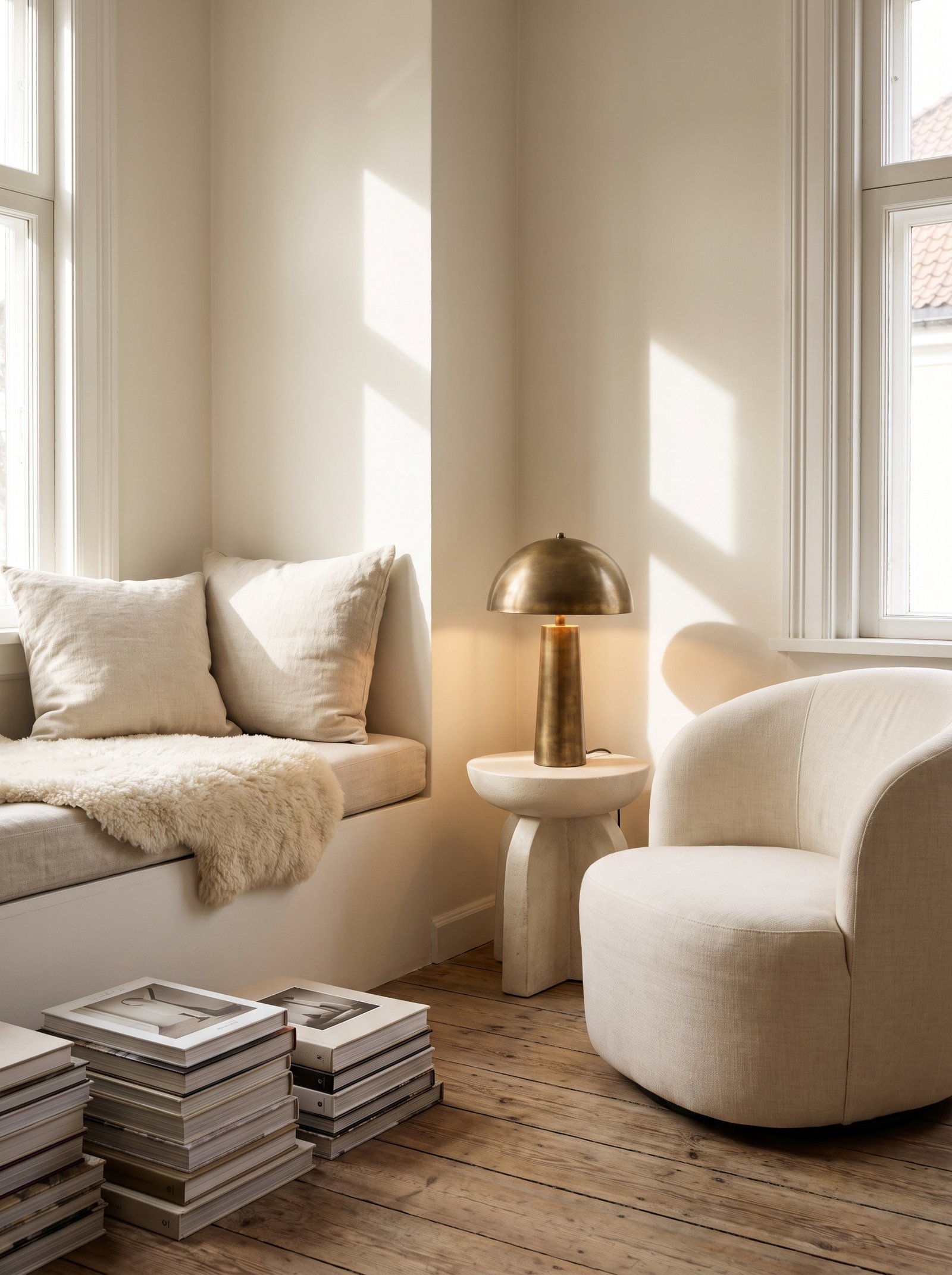
Vertical storage is the small-room secret weapon. A ceiling-height bookshelf takes the same footprint as a short one but stores three times as much, and it draws the eye up, making the ceiling feel higher. Two tall bookshelves flanking a sofa is nearly as good as adding another room.
IKEA’s Billy bookcase is the classic budget choice — buy the tallest version (93 inches) and add a top trim molding for a custom-built look. Paint it the same color as the walls and it disappears into the room, feeling built-in rather than added. Article’s Manning, West Elm’s Mid-Century, and Room & Board’s Copenhagen are the step-up options.
Style the shelves with a mix of books (a mix of vertical and horizontal stacks), a few small objects, and negative space. Every third shelf should be about 40% empty. Overstuffed shelves look cluttered; understyled shelves look intentional. Use the odd-numbers rule — arrange objects in groups of three or five.
Layered art in front of books, a small trailing plant, a stack of hardcover books lying on its side with a stone bowl on top, and a mini gallery of small framed prints on a bottom shelf all elevate the styling. Brass bookends anchor stacks and add warmth.
If floor bookshelves are too much furniture, floating wall shelves at picture-rail height around the perimeter of the room work almost as well. IKEA’s Lack shelves, Umbra Conceal shelves, and various online options all work under $30 each.
11. Layer three textures at minimum
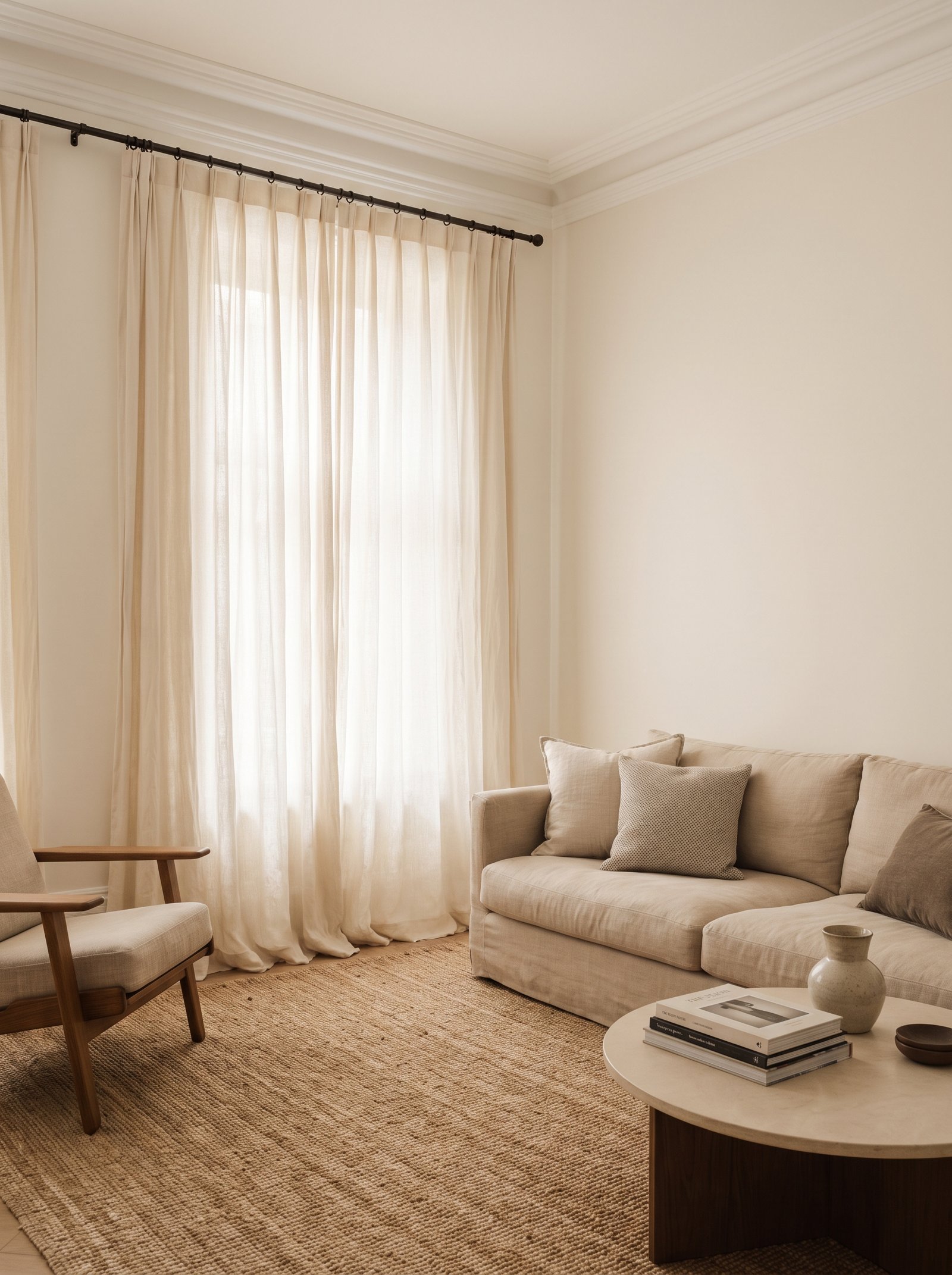
The single characteristic that separates a small living room that looks “sparse and empty” from one that looks “minimal and intentional” is textural layering. Three different textures at minimum — usually a smooth linen, a nubby boucle, and a chunky knit — is the professional minimum in any well-designed small space.
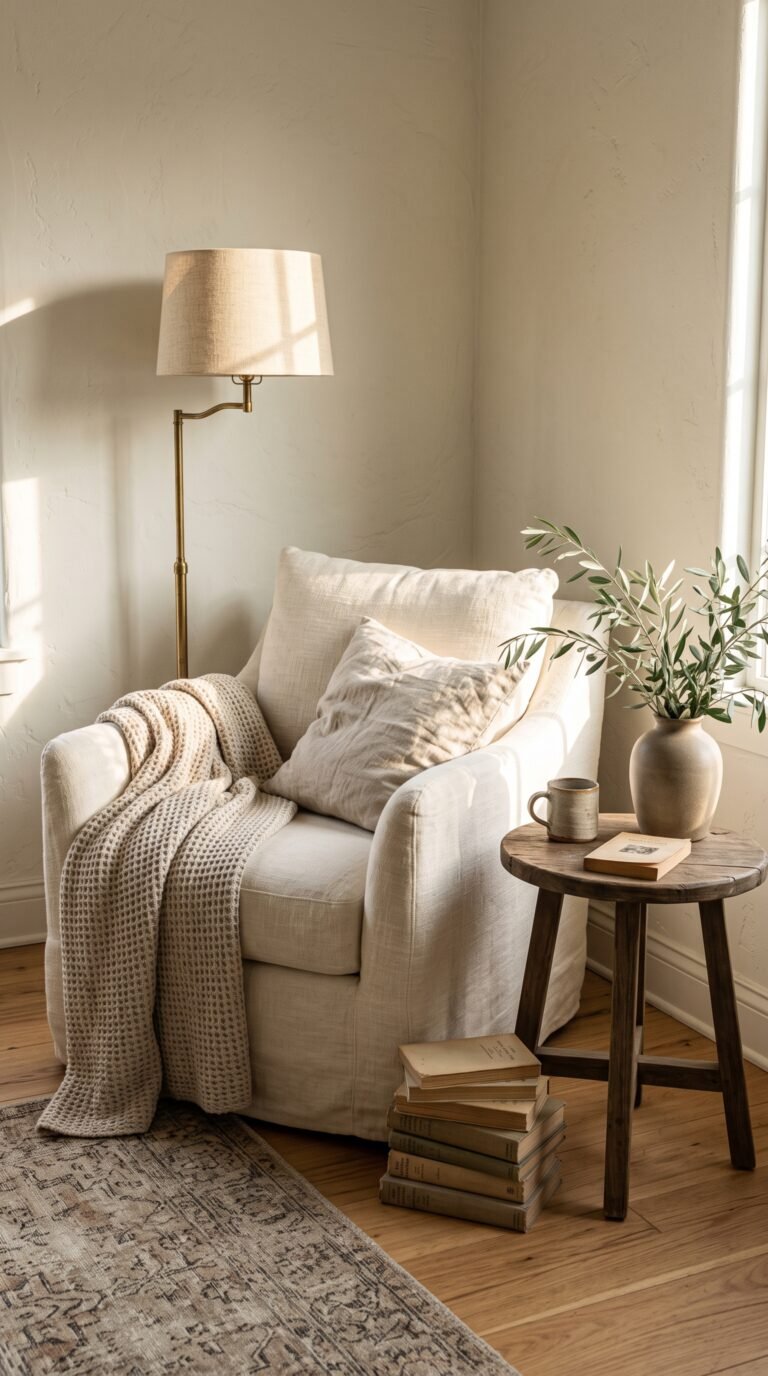
The easy formula: linen sofa or slipcover, boucle throw pillows, chunky knit throw blanket. Or: velvet sofa, linen pillows, sheepskin throw. Or: leather chair, wool throw, cotton pillows. The specific combination doesn’t matter as much as the variety of surfaces catching light differently.
Rugs count as one of the textures. A jute rug adds instant texture underfoot; a low-pile wool rug looks refined; a vintage patterned rug adds visual interest. Then the coffee table styling adds another layer — a rough stone bowl, a smooth glass vase, a stack of leather-bound books, an olive branch cutting.
Color-wise, keep it tight. Cream, oatmeal, warm white, taupe, walnut, and one or two accent colors (terracotta, sage, black) is the professional palette. When color is restricted, texture becomes the whole story of the room.
Woven baskets on the floor for blanket storage, a rattan pendant hanging overhead, a hanging plant in a stoneware pot — every added texture makes the room feel more complete and more layered without making it feel cluttered.
12. Add one big statement plant, not five small ones
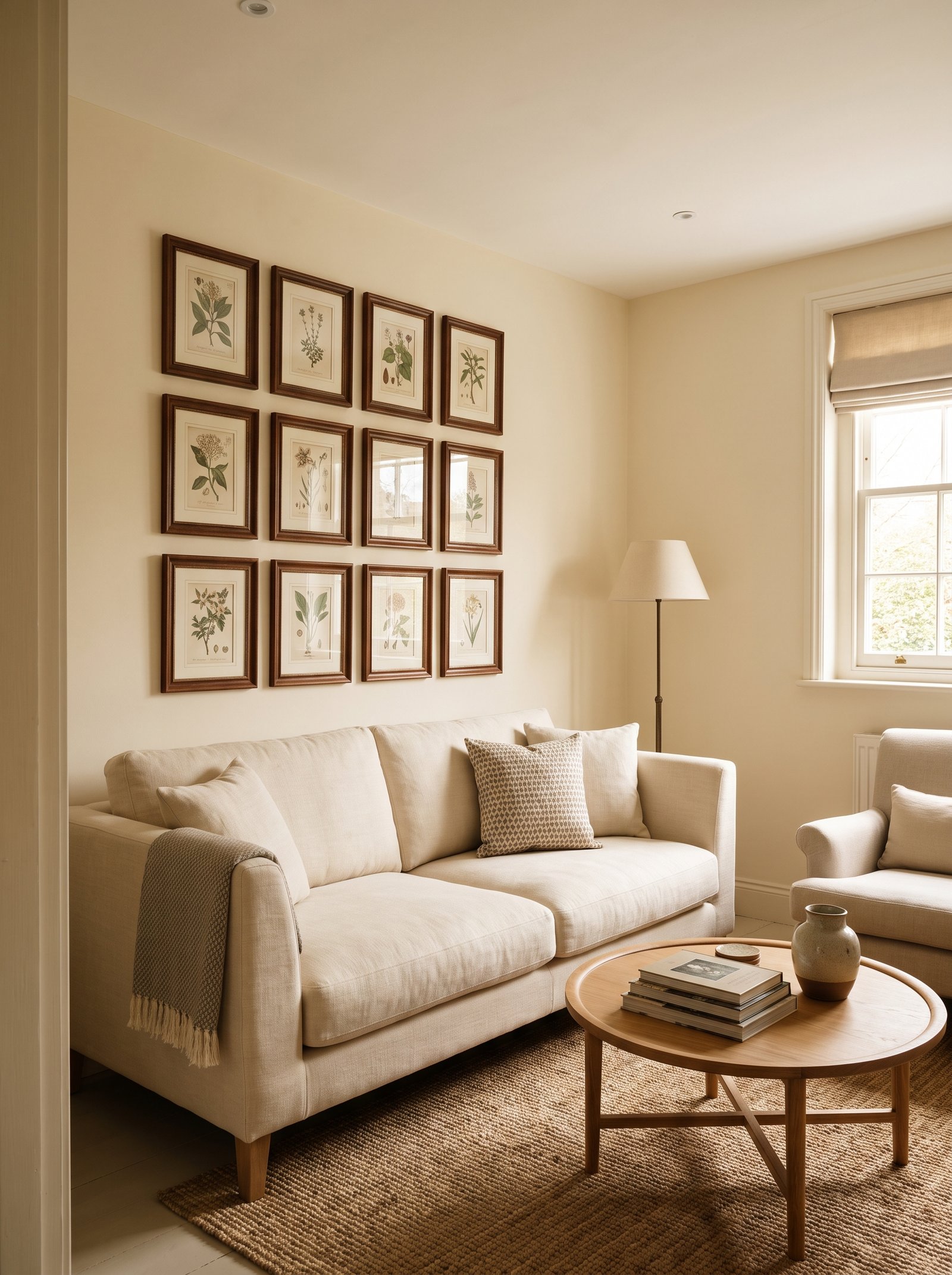
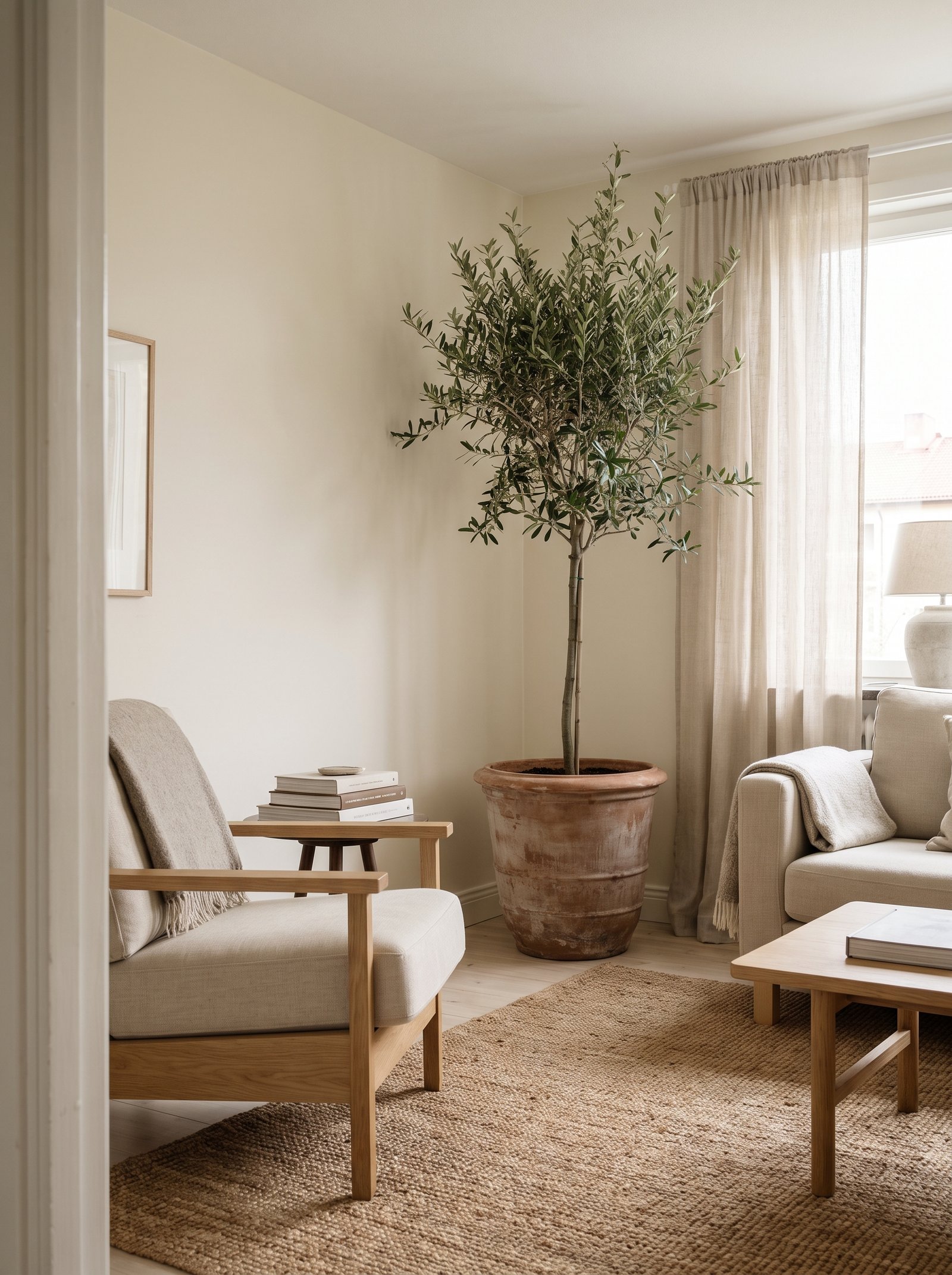
Small plants scattered around a small room read as cluttered. One large statement plant — an olive tree, a fig, a bird of paradise, a snake plant, a fiddle-leaf — reads as intentional and adds vertical interest that draws the eye up. The rule is scale: one big presence beats many small ones every time.
Put the big plant in a corner where it can grow toward the light. A five- to six-foot olive tree in a warm terracotta pot in a corner of a small living room adds instant Old World character. If your light is low, opt for a snake plant or ZZ plant — both handle very dim conditions and grow tall.
Real plants are ideal but faux is fine for very low-light apartments. Just buy the best fake tree you can — cheap fakes look plastic and cheapen the whole room. Nearly Natural, Amazon’s more expensive options, and Wayfair all have realistic 5- to 6-foot faux trees for under $200.
A single trailing plant on a bookshelf or mantel adds another organic layer. Pothos, philodendron, and English ivy all trail nicely and are hard to kill. A small trailing plant, an olive tree in the corner, and a bud vase with a single olive branch cutting is a complete plant story for a small living room.
Terracotta pots read as warm; concrete and stoneware read as modern; woven baskets around plastic nursery pots read as bohemian. Match your plant vessels to the room’s overall tone, and always choose a pot at least one size larger than the plant’s current pot.
13. Pick one piece of oversized art per room
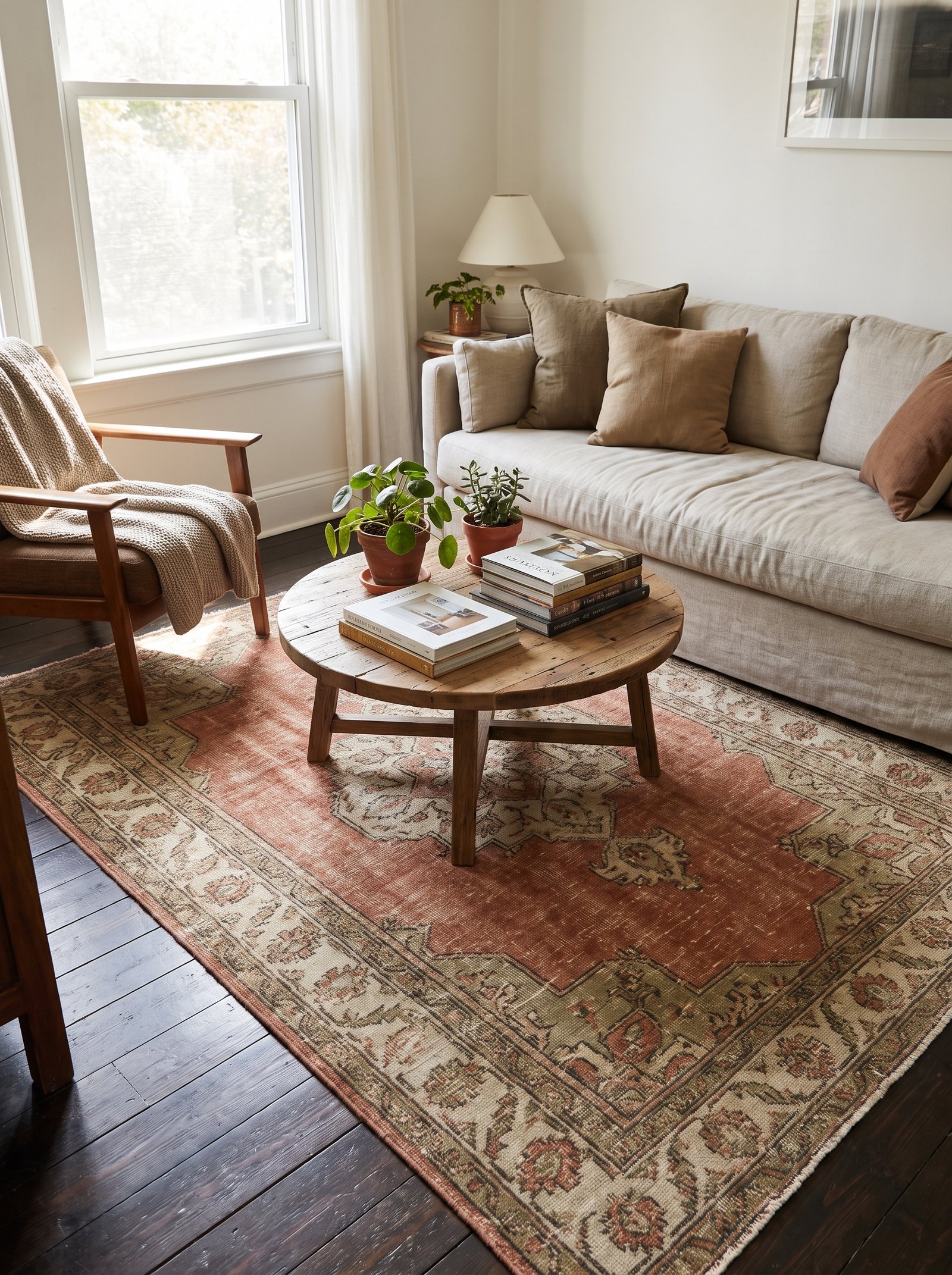
A single oversized piece of art above the sofa is the fastest way to make a small living room feel like a designed one. The mistake most people make is going too small — a 24-inch print above an 80-inch sofa looks lost. The art should be at least two-thirds the width of the sofa below it, ideally three-quarters.
Framed textile art, a large abstract print, a black-and-white photograph, or a canvas painting in a muted palette all work. Etsy and Society6 sell large-format prints for under $100. Frame them at a local framer for another $100 to $200 and you have a $500+ statement piece for a fraction of the retail cost.
Alternatively, hang three matching prints in a row above the sofa. Three 24×36-inch prints spaced two inches apart takes the same wall real estate as one 72-inch piece. This is a common trick in editorial spaces because it lets you buy affordable prints and still get the big-art effect.
The frame matters. Simple thin black, thin walnut, or thin brass frames all read as elegant. Ornate carved frames pull too much attention to themselves in a small room. If you are unsure, go plain.
For renters who can’t put big holes in the wall, leaning a large piece against the wall on the floor is actually a designer move. A 48×72-inch canvas leaned against a wall behind a low sofa is a small-room look that recently appeared in Architectural Digest three times in one year.
14. Use a picture light to feature the art
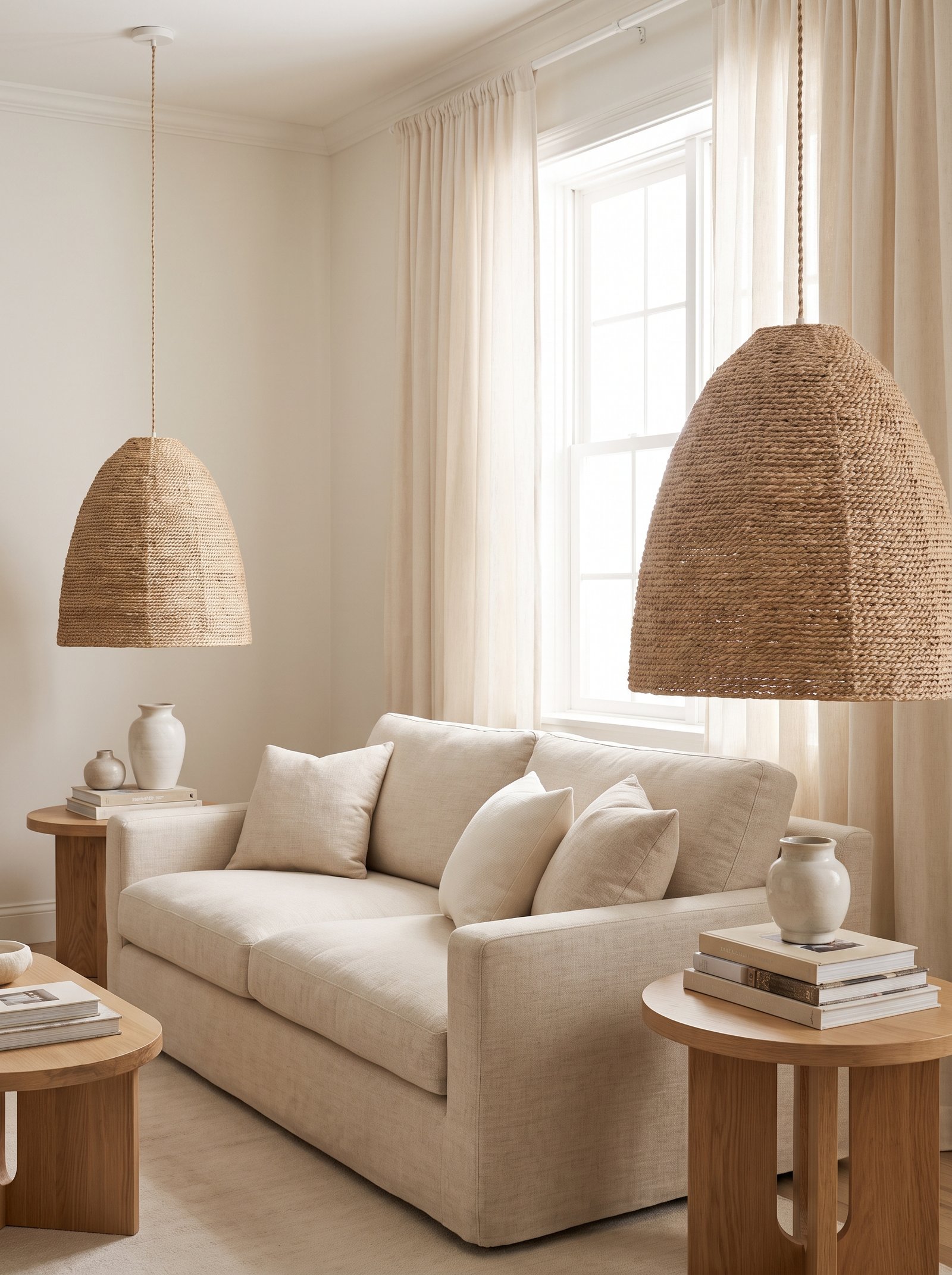
A brass picture light mounted above your one big art piece is the small detail that separates “well styled” from “extremely well styled.” A picture light does two things: it draws attention to the art (making the art feel more important), and it adds a low warm light source that changes the whole mood of the room at night.
Battery-operated picture lights are the rental-friendly version. Look for the LED versions with rechargeable USB batteries that give you two to three weeks of use per charge. Brands like Cordless Lamps Co., Modern Picture Lights, and various Etsy sellers all make them.
For hardwired versions, most electricians will install a plug-in or hardwired picture light for $150 to $250 if you supply the fixture. Warm 2700K bulbs are essential — cool white LEDs make the art look like it’s in a doctor’s office.
Angle the picture light downward at 30 to 45 degrees so it lights the art without glaring at eye level. The whole point is to graze the art from above; if it’s aimed straight out from the wall, it becomes another spotlight in your eye.
A picture light also works above a bookshelf, a mantel, a fireplace, or a bar cart. Anywhere you want to draw attention and add layered warm light, a picture light pays for itself immediately.
15. Symmetry calms a busy small room
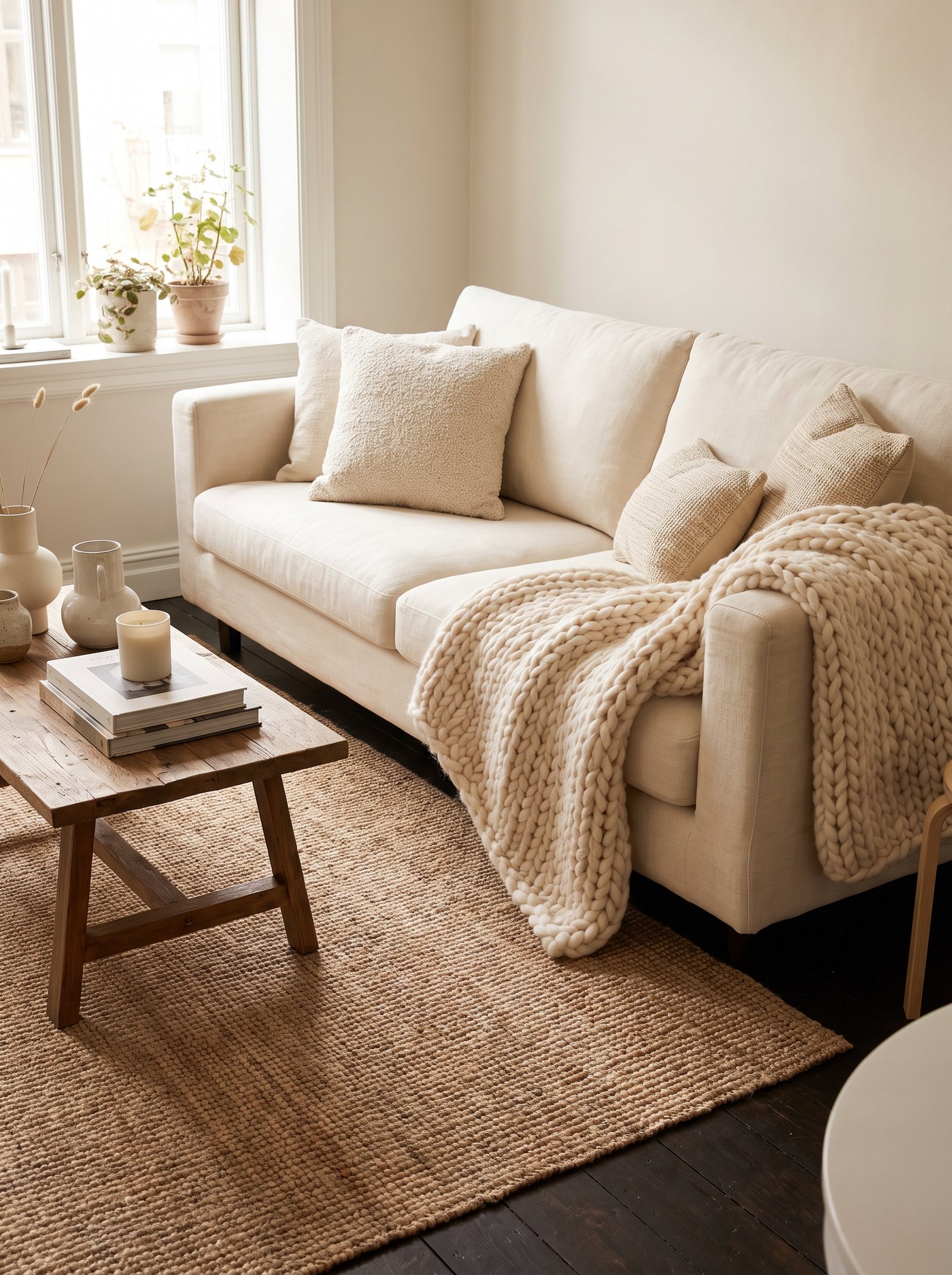
The eye reads symmetry as order. In a small living room where the walls are close and every corner is visible, an arrangement with clear symmetry — matching lamps on either side of the sofa, matching chairs facing each other, matching art panels above — instantly reads as calm and expensive.
You don’t need to make every arrangement symmetrical. One symmetrical zone in the room — the seating area, the mantel, the gallery wall — is enough to anchor the whole space. The rest can be more casual.
Two identical brass table lamps, one on each side of the sofa on matching wall shelves, works. Two identical woven baskets on either side of the fireplace works. Two matching accent chairs facing the sofa works. Two identical framed prints above a console works.
The reason symmetry works in small rooms specifically is that asymmetric arrangements in tight spaces need more space to breathe than they get. A big open loft can absorb asymmetric composition; a 12×14 living room usually cannot.
You can break symmetry deliberately with a single asymmetric styling detail — one plant, one book stack, one piece off-center — once the main structure is symmetrical. That gives the room life without losing the sense of order.
16. Get furniture on wheels or gliders
A small room needs to change shape. The ability to slide a coffee table out of the way for yoga, roll an ottoman to seat one more guest, or shift a side table into service as a laptop desk is what makes small rooms feel functional rather than cramped.
Look for furniture with gliders or discrete casters — a rolling bar cart, a lightweight ottoman, a side table on hidden wheels, a media console with locking casters. Furniture that visibly announces its wheels reads as institutional; wheels tucked underneath read as clever.
An ottoman or pouf on gliders in a small living room can be dining seating (pulled up to the coffee table), extra guest seating, a footrest, or storage — often in the same day. This kind of flexibility is what makes a small room feel like it can host a dinner party even if the dining table is a coffee table.
The nesting furniture family — nesting tables, nesting stools, stackable dining chairs — all serve the same purpose. Get out the extras when you need them, stow them under the coffee table or in a corner when you don’t.
The lighter the furniture, the more useful this trick is. If you can’t lift or slide a piece with one hand, it will stay where it is. Heavy solid-wood coffee tables are elegant but immobile. Light metal frames with wood tops are elegant and mobile.
17. Style with odd numbers, keep it under-scaled
Every stylist follows the odd-numbers rule: arrange objects in groups of three or five, never four. The eye reads three of anything as intentional; four reads as accidental. This works on coffee tables, bookshelves, mantels, console tables, and any surface that gets styled.
A basic coffee table arrangement: one stack of three books (varying heights, brass or oak accents), one small bowl or tray with something in it (matches, stones, small candles), one organic element (olive branch in a vase, small plant, dried flowers). Three items. Done.
For a small living room, keep every arrangement slightly under-scaled from what you’d choose in a bigger room. A small brass tray on the coffee table, a small bud vase, a small stack of books — the arrangement is complete, breathes, and lets the small room feel larger than an over-styled one would.
The rule of thirds also works — arrange objects in a rough triangle when viewed from the sofa. Tallest object at the back, medium at the side, small at the front. This composition reads as balanced and calm regardless of what the objects actually are.
Rotate your styling. Small rooms benefit from seasonal styling changes — a warm chunky throw and amber candles in winter, dried grasses and terracotta pots in fall, fresh eucalyptus and a linen throw in summer. Same room, four different moods per year, no new furniture required.
18. Use a warm terracotta accent everywhere
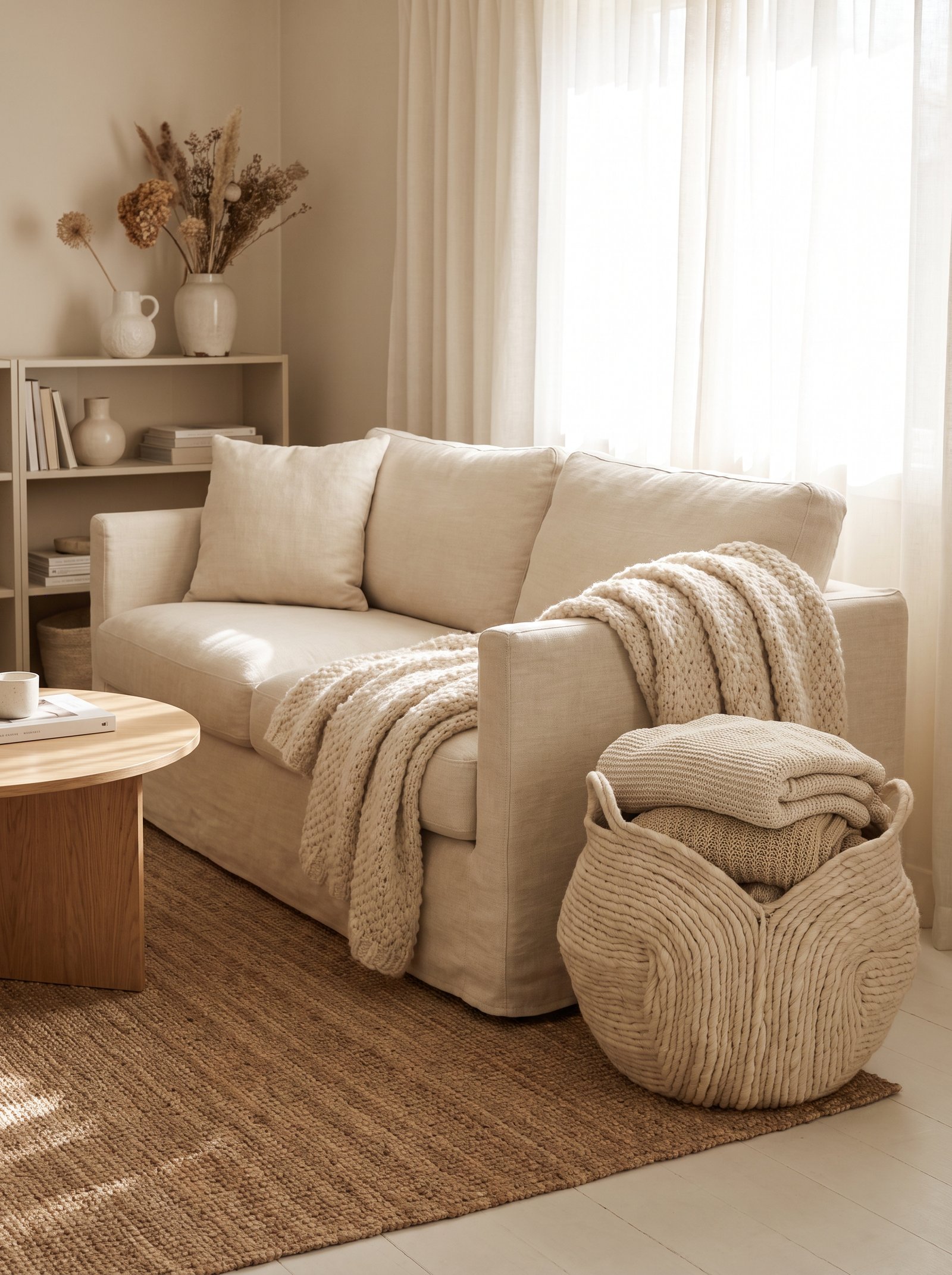
A restricted color palette in a small living room makes the whole space feel intentional. Warm cream plus one warm accent color — terracotta is the current favorite — repeated in three or four places is enough to give the room character without visual noise.
Two terracotta throw pillows on a cream sofa, a terracotta candle on the coffee table, and a small terracotta bud vase on the console — that’s the whole story. Enough to feel deliberate; not enough to feel themed.
Alternatives to terracotta that work with cream: warm sage, dusty rust, camel, deep walnut. Cool tones — dusty blue, forest green, charcoal — also work but the room reads slightly cooler and more Scandinavian rather than warm Mediterranean.
Never introduce more than two accent colors in a small living room. Cream plus terracotta plus sage is the maximum. Add a third accent (yellow, teal, pink) and the whole thing collapses into visual chaos. The room will feel calmer with fewer colors, always.
Change accent colors seasonally if you get bored. Terracotta and cream in fall, sage and cream in spring, rust and cream in winter, soft blue and cream in summer. Same base palette, different mood, no expensive changes.
19. Wrap the whole room in one wood tone
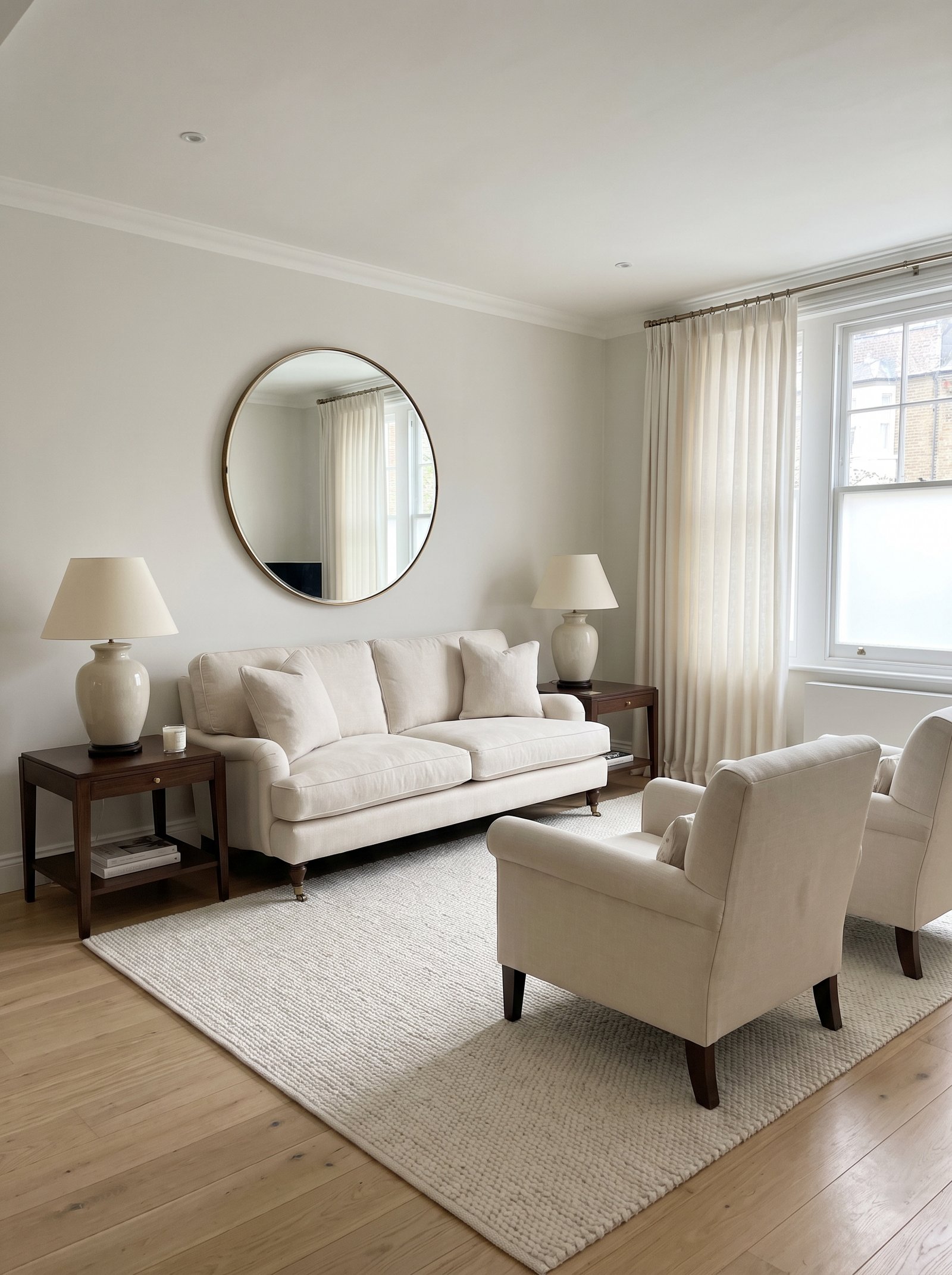
Multiple wildly different wood tones in a small room read as chaotic. Aim for one dominant wood tone — usually oak or walnut — plus one secondary tone that complements it. Repeated wood tones tie everything together and make the space feel curated.
Warm oak on the coffee table, warm oak on the side table, warm oak on the console, and a slightly darker walnut on picture frames or the media stand is the professional formula. Everything harmonizes, nothing fights.
If you already own furniture in mismatched wood tones, don’t panic. Slipcovering, painting, or restaining are all options. A walnut-stained coffee table can become an oak one with a $20 can of wood stain and an afternoon. Alternatively, adding a table lamp or two on top of every wood surface reduces the visual attention on the wood tones themselves.
The floor is the biggest wood surface in the room. If your floors are dark walnut, warm your smaller wood pieces toward walnut. If your floors are light oak, keep the smaller pieces oak. Trying to fight your floor tone always looks off.
For rentals with ugly floor tones, a big cream jute rug covers them enough to let you introduce your preferred wood palette on top. Keep the exposed floor as a border but let the rug carry the color story.
20. Style the entry so the room reads calmer
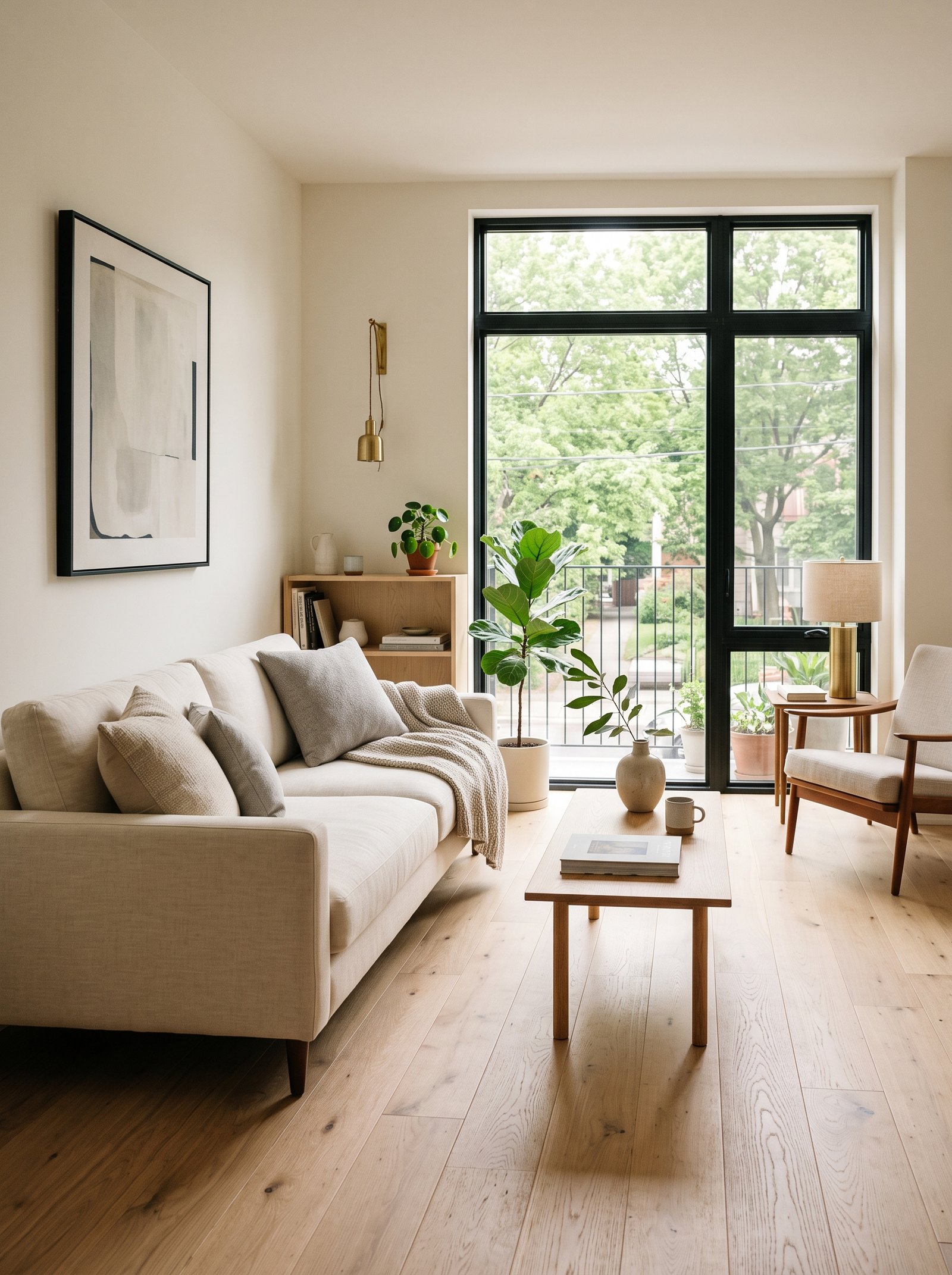
Small living rooms often double as the entryway — the front door opens right into the living space. What’s on the wall by the door and on the surface where you drop keys directly affects how calm the whole room feels the moment you walk in.
A small console table (12 inches deep or less), a woven basket for shoes underneath, a ceramic bowl for keys on top, a small mirror or piece of art above, and a warm table lamp — that’s the whole entry setup. It takes about $200 total and shifts the whole feeling of arriving home.
If a full console won’t fit, a floating wall shelf with the same styling (basket, bowl, art, mirror) works. IKEA’s Mosslanda picture ledges are $10 and hold everything you need. Just make sure whatever you install is at the right height for actual key-dropping — 40 to 44 inches off the ground.
The rug at the door matters too. A small jute or coir rug immediately inside sets a physical and visual boundary between “outside” and “living room.” Even in a tiny apartment, this small transition zone helps the living room feel like a distinct restful space.
Keep the entry zone almost empty. No coats hanging visibly, no shoes scattered, no mail piling up. A small living room that also serves as entry benefits more from strict entry hygiene than almost any other single change.
21. Introduce one vintage piece for warmth
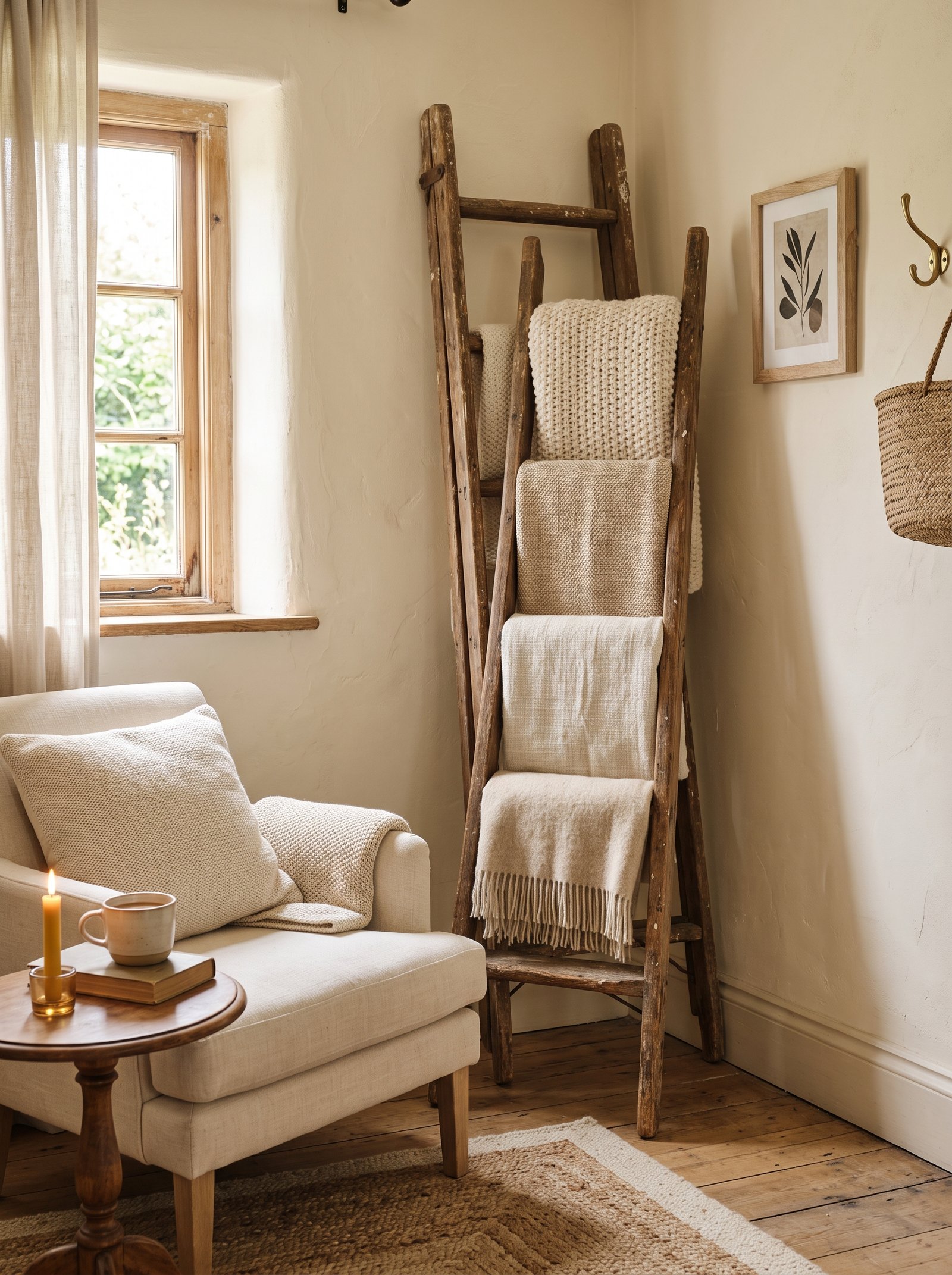
A room made entirely of new furniture reads as showroom. One well-chosen vintage piece — a brass floor lamp, a leather club chair, a woven basket, an oil painting — instantly adds warmth, character, and the sense that the room has lived a little.
The easiest vintage pieces to shop for are small ones: a brass table lamp, a wooden bowl, a set of hardcover books, a vintage rug, a small side table, a framed vintage print. Facebook Marketplace, Chairish, and estate sales are all reliable. Etsy has more but the pricing is higher.
The rule is one visible vintage piece per zone. In a small living room, one vintage piece in the seating area (like a leather chair) plus one vintage piece on the mantel or console (like a brass candlestick) is plenty. More and the room starts to look museum-like.
Vintage brass is currently having a design moment and warms up cream palettes beautifully. Vintage brass candlesticks, picture frames, table lamps, and small trays all pair perfectly with the warm cream/terracotta/sage palette described elsewhere in this guide.
If you don’t have vintage nearby, a well-chosen new brass or leather piece from a small maker still adds soul. Etsy and Chairish sell “vintage-style” pieces from small craftspeople that read as vintage even if they’re technically new.
22. Choose two matching accent chairs instead of one big one
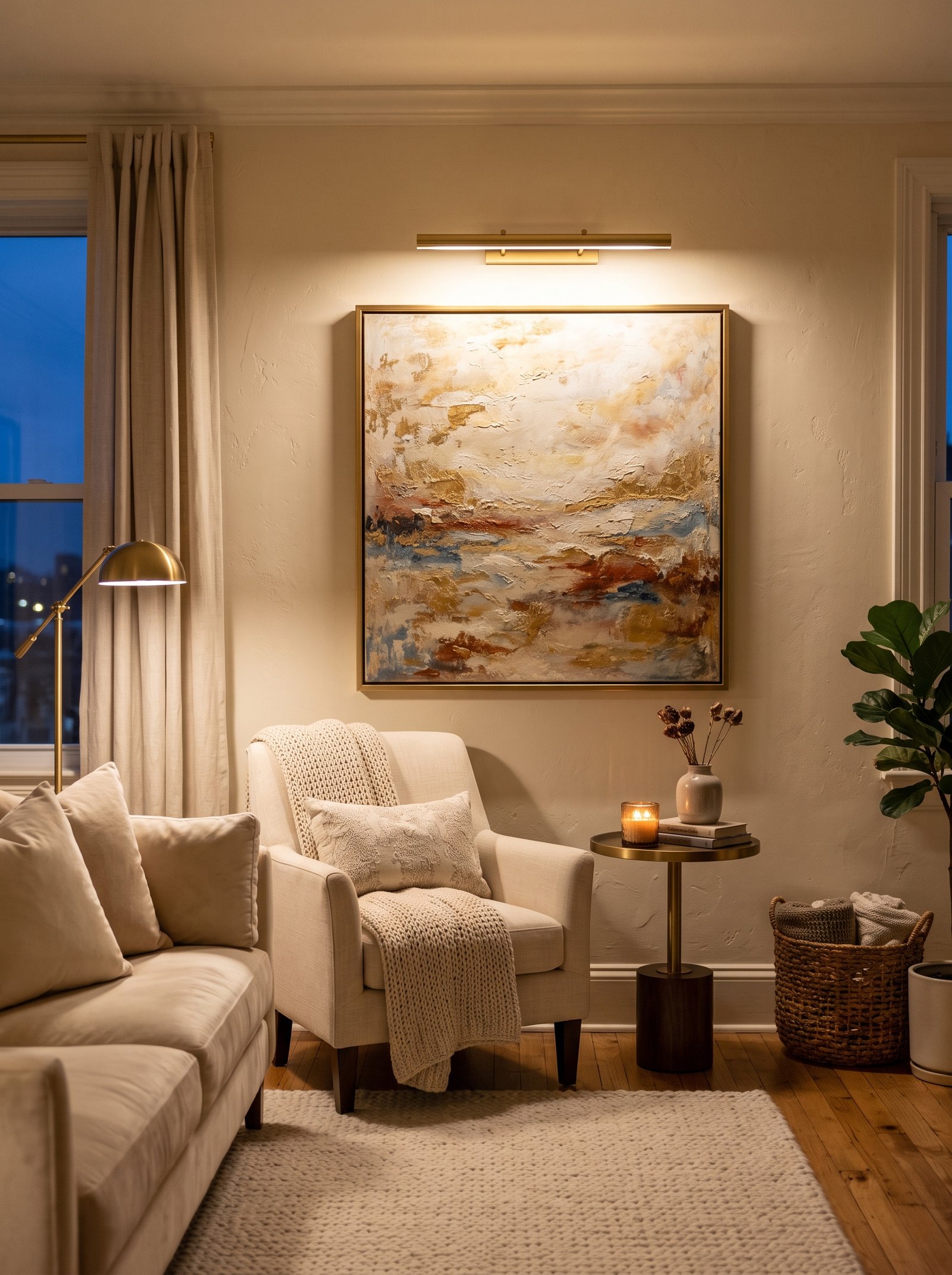
Two matching accent chairs facing the sofa often takes less footprint than one bulky lounge chair with a footstool. The pair reads as symmetrical and intentional (see idea 15), and lets two people sit comfortably during the day rather than one.
Compact accent chairs — barrel chairs, slipper chairs, wing chairs, or Danish modern chairs — all work. IKEA’s Pello, Article’s Sven armchair, West Elm’s Book Nook, and vintage barrel chairs from Facebook Marketplace are all under $500 for a pair.
If two full accent chairs is too much, consider a two-chair-and-side-table setup as a “reading corner” separate from the sofa. This visually creates a second zone in a small room, making it feel like a bigger space with multiple functions rather than one crowded room.
Slim swivel chairs are the small-space luxury option. Being able to turn from watching the TV to talking to whoever’s on the sofa without repositioning the chair itself makes a small living room feel more flexible.
Cover accent chairs in a neutral fabric that matches the sofa’s tone family. Two cream boucle chairs with a cream linen sofa is calm and cohesive. A brightly patterned accent chair pair fights with the sofa in a way that a big lounge chair typically doesn’t.
23. Hide cords, chargers, and remotes
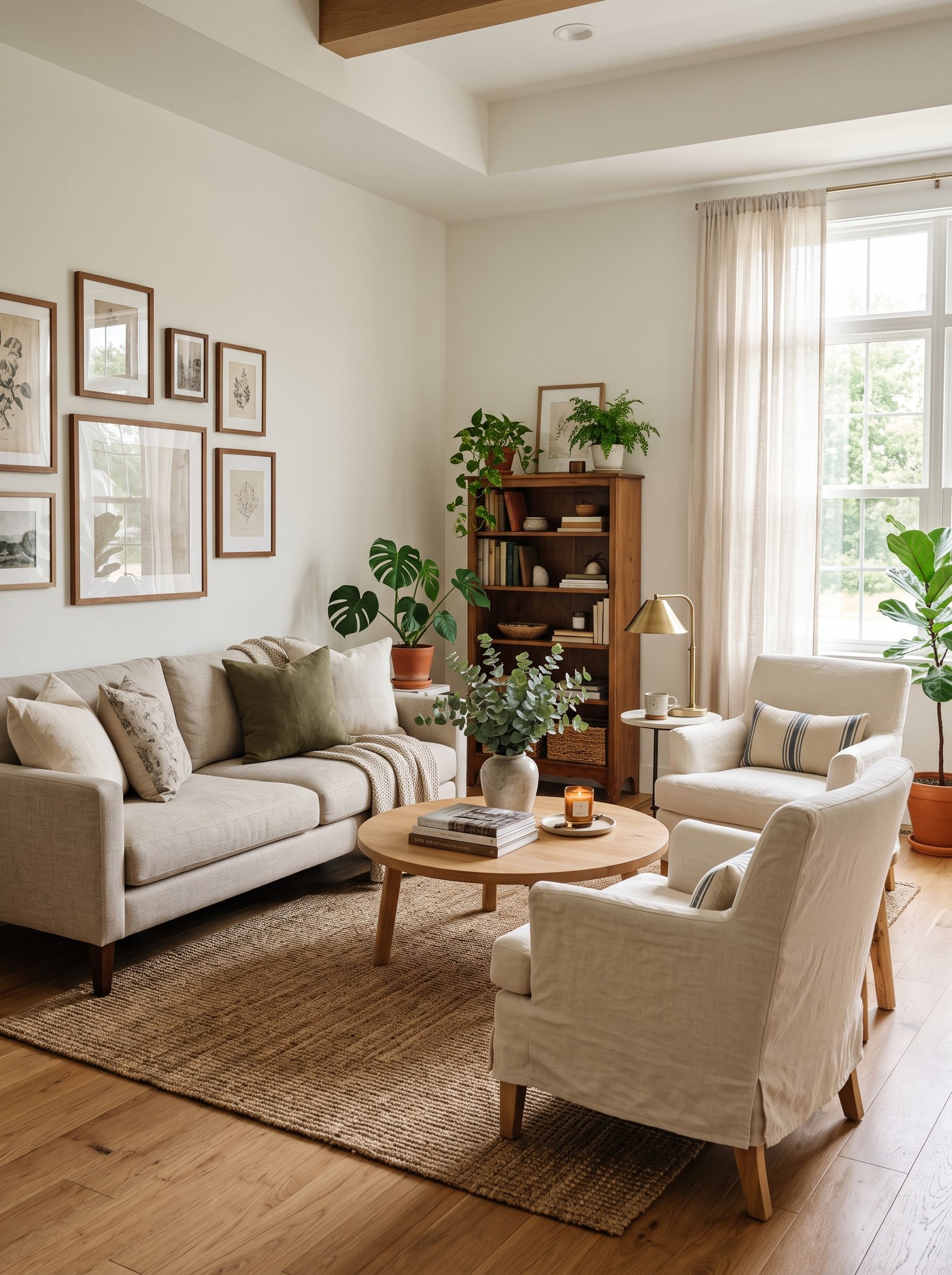
Visible cords and cables are the single fastest way to make a small living room feel cluttered. In a small space, every visible cord is competing for the same visual real estate as your intentional styling. Hiding them makes the room instantly read as bigger and calmer.
The basics: cable sleeves (fabric or nylon) that gather all the cords behind the TV or under the desk into one neat bundle. Command cord clips that route cables along the underside of tables or along baseboards. And a small basket or box (Kikkerland, IKEA Kuggis, Container Store’s fabric bins) that holds all the remotes, chargers, and small tech clutter when you’re not using them.
Media consoles with cord management built in are worth the $200-400 investment. Look for ones with cutouts in the back panel and integrated cable channels. IKEA’s Havsta, West Elm’s Mid-Century, and Wayfair’s Bosley all work.
Even the electric plug into the wall matters. If you can find surge protectors with a low profile and slim cord, they sit behind furniture invisibly. If the outlet you’re using is somewhere the cord always shows, run the cord behind a strategic piece of styling — a plant, a stack of baskets, a floor lamp base.
The bigger picture: aim for one visible cord max in the whole room. That’s usually the lamp cord that has to go from the lamp down to the outlet. Everything else — TV cables, charger cables, speaker cables, media console cables — should be routed invisibly.
24. Introduce one moment of moody drama
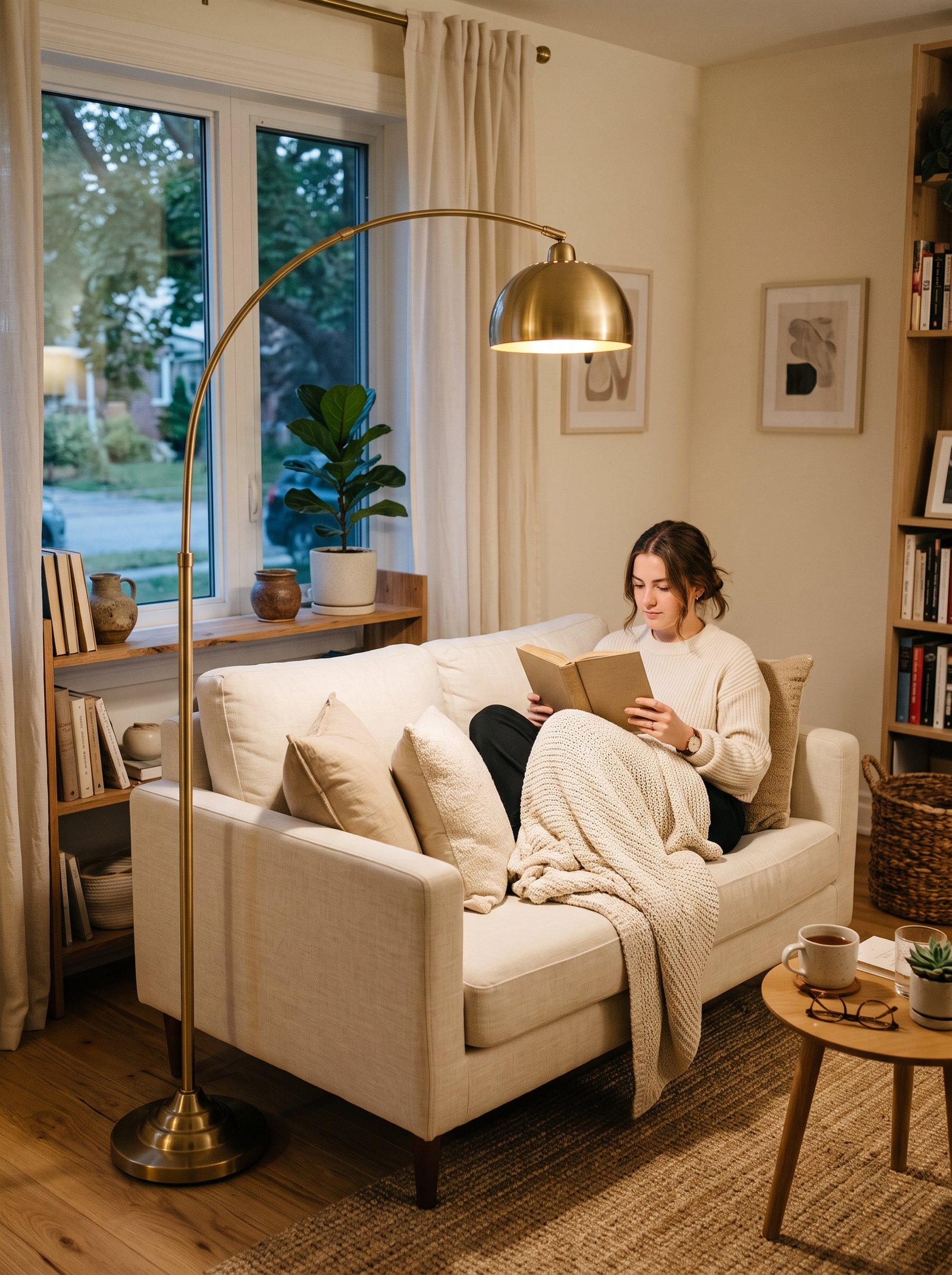
Not every wall in a small living room needs to be light. One deliberate moment of moody drama — a dark accent wall behind the sofa, a black-painted bookshelf, a dark curtain over one specific window — creates depth that makes the light-cream rest of the room feel even lighter.
The single wall painted in a deep sage green, forest green, chocolate brown, or moody plum reads as luxurious in a small room. Farrow & Ball’s Studio Green, Benjamin Moore’s Chestertown Buff, and Sherwin Williams’ Peppercorn are all popular choices. Do the wall your sofa sits against — the one you see from the entry.
The rest of the room stays cream and calm. The contrast between the dark wall and the cream rest of the room creates depth that makes the small space feel considered rather than compromised.
Alternatives to a painted accent wall: a bookshelf painted dark, a media console in walnut instead of oak, a large piece of art with a lot of black in it, or dark drapery panels on one specific window. Any single moody element serves the same purpose.
For renters, peel-and-stick dark wallpaper on one accent wall achieves the same effect. Chasing Paper, Tempaper, and Livette’s Wallpaper all sell peel-and-stick options that come off cleanly on move-out.
25. Finish with a warm signature scent
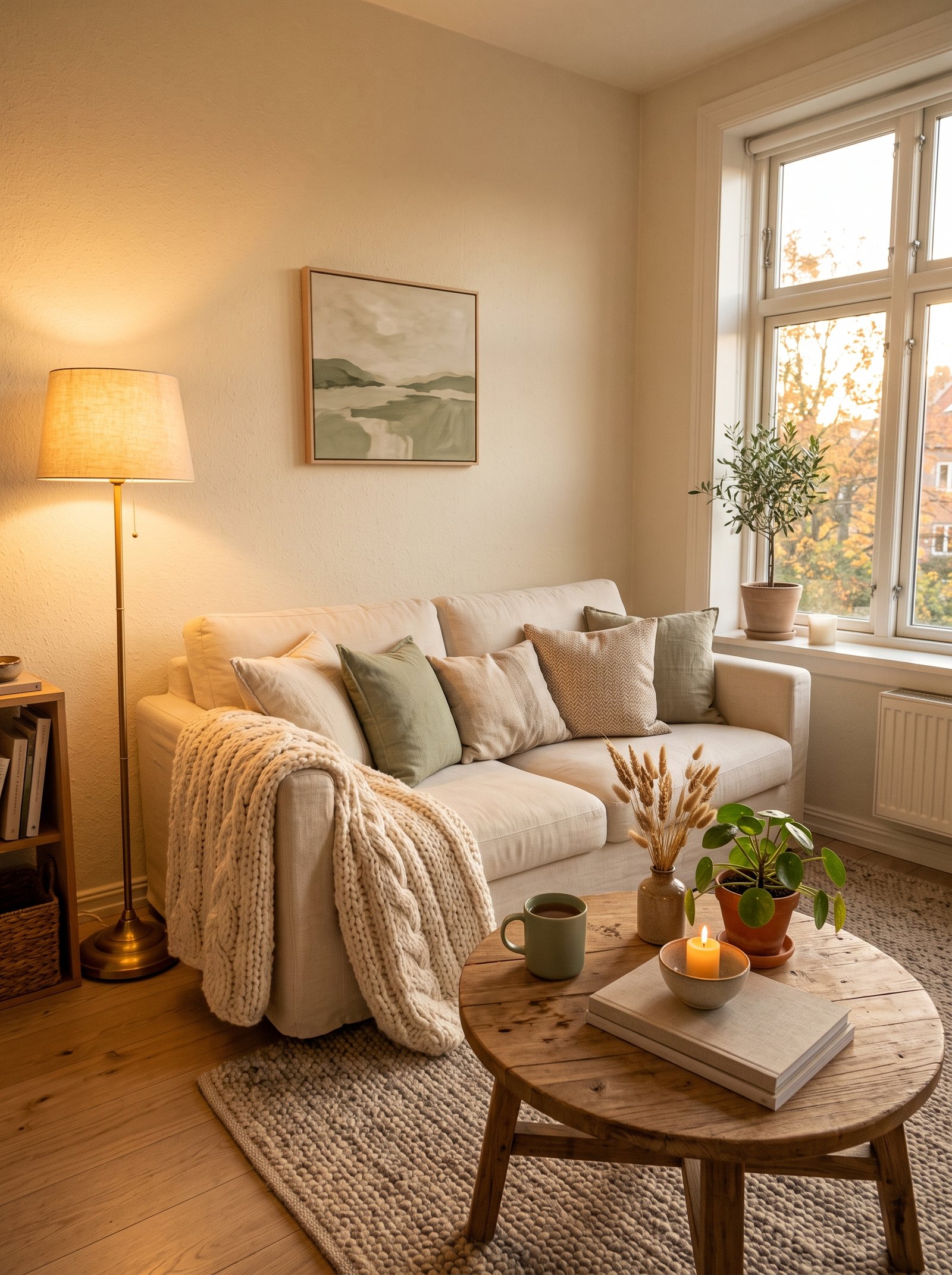
The last small-room upgrade almost no one talks about is scent. A small living room with a signature scent — one candle, one reed diffuser, one incense you burn — feels like a hotel suite rather than an apartment. Scent is the invisible layer of interior design.
Warm amber, sandalwood, cedar, tobacco, fig, and vetiver are all “cozy neutral” scents that work with the warm cream/terracotta palette. Le Labo’s Santal 33, Diptyque’s Feu de Bois, Jo Malone’s Wood Sage & Sea Salt, and Boy Smells’ Kush are the popular high-end options. Target’s Threshold candles and Aldi’s Merry Moments line have very good dupes for $10 or less.
Reed diffusers give the same effect passively — no fire, no monitoring, just a slow constant scent release for six months at a time. Get one and put it near the entry so the scent is what greets people as they walk in.
Fresh flowers or fresh eucalyptus branches from the grocery store add another olfactory layer for $10 a week. Even one small bunch on the coffee table brings the room to life in a way pure candlelight cannot.
The point is not to have five scents competing. Pick one signature and repeat it. Same candle, same diffuser, same vibe every time. The consistency is what elevates a small living room from “styled” to “lived in beautifully.”
Where to start if you’re overwhelmed
Twenty-five ideas is a lot. If you can only do three things this weekend, pick these: swap every bulb for 2700K warm white (ideas 2), hang your curtains near the ceiling and let them touch the floor (idea 3), and clear the clutter from every horizontal surface. Those three moves alone will make your small living room feel measurably bigger by tomorrow morning.
Save the paint, the furniture rearrangements, and the shopping for a longer weekend. Every idea here is designed to layer with every other one, but they compound better when you make one change and live with it for a week before making the next.
The best small living rooms are not the ones with the most tricks stacked on top of each other. They’re the ones where each choice was deliberate and each piece earns its footprint. Start light, add slowly, and remember that in a small room, restraint is the ultimate design move.
Keep reading — related decor guides
- → 25 Studio Apartment Layout Ideas
- → 30 Small Bedroom Ideas
- → 25 Tiny Kitchen Ideas
- → 30 Small Bathroom Ideas Under $100
- → 25 Rental Kitchen Makeover Ideas
Take our 2-minute Decor Style Quiz
Answer 10 quick questions and discover whether you’re Modern Boho, Scandinavian Minimalist, Modern Farmhouse, Mediterranean, Japandi, or Classic Traditional — plus your color palette and 3 articles made for you.
Our interactive tools can help
Take the style quiz, generate a beige wall color palette, or calculate the perfect pillow stack for your bed — all free, all in under 2 minutes.